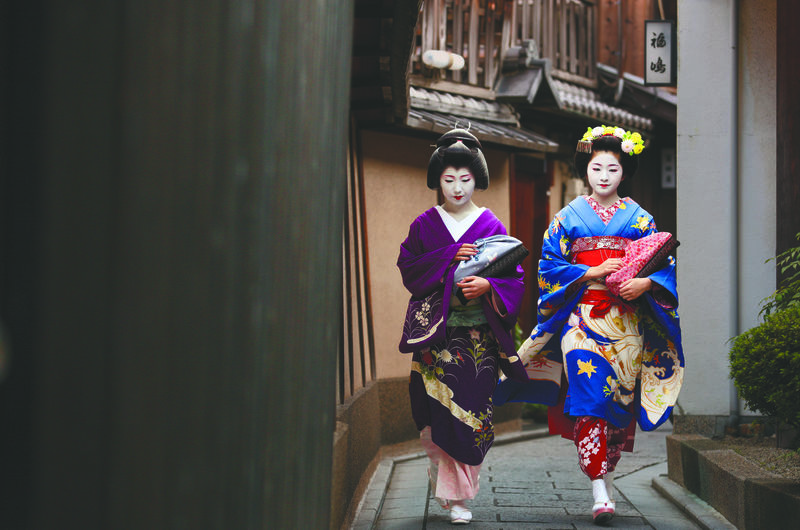
KYOTO -- Their black hair done up with colorful, delicately crafted hairpins, their faces painted white and their luxurious kimono like works of art, maiko apprentice geiko are often described as walking museums. The only place to catch a glimpse of these dazzling creatures is in Kyoto.
Geiko perform dances and songs classified as traditional Japanese performing arts, and play traditional musical instruments such as the three-stringed shamisen. Referred to as geiko in Kyoto, they entertain customers at banquets held mainly in zashiki tatami-floored rooms.
There's no particular difference between geiko and geisha, but calling them geiko is an expression of Kyotoites' feeling that their city is different from everywhere else. More than anything, it's an expression of their pride.
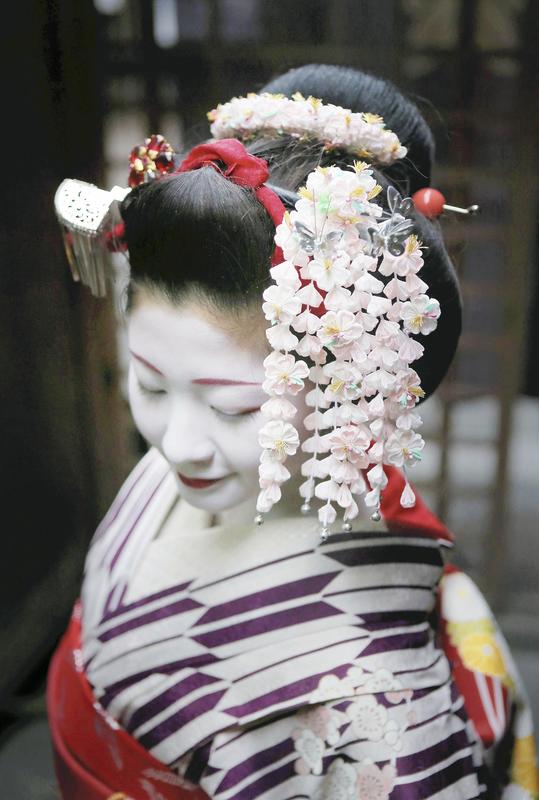
Maiko are young women training to become geiko. Aged from about 15 to 20, they are apprenticed to masters of traditional performing arts. They tend to be considered "Kyoto-born beauties," but they actually come from all over the country. Acquiring the Kyoto dialect and intonation that are indispensable to their entertainment in zashiki is said to be difficult for them.
Maiko appear in zashiki even before they are recognized as full-fledged geiko, and they seem to be more popular. However, this doesn't appear to be because they are young.
Both geiko and maiko base their fashion on that of the Edo period (1603-1867). Emphasizing youthfulness is an especially common practice for maiko.
Geiko, in fact, wear a wig with simple ornaments. Maiko, on the other hand, have their hair done up in a style peculiar to girlhood. They put on many intricately shaped accessories, including ornamental hairpins with artificial flowers whose designs are replaced every month.
Geiko wear chic kimono made of undecorated fabric of any color or black, but maiko wear long-sleeved kimono with colorful patterns and a sash called darari no obi that is more than five meters long. The sash is tied to leave both ends dangling.
Darari no obi, which accentuate maiko's backs with their elegant designs, have become a byword for maiko. The dangling sash makes maiko look smaller and childish.
Geiko aim for sophistication as refined adults, while maiko aim for an excessive degree of pomp that can only be allowed for teenage girls.
Darari no obi embroiled with gold and silver threads cost several million yen apiece. Various kinds of jewels and precious stones, including coral, jade and agate, are used to make obidome sash clips worn by maiko. These clips are known as "pocchiri."
A gentleman may hear a maiko say, "Kore hitotsu de kokyu gaisha ga kaerun dosu-e" (One of these obidome is worth a luxury foreign car). Dosu-e is used by maiko as a suffix when they speak traditional Kyoto dialects. Indirect statements are preferred in Kyoto, and the maiko might actually mean "why don't you buy me another obidome?"
Bear in mind that not all the "maiko" you will come across on Kyoto streets are genuine maiko. The vast majority are likely "henshin maiko," Japanese and foreign tourists dressed as maiko in inexpensive rented costumes.
You may encounter genuine maiko or geiko if you stroll through the Gion area and other places in Kyoto where entertainment houses are concentrated in the evening. But don't touch their kimono or obi under any circumstances as they hurry to zashiki to entertain customers. These are precious works of art.
* * *
This column, which appears once a month, is about various aspects of the culture of Kyoto.
Mori was born and raised in Kyoto. He has 30 years of experience in reporting about Kyoto culture. He has extensively covered scholars of the New Kyoto school, the heads of tea ceremony and flower arrangement schools, as well as maiko in the Gion area of the city.
Read more from The Japan News at https://japannews.yomiuri.co.jp/