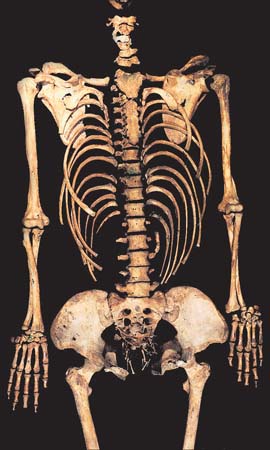
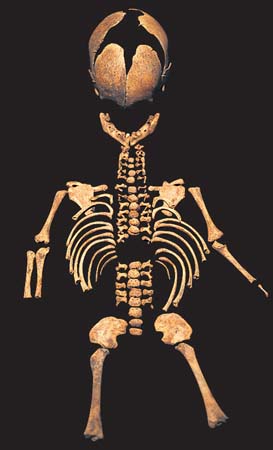
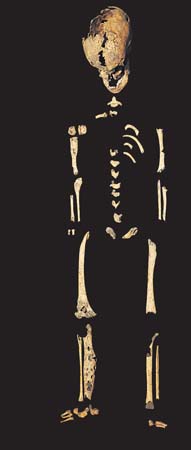
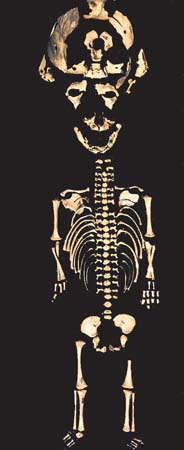
The mother-to-be: She lived somewhere between 1700 and 1850, and was carrying what was almost certainly her first baby when she died, just 22 weeks into her pregnancy. The foetal skeleton is intact - one of the youngest skeletons ever recovered in British archaeology. The woman’s hip size reveals she probably hadn’t given birth previously. Since her pregnancy was only halfway through, it’s more likely she died of an infection than as a result of birth Photograph: Linda Nylind/GuardianThe baby: This child was between six and nine months when he or she died of smallpox, a condition common in the 17th and 18th centuries. Smallpox rarely affected the skeleton, but occasionally there is damage to the elbow joint, as with this baby. Although the spores found in bones of smallpox victims are very unlikely to be infectious, the remote risk of live spores surviving in soft tissue means lead-lined coffins are not openedPhotograph: Linda Nylind/GuardianThe prostitute: The numerous tragedies of this young woman’s life — she died at around 20 in the 17th or 18th century — are etched into her bones and teeth. Osteologists have discovered that the formation of her tooth enamel has been interrupted, which is a result of extreme childhood stress. She almost certainly went into prostitution (her bones were discovered in an unconsecrated burial ground reserved for “single women”, a euphemism for prostitutes) and contracted syphilis Photograph: Linda Nylind/Guardian
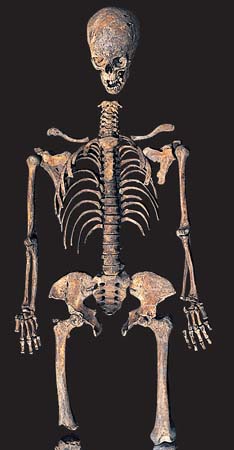
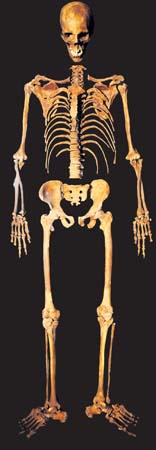
The pipe smoker: Even 300 years after he lived, this man’s remains reveal not only that he was a smoker, but that he loved his pipe and was rarely without it. There is a hole through his teeth at the front of his skull caused by his clay pipe. The fact the hole is so pronounced shows he must have been a chain smoker - not altogether surprising considering he lived at a time when smoking was very popular. His left big-toe joint is swollen, almost certainly a result of goutPhotograph: Linda Nylind/GuardianThe child: Found in east London, this child lived and died during the 15th century. Child skeletons are easier to date than adults, but before puberty it’s harder to tell whether a child was male or female. What’s clear is this child had a painful and difficult life, with severe disabilities. He had congenital syphilis, which deformed and crippled him, and also a cleft. But the fact he lived to be as old as 11, at that time, means he must have been extremely well cared forPhotograph: Linda Nylind/GuardianThe foetus: The parents of this child couldn’t possibly have known what was wrong with him, or why he died at birth or was stillborn. But 300 years on, pathologists have diagnosed what killed him. He had Langerhans' cell histiocytosis, an extremely rare disease of the immune system. In this boy’s case, it has attacked his skull, leaving circular lesions. In the 17th century a baby with such a complex immunological disorder would almost invariably have diedPhotograph: Linda Nylind/Guardian
Sign up to read this article
Read news from 100’s of titles, curated specifically for you.