KANSAS CITY, Mo. _ A year had passed. Yet no matter how many times the 38-year-old Iranian engineer asked the U.S. immigration office in Kansas City about his citizenship application, the frustrating answer was always the same.
"They'd say 'It's pending,'" Behrang Pakzadeh said.
Pending? Pending what?
"Background checks," was the cryptic reply again and again, always without explanation of what might be holding things up.
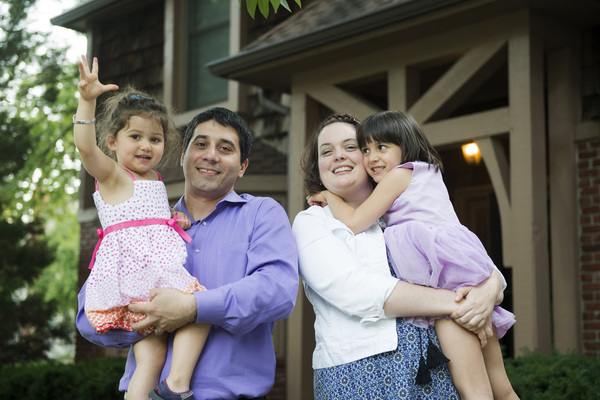
On the job, Pakzadeh's co-workers know him as Ben, while at home in Shawnee, Kan., his American-born wife, Rachel, calls him Benny, which fits his sunny personality.
He began his quest for citizenship with a positive attitude. He understood the need for background checks. The government works hard to exclude criminals and people with ties to terrorism. Aided by the FBI, U.S. Citizenship and Immigration Services scrutinizes everyone applying for citizenship, or asking for permission to live, work or visit the country on a visa.
But when the standard processing time for naturalization is five to seven months, why had he been waiting twice that long with no resolution in sight?
When the feds wouldn't say, Pakzadeh grew impatient and hired a lawyer from St. Louis with a wealth of experience in handling cases like his.
That attorney had a ready explanation for why Pakzadeh's paperwork was stalled.
"I think they have an overall approach to try and slow down immigration by Muslims to the United States," James O. Hacking III said.
Hacking had seen situations like Pakzadeh's repeated over and over. He's filed more than 60 lawsuits in recent years, accusing the government of unfair treatment of Muslims chasing citizenship or green cards that signify permanent resident status.
Mostly, he's been winning, gaining citizenship or green cards for more than 100 people coast to coast by calling out the feds on their stalling. In fact, he argues that simply calling the government's bluff nearly always gets officials to relent.
In the case he filed last fall for Pakzadeh against the Department of Homeland Security, Hacking made many of the same claims he argued in nearly every case he's filed since 2013 when a secret government screening process was revealed.
His client, he said, had been unfairly singled out for the sort of extreme vetting President Donald Trump often suggests for screening new immigrants from majority-Muslim nations.
Except the little-known and secretive vetting process to which Pakzadeh was subjected, Hacking said, was in existence years before Trump proposed his controversial travel ban and enhanced vetting process.
Instead of fresh immigrants, it targets people already in the country legally. Folks who have already been vetted at least once, and are now trying to upgrade their immigration status so that they can stay here permanently and eventually gain citizenship.
The Controlled Application Review and Resolution Process was imposed in the waning days of the George W. Bush administration and continued under Obama. Since then, tens of thousands of immigrants have seen their applications stalled or denied, according to the American Civil Liberties Union and news reports.
CARRP's purpose would seem reasonable on its face. It subjects immigrants with known or possible national security concerns for more scrutiny than other applicants get.
But critics say the criteria used to trigger review are overly broad and discriminatory, disproportionally targeting immigrants from Muslim-majority countries. As a result, they claim, it is unconstitutional.
Once someone is placed on the CARRP track, their fates are often doomed, according to the ACLU. The group was the first to reveal CARRP's existence in a 2013 report.
Immigration officers are told to impede an applicant's progress toward citizenship, delaying and ultimately denying their applications "all without informing applicants they are subject to the policy let alone giving them an opportunity to respond to the agency's classification of them as a 'national security concern,' " the civil liberties union said.
Pakzadeh still doesn't know what about his background triggered so much examination and seeming foot-dragging before finally taking his citizenship oath this spring.
Neither does Rachel, who grew up in Ohio and describes herself as "a white girl with brown hair and brown eyes" who until recently had what she now sees as a naive belief in the fairness of the immigration system.
But all that delay and the lack of transparency left her jaded.
"Each time there were delays," she said, "a chunk of my confidence in the system fell away."