Crossing borders is more than a physical act. It is a mental and emotional one which involves tremendous challenges to the aid worker.
We must leave our partner and family, friends and familiar surroundings behind, and cope with a barrage of new pressures and demands. You learn as you go, on the job training, the languages, the culture, differing value systems and world views. Time brings answers, you get acclimatised, find your way around, make friends, get to know the local shops, from time to time find familiar products you longed for that say “home” and settle in.
But there is always a deeper, more visceral challenge, like something that lurks in a dark corner, slightly out of focus, needing definition, that gnaws at you. After all, you are faced with the reality of life in its most desperate forms, corruption, neglected and disenfranchised populations, conflict, senseless killing and mayhem, irrational behaviours, starvation, disease and death to name just a few.
When I began supervising a project for the rehabilitation of malnourished children in the Democratic Republic of the Congo’s capital Kinshasa, then Zaire, I was faced every day with the hopelessness of children brought in after failed attempts by traditional healers from the village to our health units. I watched these children, like flickering bulbs slowly extinguishing their light, gradually fade. I used to return home and cry, the weight of visions of these poor victims, victims to ignorance and corruption was too much.
After those three years I was no longer the same person with the same heart and mind, I was immutably changed forever. I poured myself into my work, devoting all my energies to bring positive change. If I wanted to draw my focus and energies away from the misery, I realised that the challenge had to be to bring change and in doing so transform my own emotional interpretation of hopelessness into positive action. The years passed, the project grew and began to be recognised, and my initial bewilderment turned to success.
But the challenge of work was only one of the pressures I faced. Above all, living far away from my family, I still had to face loneliness, a void that necessitated filling. I found that having at least one task a day, outside of work enabled me to “look forward” with anticipation to something that would bring me illumination, and satisfaction. It could be something as banal as buying Belgian chocolate bars at the corner shop and engaging the cashier and staff in the local language.
I once read a psychological study about loneliness and how many people frequented supermarkets, airports, train stations just to be among the crowds. There was no lack of open markets in Africa, and weekly visits to stock up my cupboards, to chat and just hunt around filled that void.
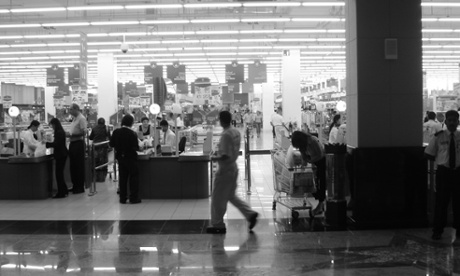
When a Belgian supermarket opened up near my house in Kinshasa, I used to frequent it two or three times a week, especially on the weekends which were the loneliest time for me. I would spend hours going up and down the aisle, buying a bit here and there just to justify my presence. But sometimes as I pushed the cart down an aisle filled with laughing families, especially expats married to local women and their extended family, I would be overwhelmed with loneliness, and wonder how I was going to get through it all. This was usually the moment I would call home; hearing the voices of my wife and children would get me through.
I found it best to keep busy to keep my mind off my own needs. I would get into the jeep on Sunday afternoons, the worst time for me and just cruise up and down the streets, along the river and quiet parts of the city, getting the air and release from my cabin fever.
Finally, having adjusted to the sadness of my task by bringing positive change, and my loneliness by both doing things that relieve the pressure and also by using wonderful modern technology, the ability to Skype and see your family ten thousand miles away, I realised that I was home. As the African adage says, “a man must be like a flowering pole, he must grow wherever he is planted”. I had put down roots and grown, roots far deeper than I imagined.
After 30 years I now understand the words that a character in Ben Okri’s The Famished Road says to the white man who complains he hasn’t been able to leave Africa: you can get out of Africa, when you can get Africa out of you. That is the ultimate response to the question of how do you deal with the sadness, loneliness, alienation of working in the humanitarian field in a foreign land. You absorb it as it, in turn, absorbs you.
Do you have a secret aid worker story you’d like to tell? You can contact us confidentially at globaldevpros@theguardian.com - please put Secret Aid Worker in the subject line.
Join our community of development professionals and humanitarians. Follow@GuardianGDP on Twitter.