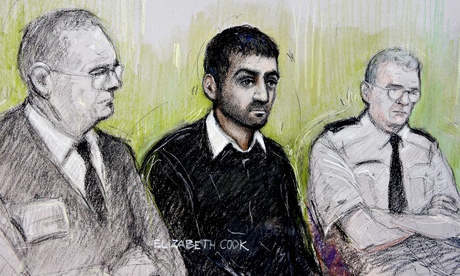
It was initially ordered that Erol Incedal’s trial be heard entirely in secret and, under the terms of a court order granted last year, he was to be identified only as AB. This secrecy was said to be necessary for the administration of justice.
After a number of media organisations, including the Guardian, challenged these restrictions, the court of appeal imposed a compromise arrangement.
Part of Incedal’s trial, for allegedly planning a terror attack in the UK, is now being heard in open court and part is being heard in complete secrecy, with the press and the public excluded.
However, part of the case – described by the court of appeal as its “core” – is being heard in secret sessions that 10 journalists, representing the media organisations that mounted the legal challenge, may attend.
They cannot report what they hear, however. At the end of the trial, the judge, Mr Justice Nicol, will decide whether these journalists will be permitted to report any of the evidence that they have heard.
Until then, they are expected to abide by the restrictions.
During the secret sessions, their mobile telephones are locked in a soundproof box. Their notebooks must be surrendered to court officials at the end of each day and are locked in a safe located within the court.
The journalists are also prohibited from making notes from memory, outside the court.
The court has said that the 10 journalists can discuss the case with their legal representatives but this can only be done in a confidential meeting.
This is defined as “a meeting that takes place in a room in which the door is closed and it is clear that no one can overhear from outside the room what is being said during the meeting”.
It is further stipulated that “mobile phones must be switched off and any telephone land lines must not be connected [ie the line open] to any internal or extern other telephone. No part of the meeting can be recorded and no notes made.”
The journalists have been told that if they breach these restrictions they will be in contempt of court, an offence that can result in imprisonment.
The eight women and four men of the jury have also been warned that they may be committing an offence if they discuss the case with anyone.
Incedal denies the charges.