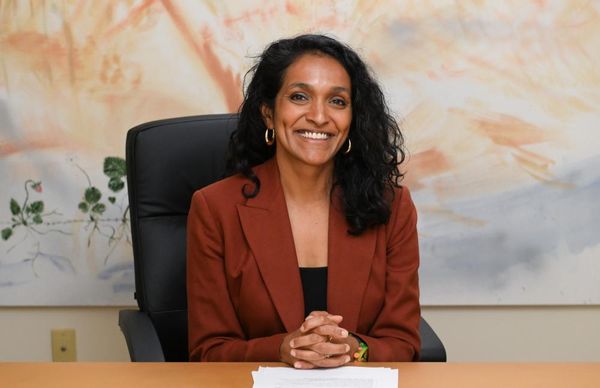
Vinita Devi, 23, is a very relieved person these days. Last month she gathered the courage to publicly celebrate her marriage with taxi driver Rakesh Kumar, nearly three years after they first sealed their union in a very quiet civil ceremony.
In doing so, she also sent a message to her community that widows will no longer submit to the dictates of men and be resigned to spending the rest of their lives alone and in misery.
Ms Devi lost her husband in June 2013 to flash floods in Rudraprayag, a district in Uttarakhand state in the lap of the Himalayas, 400 kilometres northeast of Delhi. Just 19 at the time, she was expected to never marry again. But she broke an age-old tradition by celebrating her second marriage on Oct 16 in Vrindavan, a city in western Uttar Pradesh famous for its associations with the Hindu god Krishna.
"Our marriage was solemnised with proper Hindu rituals. A large number of men and women were witness to it," Ms Devi and Mr Kumar say in unison as they describe the ceremony. A group of widows from Vrindavan also attended the function.
Fifty four men from Devlibhanigram, a cluster of seven small villages in Rudraprayag district, lost their lives during the flash floods that claimed thousands of lives across northern India in 2013. Thirty-four women -- some of them only in their 20s -- lost their husbands in the calamity. The community has since become known as the "widows' village".
Ms Devi's remarriage has touched off a heated debate and has also brought forward some men who appear willing to help other widows challenge the long-standing taboo.
"At least a couple of men from Madhya Pradesh state have approached me and offered to marry the widows and accept them with their children," says Bindeswari Pathak, head of the Sulabh International Social Service Organisation, a non-governmental organisation (NGO) that promotes human rights, environmental preservation, social reform and public sanitation. It operates 7,500 public toilet facilities and has helped build 1.1 million household toilets in India. It is also present in Nepal, Bangladesh, Bhutan and Afghanistan.
Mr Pathak played a major role in organising Ms Devi's marriage with Kumar. His group "adopted" Devlibhanigram in August 2013 and has since been distributing financial aid to the residents. It has been paying 2,000 rupees (about 1,010 baht) per month to each person in every family who lost one or more members in the floods. It also pays 1,000 rupees per month to other families. As well, it runs three vocational training institutes where every trainee is paid a monthly stipend. The institutes train people in skills such as computers and tailoring.
Vinita Devi's achievement has stirred great enthusiasm among other widows in Devlibhanigram. They are now less inclined to put up meekly with orders or abuse from men, yet most still lack the courage to follow in her footsteps.
"Remarriage is impossible. My in-laws will throw me out," Ms Dhanita, a 27-year-old mother of three children, said in an interview with Asia Focus. Widows in the community, she says, continue to be the object of taunts by other villagers, who say things such as: "Your misfortune claimed your first husband. What is the guarantee that your second husband will not die? Where will you go in that situation? How many times will you marry?"

Ms Dhanita is happy for Vinita Devi but says it would be better if the latter never visits Devlibhanigram, the home of her first in-laws. "Men will pass comments on her," she says. Ms Devi is now settled in Teliwara, a village about 50 kilometres from Devlibhanigram.
Savitri Tiwari, 27, another widow, was pregnant with her second son Nirgun when the tragedy claimed her husband Hemant. She says her society is against remarriage of widows. "It does not happen in our community. I cannot even think of it," says Ms Tiwari, who holds a postgraduate degree but earns her livelihood from tailoring and farming.
A few men in Devlibhanigram confide that they support remarriage by widows, but they dare not say so openly for fear of backlash. "No woman remarries in our place. If I speak up for it, the villagers will get together and attack me," Shankar Lal, a villager who earns his livelihood from crushing stones, tells Asia Focus.
When reminded that remarriage was not prohibited for men, Lal simply replies that men in the hills have always had the freedom to do what they liked.
Keshav Tiwari, 54, a former member of the district panchayat, or local council, said he had heard of only one remarriage in his lifetime, and that was Vinita Devi's.
"Widowhood is considered a symbol of purity in our society. This has been a very old tradition. I know of widows who are older than 70. People do not even wish to hear of remarriage and look down on it," he says.
The 2013 floods in northern India claimed 5,700 lives including 934 people from Uttarakhand state and caused widespread damage to property. The army, air force and paramilitary forces evacuated more than 110,000 people. The state government awarded compensation of 700,000 rupees for each death.
About 60% of the men in Devlibhanigram are employed as priests at Kedarnath, a famous Hindu pilgrimage site above the community that is home to about 1,500 people.
Dedicated to the Hindu god Shiva, the shrine attracts about 500,000 pilgrims from across India every year. It is open for only about six months of a year and is locked during the winter because of extreme weather and snowfall. The shrine is part of the Chota Char Dham pilgrimage circuit of four religious abodes -- Badrinath, Yamunotri and Gangotri are the others -- and is considered very sacred by Hindus.
For a long time Kedarnath was accessible only on foot or horseback but recently the government started a helicopter service.