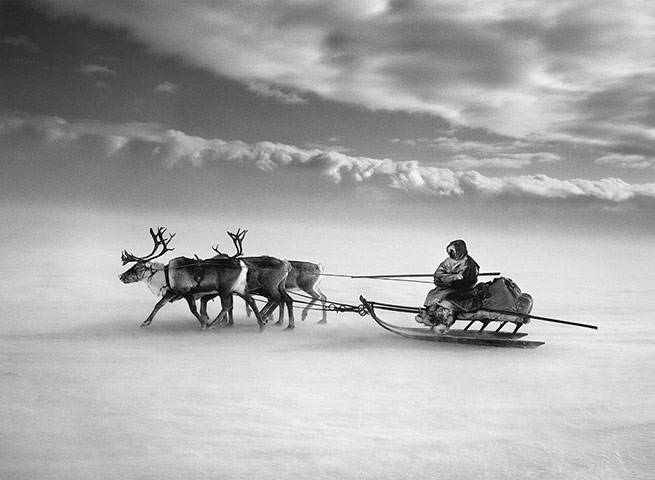
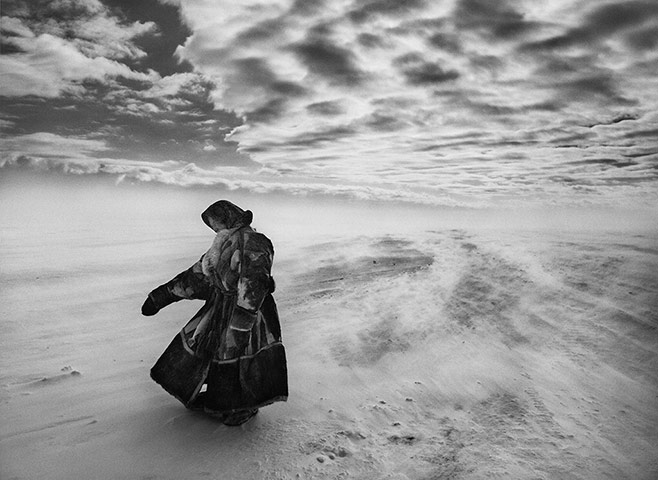
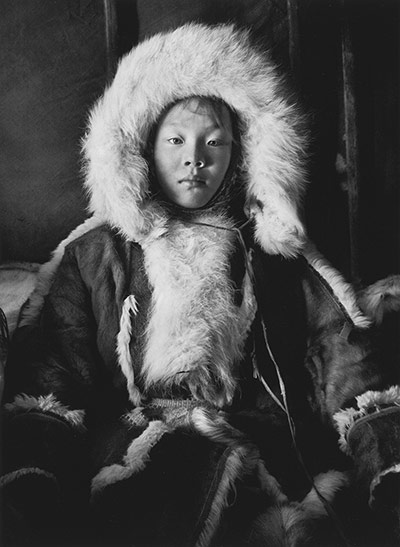
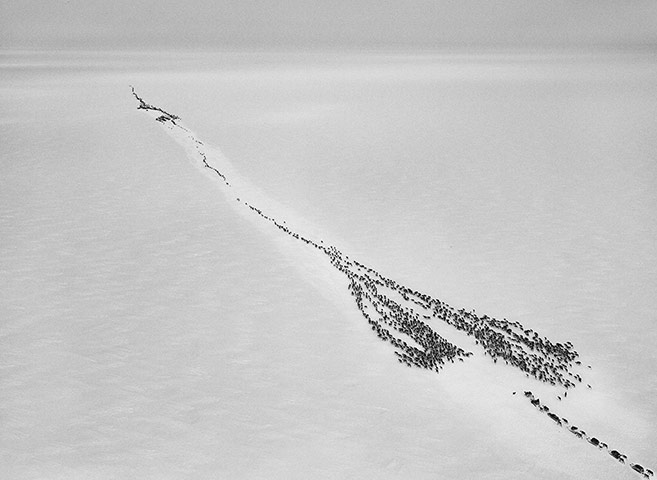
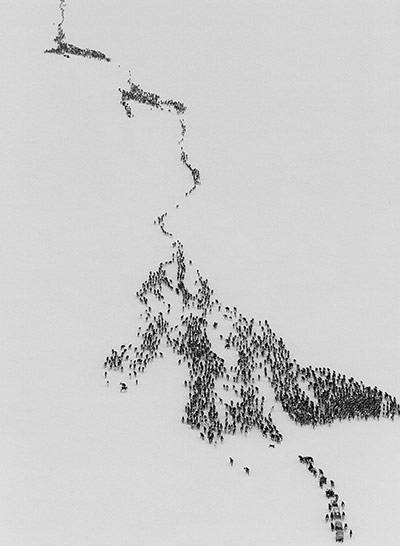
The larger sledges are driven by the women, with as many as 10 sledges forming a long caravan. The men drive smaller sledges since they go faster: it is the men’s job to regroup the herd around the camp each morning and, often with the help of dogs, to keep the reindeer moving in a single direction throughout the day. Photograph: Sebastião Salgado/Amazonas/nbpicturesWhen temperatures fall sharply and fierce winds blow, the Nenets and their reindeer may spend several days in the same place until milder weather allows them to continue their migration.Photograph: Sebastião Salgado/Amazonas/nbpicturesThis portrait of a young girl illustrates both the beauty of and the importance given by the Nenets to their clothes. Her main coat is made of the inside of reindeer skins, while her hood is made with the fur of blue fox.Photograph: Sebastião Salgado/Amazonas/nbpictures
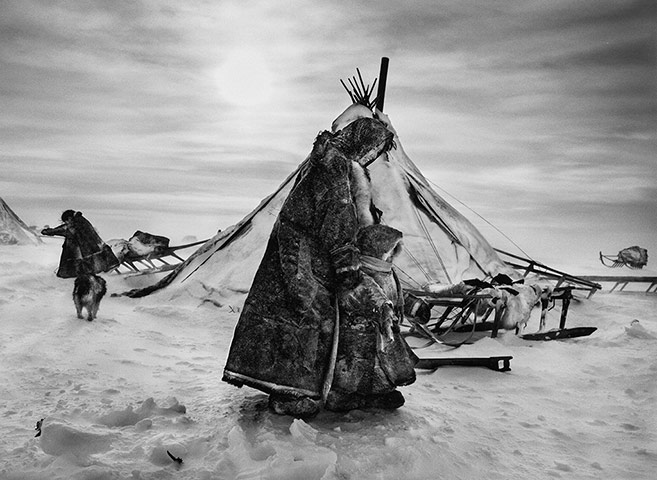
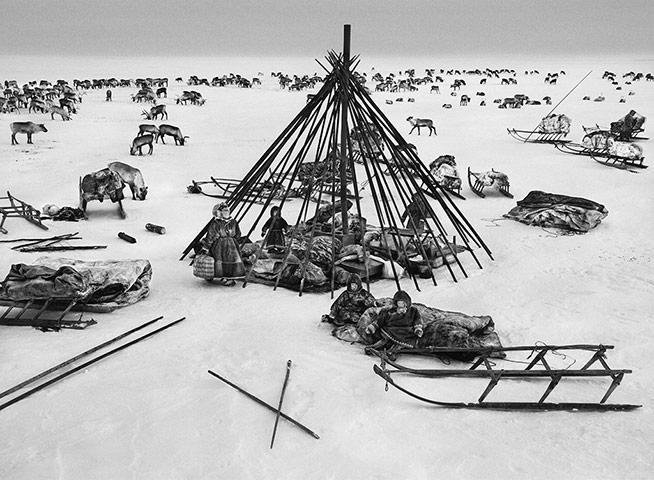
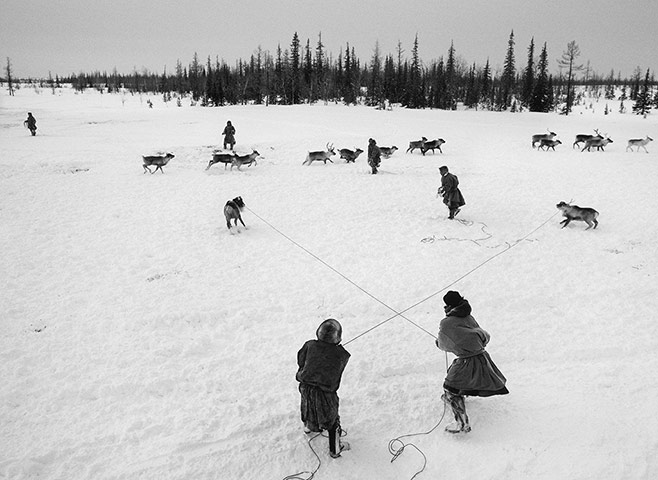
Crossing the Ob river to enter the Arctic Circle, travelling some 50km (31 miles) over ice. The way of life of the Nenets of the Siberian Arctic is inseparable from the reindeer. Every spring, they move enormous herds of reindeer from winter pastures on the Russian mainland, travelling more than 1,000km (620 miles) north to summer pastures in the Arctic Circle. This ritual is so old that it seems unclear whether the Nenets follow the reindeer, or vice versa. The migration starts in mid-March in freezing temperatures and is immediately challenged by the need to cross the frozen Ob river. But the Nenets take this in their stride, bolstered by a regimented work ethic and a robust culture. They survived early Russian colonisation of Siberia and the dark years of the Soviet regime, but are now being exposed to the perils posed by development of oil and gas fields in the far north. Photograph: Sebastião Salgado/Amazonas/nbpicturesNorth of the Ob river, about 100km (62 miles) inside the Yamal peninsula, fierce winds keep even daytime temperatures low. When the weather is particularly hostile, the Nenets and their reindeer may spend several days in the same place, doing repair work on sledges and reindeer skins to keep busy. The deeper they move into the Arctic Circle, the less vegetation is to be found.Photograph: Sebastião Salgado/Amazonas/nbpicturesThese caravans of sledges carry all the belongings of the families in the group. Usually the men take care of the reindeer, herding them with smaller sledges and sometimes with snowmobiles; the women and children ride on the caravans, which may be composed of as many as 10 sledges tied to each other, with one woman in charge. Photograph: Sebastião Salgado/Amazonas/nbpicturesAt the end of the day, after leading the herd north across the Yamal peninsula towards the Kara Sea on the Arctic Ocean, the Nenets set up their tent, or tchoum. They first put all their belongings in a circle on the ground, around which they place wooden supports covered with reindeer skins. Photograph: Sebastião Salgado/Amazonas/nbpicturesNorth of the Ob river, fierce winds keep even daytime temperatures low, as this image of a sled dog illustrates. Photograph: Sebastião Salgado/Amazonas/nbpicturesCrossing the frozen Ob river was a considerable achievement. We were some kilometres from the riverbank at 7am and, when we stopped 15 hours later, our GPS showed we had travelled 52km (32 miles). At this time of the year, the end of March, with the river covered by ice 1.2m (4ft) thick, the landscape was one uninterrupted sheet of whiteness. The Nenets only make such a long journey in a single day when they cross the Ob river since there is no food under the ice for the reindeer; on a normal day, they average some 20km.Photograph: Sebastião Salgado/Amazonas/nbpicturesIce cut out of a frozen lake is melted and the water used for cooking and drinking. The Nenets struggle to find enough fresh water and use it very sparingly, for instance rarely washing themselves. Photograph: Sebastião Salgado/Amazonas/nbpicturesThe Nenets in their tchoums. During the day, tchoums are not heated, but at the end of the day the Nenets use a wood-fired stove to cook their only hot meal of the day and to warm the tchoum. Photograph: Sebastião Salgado/Amazonas/nbpicturesAfter their dinner, the Nenets put out their fire and soon it is as cold (though not as windy) inside the tchoum as outside.Photograph: Sebastião Salgado/Amazonas/nbpicturesThe Nenets are the true cowboys of Siberia. Every morning, having rounded up reindeer that wandered off during the night in search of forage, they use a lasso to catch those reindeer needed to pull the sledges. They never leave their camp before noon, but will then travel for seven or eight hours. Photograph: Sebastião Salgado/Amazonas/nbpicturesThe Nenets’ diet is based on reindeer meat and fish. Every three or four days, they kill a reindeer by strangling it. They then remove the entrails, drink the warm blood and eat the uncooked liver, kidneys and heart. The rest of the meat, easily preserved in the cold, is left on a sledge, along with fish caught in ice holes, to be consumed when necessary.Photograph: Sebastião Salgado/Amazonas/nbpicturesThe caravan of sledges prepares to cross the Ob river. The trees here are much smaller than those 100km (62 miles) to the south and soon all vegetation will disappear.Photograph: Sebastião Salgado/Amazonas/nbpictures
Sign up to read this article
Read news from 100’s of titles, curated specifically for you.