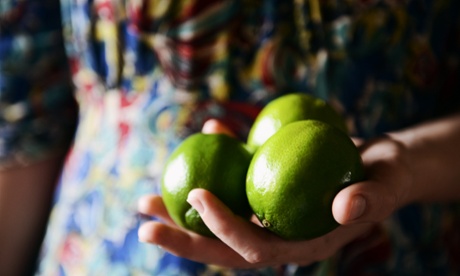
In Australia limes are at their best in late autumn. Look for heavy, fragrant fruit. There are a couple of varieties commercially available. Tahitian limes have large fruit and no seeds. West Indian limes have smaller fruit but are juicier. Kaffir limes are grown exclusively for their fragrant leaves, the fruit itself is bitter and quite dry but they are not without use.
The skin can be peeled and squeezed against the skin as a mosquito repellant, the smell being very close to citronella. In spring lime tree flowers are heavily scented and a tree makes a lovely addition to a backyard garden, or patio – they grow well in large pots.
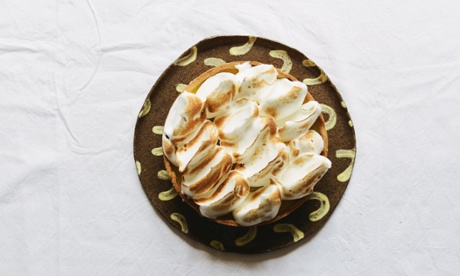
The lime is an incredibly versatile fruit, it is used in such varied cuisines, the juice, pulp, zest, leaves can all be used. Here we’ve made a lime curd and used it as the basis for a meringue pie.
But if you think the pie is too difficult, simply make the curd. It is delicious on toast, or spooned directly from the jar. The meringue pie is decadent and very sweet, the peaks of meringue caramalised on the outside, white and silky within, the curd perfectly tart. It is definitely a special occasion pie.
Lime Meringue Pie
There are four stages to this pie, but if you prepare the pastry and curd in advance you can assemble the pie on the day easily. It will need some time to rest and settle before it’s served but should be eaten on the same day.
Sweet Short Crust Pastry
Prepare your favourite recipe for sweet short crust in advance.
Blind bake the pastry in a flan tin, in a moderate oven, lining the pastry with baking paper and weighing it down with weights, rice or beans so it holds its shape. Bake for 10 minutes with the beans in place, then remove them and bake your pastry for another 10 minutes until the shell is cooked through and golden.
Lime Curd
Adapted from Stephanie Alexander’ Lemon Curd, The Cook’s Companion
4 egg yolks
2/3 cup caster sugar
60g unsalted butter
2 tsp grated lime zest
100 ml lime juice
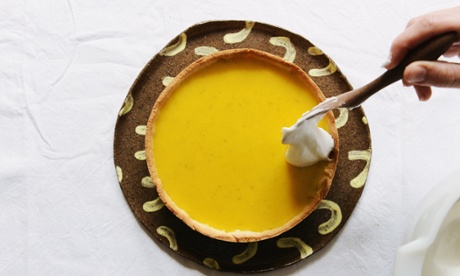
Whisk egg yolks and sugar until well combined but not frothy. Tip into a heavy-based non-reactive saucepan, add butter, zest and juice. Stirring constantly with a wooden spoon, bring to simmering point over a medium-high heat (around 5 minutes). As soon as bubbles appear, remove from heat, still stirring.
Allow to cool. You should be able to push your fingertip through a spoonful of curd and the curd should hold its form, not ooze into the path your finger has left.
Meringue
50g egg whites at room temperature
100g fine white sugar
¼ cup of water
Place sugar and water in a saucepan and on a moderate heat. Make sure you have a clean and dry bowl for whisking. Whisk egg whites until very stiff. While the whites are whisking get your sugar syrup to 120 degrees, best to have a candy thermometer for this. It is otherwise known as ‘soft ball’ stage in candy terms. When you’re whites are stiff slowly drizzle the sugar syrup in a thin steady stream into the stiff egg whites with the beaters are on low until the meringue is firm and glossy. Whisk it until it looks really shiny.
Assembling the Pie
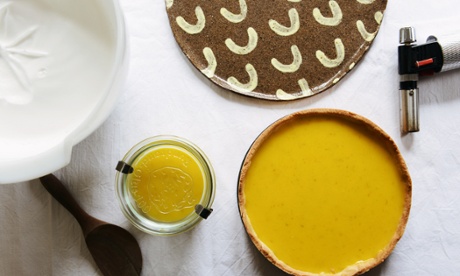
Line the cooled bottom of the pastry case with lime curd. Over the curd, very carefully add the desired amount of meringue mixture. To create peaks all over the top of your meringue use the back of a spoon and gently dab it over the top of the meringue pulling it up to little peaks.
If you have a chef’s blowtorch, cook the top of the meringue with the torch until golden. If not, place under a grill for short spurts and keep your eye on it, it will cook very quickly.
Allow to cool and settle, and refrigerate until serving.