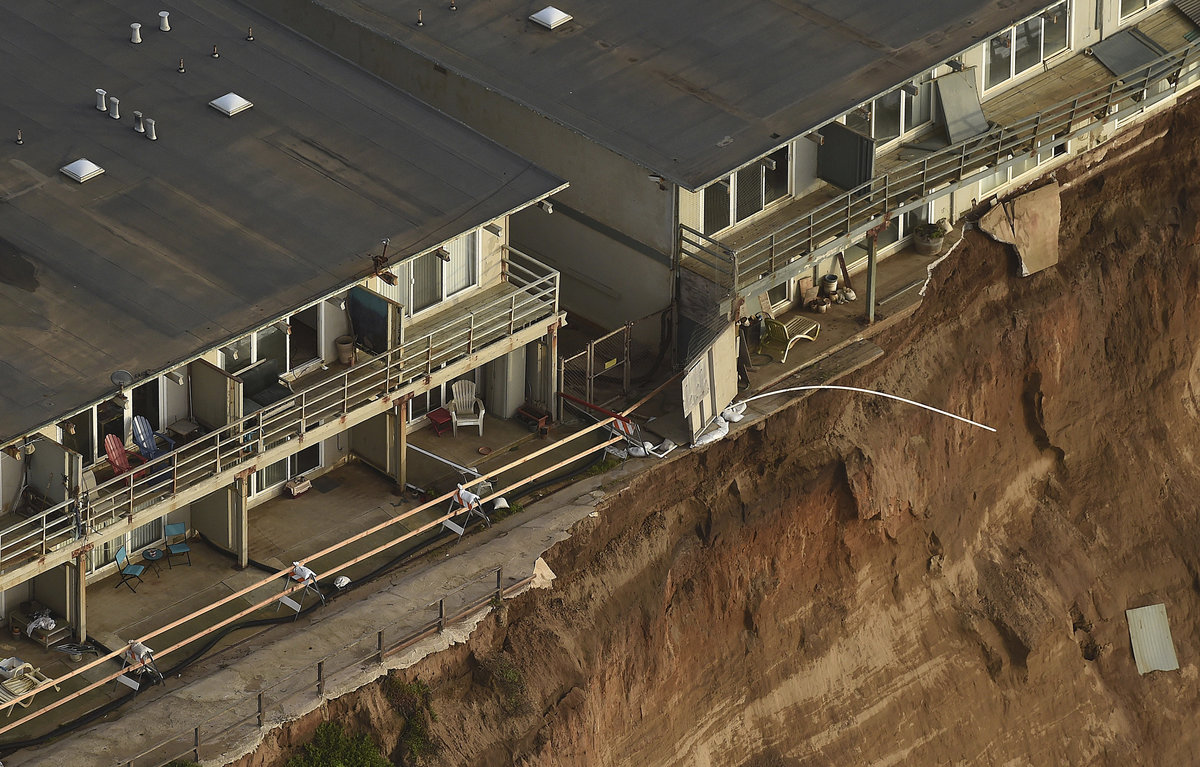
OSLO (Reuters) - Sea levels will rise between 0.7 and 1.2 meters (27-47 inches) in the next two centuries even if governments end the fossil fuel era as promised under the Paris climate agreement, scientists said on Tuesday.
Early action to cut greenhouse gas emissions would limit the long-term rise, driven by a thaw of ice from Greenland to Antarctica that will re-draw global coastlines, a German-led team wrote in the journal Nature Communications.
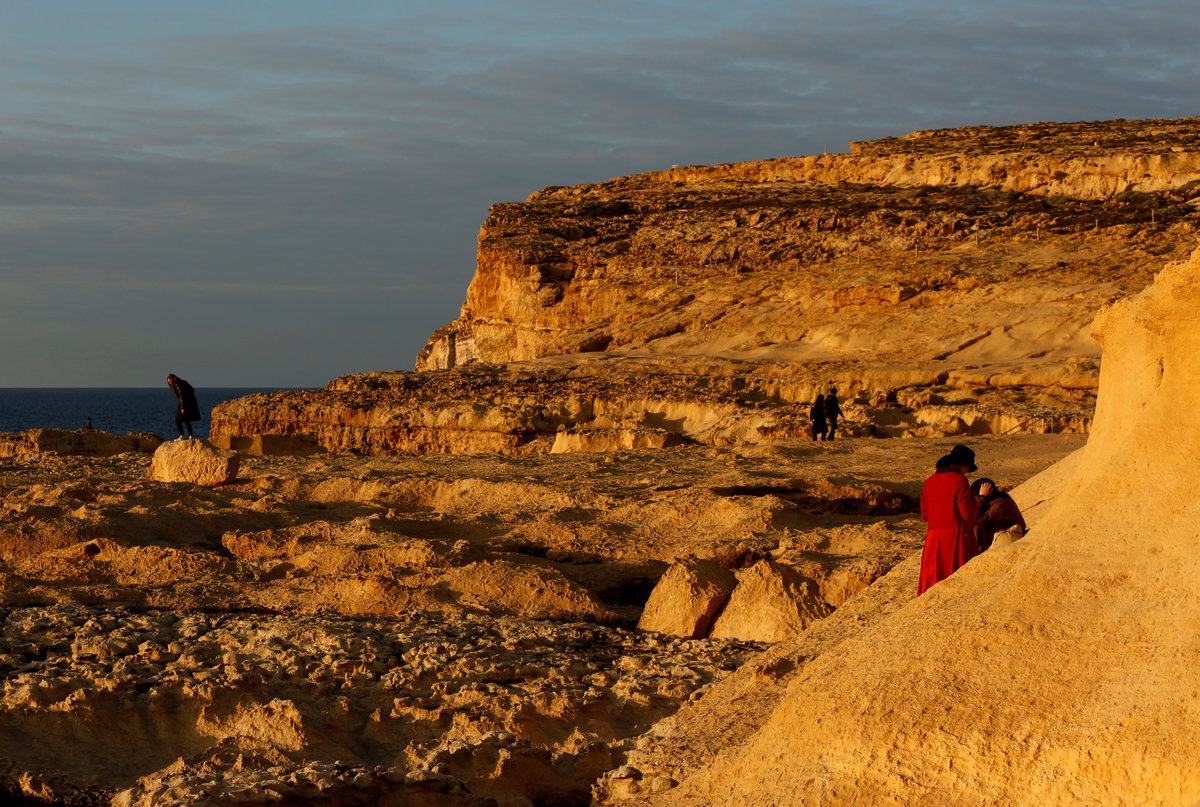
Sea level rise is a threat to cities from Shanghai to London, to low-lying swathes of Florida or Bangladesh, and to entire nations such as the Maldives in the Indian Ocean or Kiribati in the Pacific.
By 2300, the report projected that sea levels would gain by 0.7-1.2 meters, even if almost 200 nations fully meet goals under the 2015 Paris Agreement, which include cutting greenhouse gas emissions to net zero in the second half of this century.
Ocean levels will rise inexorably because heat-trapping industrial gases already emitted will linger in the atmosphere, melting more ice, it said. In addition, water naturally expands as it warms above four degrees Celsius (39.2°F).
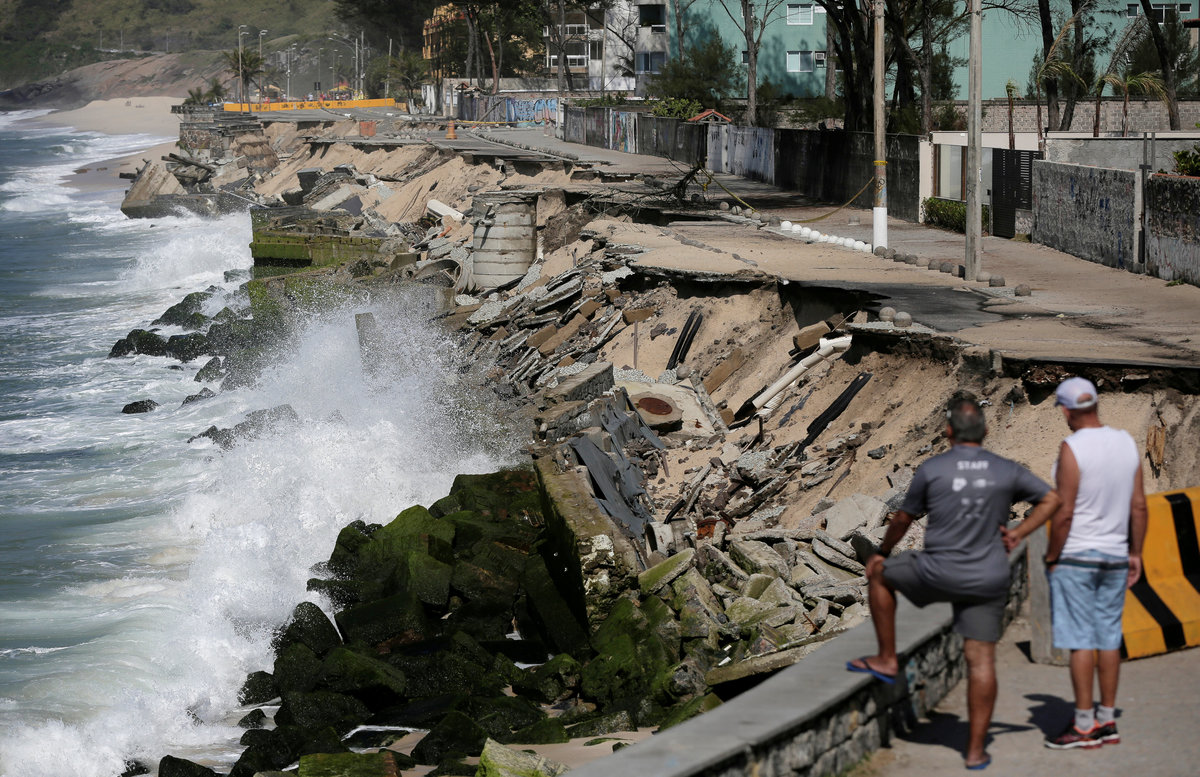
The report also found that every five years of delay beyond 2020 in peaking global emissions would mean an extra 20 centimeters (8 inches) of sea level rise by 2300.
"Sea level is often communicated as a really slow process that you can't do much about ... but the next 30 years really matter," lead author Matthias Mengel, of the Potsdam Institute for Climate Impact Research, told Reuters.
Governments are not on track to meet the Paris pledges. Global emissions of carbon dioxide, the main greenhouse gas emitted by burning fossil fuels, rose last year after a three-year plateau.
And U.S. President Donald Trump, who doubts that human activities are the prime cause of warming, plans to quit the Paris deal and instead promote U.S. coal, oil and natural gas.
Maldives Environment Minister Thoriq Ibrahim, who chairs the 44-member Alliance of Small Island States, said Tuesday's findings showed a need for faster action to cut emissions, especially by rich nations.
"Unfortunately, the study confirms what small island nations have been saying for years: decades of procrastination on climate change have brought many of us to the brink of inundation," he told Reuters.
Professor John Church, of the Climate Change Research Centre at the University of New South Wales, who was not involved in the study, said 100 million people now live within one meter of the high tide mark.
"More people are moving to live within the coastal zone, increasing the vulnerable population and infrastructure," he said in a statement. "Adaptation to sea level rise will be essential."
(Reporting by Alister Doyle; Editing by Catherine Evans)