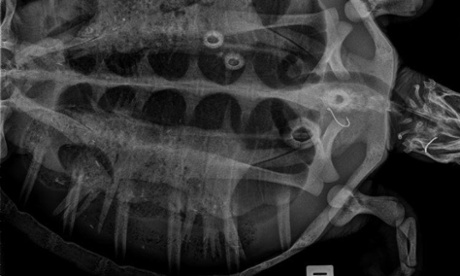
Rates of marine animals needing treatment for ingesting plastic bags, balloons and other waste in Australian waters have “accelerated dramatically” in the past decade, according to veterinarians, the toll of more than five trillion pieces of plastic floating in the world’s oceans largely unseen.
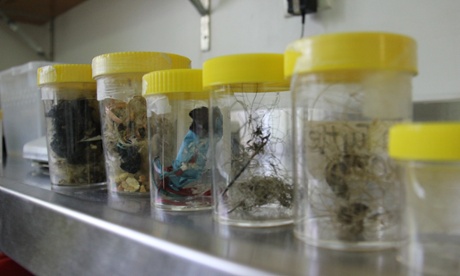
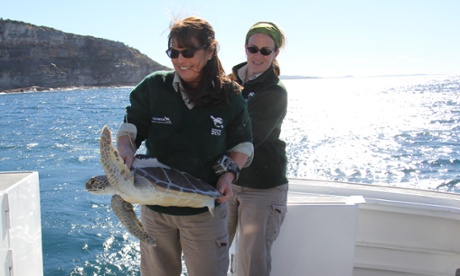
The manager of Sydney’s Taronga Zoo wildlife hospital, Libby Hall, said unprecedented numbers of turtles were being treated by the centre. Some had consumed so much waste that they regularly excreted scraps of balloons or slivers of plastic bags.
“Every day we clean out the pool the turtles live in, and there’s plastic debris in there,” the hospital’s manager, Libby Hall, said.
“The process and the number of animals it’s affecting has accelerated dramatically over the past 10 years.”
Research published last August found “alarming” rates of microplastics in Sydney harbour, far higher than in similar areas overseas.
Hall said around 80% of this plastic came from litter that washed into gutters and made its way out to sea.
As it becomes part of vast islands of floating rubbish, a December study found the waste was shredded and disintegrated into tiny, barely visible particles that are easily swallowed by dolphins, whales and fish. “That means we’re eating the plastic,” Hall said.
She urged people to watch where they threw out their coffee cups, cigarette butts, food packaging and plastic bags – even the biodegradable kind.
“Biodegradable bags might degrade in the soil, but they’re certainly not degradable in the ocean,” she said.
Poor waste management practices and increasing rates of consumption in the developing world could one day result in as much as plastic as fish in the world’s waterways and oceans, environmental groups have warned.
A campaign called Take 3 is trying to raise awareness of the issue, urging Australians to take three pieces of rubbish with them whenever they leave a beach or waterway.