
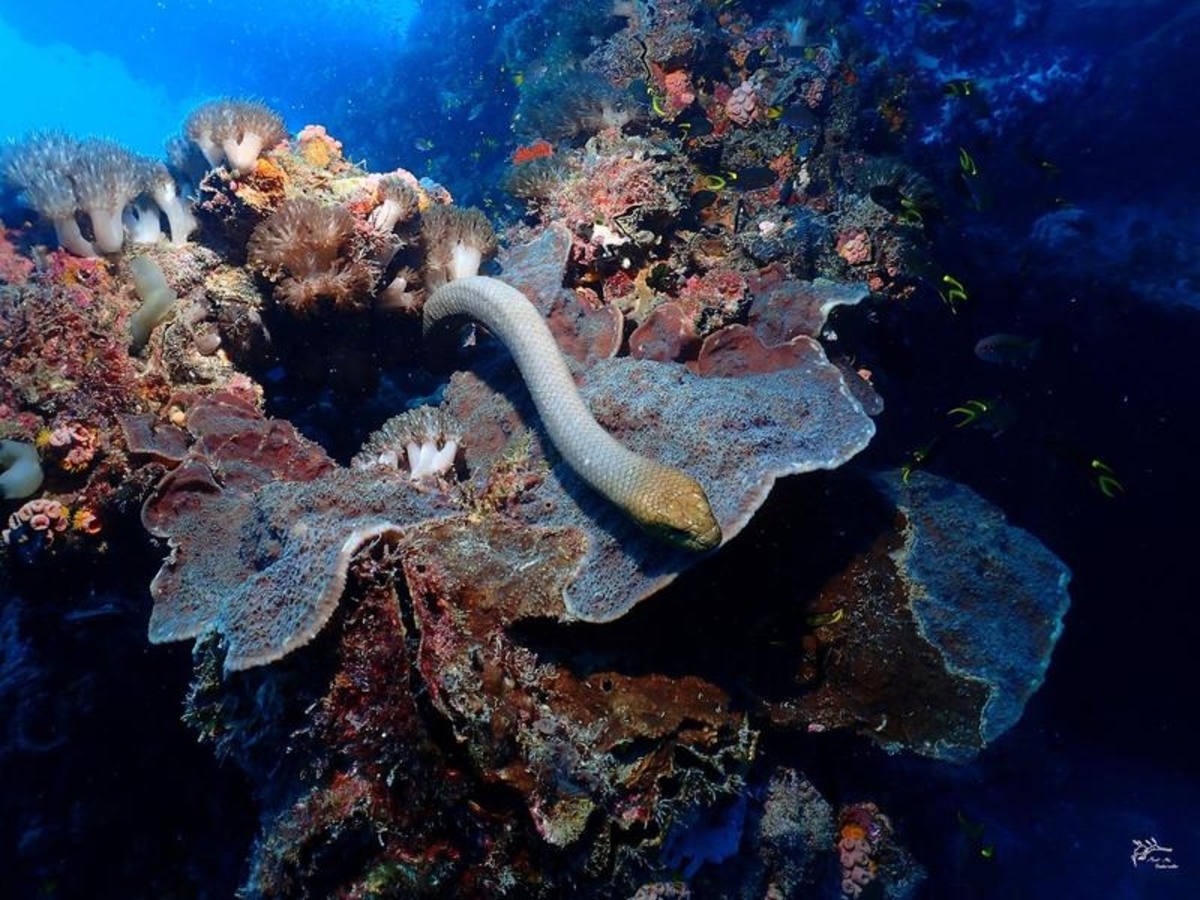
Attacks by highly venomous olive sea snakes on scuba divers may in fact be misdirected courtship, researchers in far north Queensland say.
A report into frequently unprovoked attacks by sea snakes from the mid 1990's shows male snakes charged at divers immediately after an unsuccessful chase of a female, or an interaction with a male rival.
Through the analysis of data collected between 1994 and 1995 researchers found just under half of encounters involved the snake approaching divers on the Great Barrier Reef.
Previous research has suggested sea snakes find it difficult to identify shapes in water.
"They will tongue flick them, which is a snake's way of smelling stuff, they will sometimes coil around their arms or legs, which is what they do when they're trying to mate," Dr Ross Alford from James Cook University told AAP.
"Charges by females occurred after they were chased by males or lost sight of, and then re-approached, the diver.
"We don't think they're attacks, although they're often recorded as attacks because if a snake swims quickly and starts looking like it's getting its head very close to you, lots of people will just get terribly worried about that.
"And of course, if you think you're being attacked, then you're likely to do things that will make things worse like trying to get the snake or try and swim away from the snake."
Dr Alford added that during the study, thirteen encounters involved sea snakes rapidly charging at the diver.
But while they are highly venomous, he said olive sea snake encounters are very unlikely and anti-venom is prevalent at hospitals in the region.
The snakes mate during Australia's winter months between May and August, which is when most encounters are recorded.
And while the snakes are big and noticeable on the reef, Dr Alford says they're usually found foraging for food.
"The males are a lot more conspicuous because when they're on the reef they're swimming around looking for females. And when they are away from the reef, you don't see them because they're out the ocean foraging somewhere.
"They eat pretty much anything they can catch; sea snails, fish and shrimp."