As with every event in the development area this year, one of the hot topics at the coming AfricaSan will be the post-2015 agenda. Rightly so: the Sustainable Development Goals (SDGs) will heavily influence upcoming AfricaSan editions - and the status of the Wash sector in Africa - for many years to come.
The Millennium Development Goals (MDGs) were likely the most ambitious development project ever taken on by the global community. The final report is still to be published but it’s already clear we haven’t reached 100% of what we set out to accomplish. In our sector for instance, the world has boosted access to drinking water, but will fall short of reaching the target on sanitation. And we remain a long way from the idea of universal access.
The shortcomings of the MDGs are pushing world leaders to have an even more ambitious vision of the future, putting the progressive elimination of inequalities at the heart of the impending Sustainable Development Goals (SDGs). They represent a fundamental paradigm change, as they will no longer be a vision by the rich for the poor, but rather a development agenda that’s crafted by all for all.
Currently, several discussions are taking place on the format and modalities for monitoring the progress of the goals, their targets and indicators. The UN secretary general, in his synthesis report referred to the main elements of the future review and follow up process, namely a country-led national component, a regional component for peer reviewing, as well as a global component which would be convened annually under the auspices of the high level political forum (that replaced the Commission on Sustainable Development). In addition to these, thematic reviews should be carried out relying on relevant coordination and review platforms – which could be linked with existing partnerships.
Since the national review segment is the closest to the people, this should also be the most significant. Governments should be in the driver’s seat, but must involve different stakeholders throughout the whole process, such as civil society, donors, business, parliaments, local governments and academia.
What I came to realise after talking to many people involved in the development of the post-2015 agenda is that the Wash sector is already one step ahead when it comes to follow-up and review. Our sector has been implementing and perfecting a self-monitoring system for the last five years in the form of the Sanitation and Water for all (SWA) partnership. I not only believe that SWA is well placed to play a major role in the follow-up and review process of the SDGs, but also that through the partnership, the WASH sector could become a case-study for other sectors that are looking for ways to track progress on the different SDG Goals. Let’s see:
• Every two years, SWA countries and donors partners table commitments on WASH that are then monitored annually.
• Results are made publicly available and partners are encouraged to exchange learnings. This dialogue occurs at the highest of levels during SWA’s high level meetings and sector minister meeting (aligning both donors and developing countries and finance and Wash-sector ministers), but also at the technical level through regular Partnership meetings, webinars, case-studies and other communications platforms.
• Monitoring commitments and reporting to the international community is voluntary, but SWA’s structure encourages participation from other stakeholders, especially civil society, in the different parts of the process, from developing the commitments to the content of the regular report.
• Countries and donors stated that through SWA they stayed focused and developed commitments that really tackled their WASH bottlenecks. This happened because SWA is structured to stress the importance of using Joint Sector Reviews and evidence-based tool to support decision-makers, such as the UN-water global analysis and assessment of sanitation and Drinking-Water (GLAAS) report.
SWA is partner-led and partner-governed, with a heavy representation of African countries and organisations. They are the ones that have the experience of what works and doesn’t when it comes to implementing international commitments at national and local level.
My expectation for the upcoming AfricaSan conference is that it will be a platform for dialogue and decision at just the right moment. A moment where we must consider what a robust follow-up and review process for any possible WASH-related goals, targets or indicators should look like. As such, AfricaSan 4 will lay a firm foundation for the achievement of the SDGs.
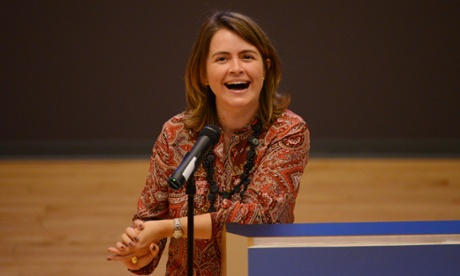
Catarina de Albuquerque is SWA Vice-Chair
Content on this page is paid for and provided by WSSCC, sponsor of the Guardian Global Development Professionals Network.