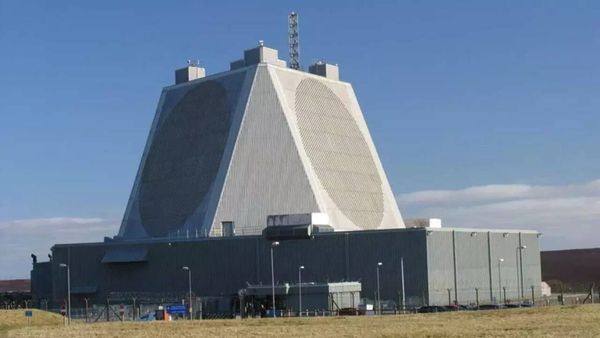
There have been a number of cases in which foreign capital has been used to purchase land that is important for Japan's security. It is important to understand the situation and take appropriate measures.
The government intends to establish new legislation to monitor the sale of land around Self-Defense Forces bases and on remote border islands. It said the government will submit a bill for the new legislation to next year's ordinary session of the Diet, after discussions by a panel of experts that will be newly established.
Prime Minister Yoshihide Suga has instructed National Public Safety Commission Chairman Hachiro Okonogi, who is in charge of territorial issues, to study the details of this matter. Okonogi must identify issues and take action quickly.
The purchase of land with foreign capital has been a problem in the past as well. Companies funded by South Korean capital have purchased land around the Maritime Self-Defense Force base on the island of Tsushima, which is part of Nagasaki Prefecture, and Chinese or China-affiliated companies have been revealed to have made large-scale acquisitions of resorts in Hokkaido and other areas in Japan.
In the national security strategy adopted by the Cabinet in 2013, the government clearly stated that it "will strive to understand the situation and study how the use of land and other matters should be handled" with regard to land ownership on remote border islands and around defense facilities and other key places. Accurately understanding the current situation is an essential task.
The Cabinet Office and other government bodies have dispatched officials to different locations to investigate, but it has been difficult to assess the real situation of land transactions partly because there is no legal authority to investigate. In many cases, the names on the real estate registration have not been changed, and even determining the nationality of the owners is said to not be easy.
The new law is expected to make it possible to investigate the nationalities of land owners and the purpose of purchases, from the perspective of security.
In this regard, an idea is said to have emerged that the new law will designate land around SDF bases and nuclear power plants, as well as on remote border islands that serve as outposts for territorial waters and exclusive economic zones, as subjects of investigation.
If such land is acquired by foreign capital, risks could emerge such as the inside of facilities being monitored or land being used as bases for terrorism and crime.
An effective system must be put in place in tandem with the new legislation, including the securing of investigative personnel. Cooperation with local governments will also be essential.
The government should investigate the actual situation and then study such measures as making it compulsory to report transactions. The government could also consider identifying vital plots of land and directly buying them up.
The population of remote border islands is declining at a rapid rate. Once they are uninhabited, the risk of illegal entry from abroad will increase. It is important to take measures to stimulate industry and tourism while local communities still exist.
Promoting remote islands will lead to territorial preservation. The government must devise further measures to provide more support for the islands.
-- The original Japanese article appeared in The Yomiuri Shimbun on Oct. 18, 2020.
Read more from The Japan News at https://japannews.yomiuri.co.jp/