Sure, offensive tackles grab the headlines, and prospects that have a chance to be drafted on the edge of the offensive line want to make that stick in the NFL. Because that is going to translate to a bigger contract when it is time for your second deal in the league.
But there are only two tackle spots up front, and three in the interior line. Yes, perhaps guards and centers are devalued a bit come draft time, as well as in free agency, but study Tom Brady sometime and ask yourself this: What bothers him more, pressure off the edge, or pressure in the interior?
Guards and centers matter schematically. So you better have some good ones. Teams looking to address these positions would be wise to keep these eleven players in mind.
1. Cesar Ruiz, IOL, Michigan

Height: 6’3″ Weight: 307
40-Yard Dash: 5.08 seconds
Bench Press: 28 reps
Vertical Jump: 33 inches
Broad Jump: 9 feet 6 inches
3-Cone Drill: 7.91 seconds
20-Yard Shuttle: 4.64 seconds
60-Yard Shuttle: N/A
Bio: Cesar Ruiz was the top center prospect in the country coming out of IMG Academy, and had no list of suitors. Ruiz joined IMG Academy after starting his high school career in Camden, growing up in a very tough neighborhood. Almost 30 schools gave Ruiz a scholarship offer, including Florida, Auburn and North Carolina, but he chose to play for Michigan.
Ruiz was pressed into action early, starting in Week 10 of his freshman year and finishing the season as the Wolverines’ starting right guard. He was moved to center for the 2018 season and started every game for Michigan that season. He locked down that spot for the Wolverines again last season.
Ruiz’s story is also one of personal tragedy. His father passed away in December of 2007, when Cesar was only eight years old. His father, Cesar Edwin Ruiz, had pulled over to the side of the road to help another driver with a flat tire. A driver then collided with both the elder Ruiz and the stranded motorist, killing Ruiz’s father. It was two years later that Ruiz turned to the sport of football, putting him on a path towards the NFL. As he told the media during the Scouting Combine, everything he does, he does with his father on his mind.
Stat to Know: Ruiz allowed just three sacks on 2,116 snaps while at Michigan.
Strengths: Ruiz is a versatile offensive lineman, given his experience at both guard and center. On film he displays good lateral quickness with fast hands, and he is usually the first to initiate contact in pass protection and starts with the advantage as a result. His athleticism is something to behold, as his impressive 20-yard shuttle (95th percentile) illustrates. He is quick when asked to long pull to the outside, and shows the athleticism, footwork and vision to consistently climb to the second level and take on linebackers.
In pass protection, Ruiz is extremely aware, constantly scanning for loopers or twisters and if uncovered, he is always looking for work. He displays good awareness and recognition of blitzers, whether early or late in the snap, and he is adept at handling/passing off interior stunts and twists. He also maintains control of the situation when a defensive lineman attempts a secondary pass rushing move, and is able to counter those attempts with ease. He also fights hard to maintain his anchor, or reanchor his base, against slanting bull rushers who have a leverage advantage pre-snap.
Ruiz is also a finisher. He will block his assignment until the whistle – or a little longer if he wants to – and loves to get his guy to the turf. Ruiz does a solid job of continuing to chug his feet post-contact, leading to his reputation as a finisher. He also has what you can describe as textbook “secondary” technique. For example on some zone running schemes he uses a rip technique of his own to counter the initial contact from the defender and get himself to the outside.
Weaknesses: Ruiz tends to drop his eyes before contact, which leads to some whiffs either at the point of contact or in space when he is pulling or working to the outside on a zone running design. There are questions about his athleticism, and therefore his ability to fit in a zone-heavy scheme, but on film he displayed to me the athleticism and technique to operate in such an offense.
Conclusion: Ruiz has the experience, athleticism, strength and mental approach to be a stout interior offensive lineman in any NFL system. He uses his hands and feet well, he wants to finish plays on every snap, he is always looking for work and fights to the whistle every chance he gets. Set to turn 21 this summer, the sky could be the limit for this Michigan offensive lineman.
Comparison: Pro Football Focus compared him to Maurkice Pouncey, and that seems apt given what Ruiz offers as a prospect. There are some flaws but he is a very complete player.
2. Jonah Jackson, IOL, Ohio State

Height: 6’3″ Weight: 306
40-Yard Dash: 5.23 seconds
Bench Press: 28 reps
Vertical Jump: 26 inches
Broad Jump: 8 feet 2 inches
3-Cone Drill: 7.83 seconds
20-Yard Shuttle: 5.02 seconds
60-Yard Shuttle: N/A
Bio: Jonah Jackson was a two-way player in high school, starring for Penncrest High School in Media, Pennsylvania. He played both offensive line and defensive line, and entertained offers from Monmouth, Massachusetts and Albany. He ultimately enrolled at Rutgers, and started inside at both center and right guard back in 2017. In 2018 Jackson was the team’s starting right guard for the entire campaign. He transferred to Ohio State as a graduate, and started each contest for the Buckeyes last season at left guard.
Stat to Know: According to charting information from Pro Football Focus, Jackson has allowed just one sack – and zero quarterback hits – over the course of his entire collegiate career.
Strengths: Similar to Ruiz, one has to appreciate Jackson’s approach to the position. He has great length for the position, and he uses that to his advantage in both the running game and in pass protection. He is often the first to initiate contact, forcing his defender to counter and adjust their approach, and it gives Jackson the upper hand on many snaps. He loves to get into defensive linemen and not let go, driving them back and finishing the play.
Jackson works combination blocks very well, with good feel for when to come off the first block and work to the second level.
With his penchant for striking the first blow, Jackson has developed an ability to reset and adjust to defensive lineman when they employ counter moves on him. An example of this in action comes from his game against Northwestern:
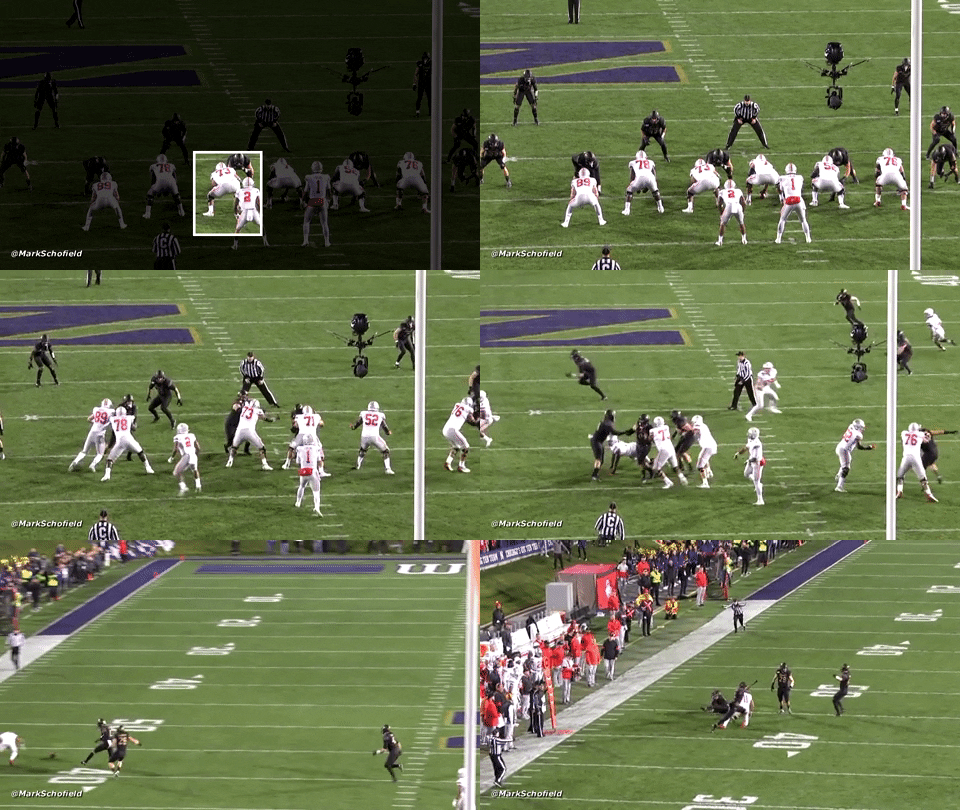
Jackson gets his hands into the defensive tackle first, forcing the DT to adjust his pass-rushing plan. The DT then tries to swim and rip Jackson by working to the outside, but the guard’s hands are so quick that he immediately gets back into the DT’s chest, driving him away from Justin Fields in the pocket.
Jackson displays ideal lateral movement skills in pass protection situations, using his feet well to mirror the nearest threat and then dropping the anchor after contact, setting up a stone wall for the defender to fight through. When uncovered he scans for threats well, and can handle stunts and twists at a sufficient level. Jackson will also use a quick set at times, and even when he does he displays the quickness to recover if the plan of attack changes from the defensive tackle:
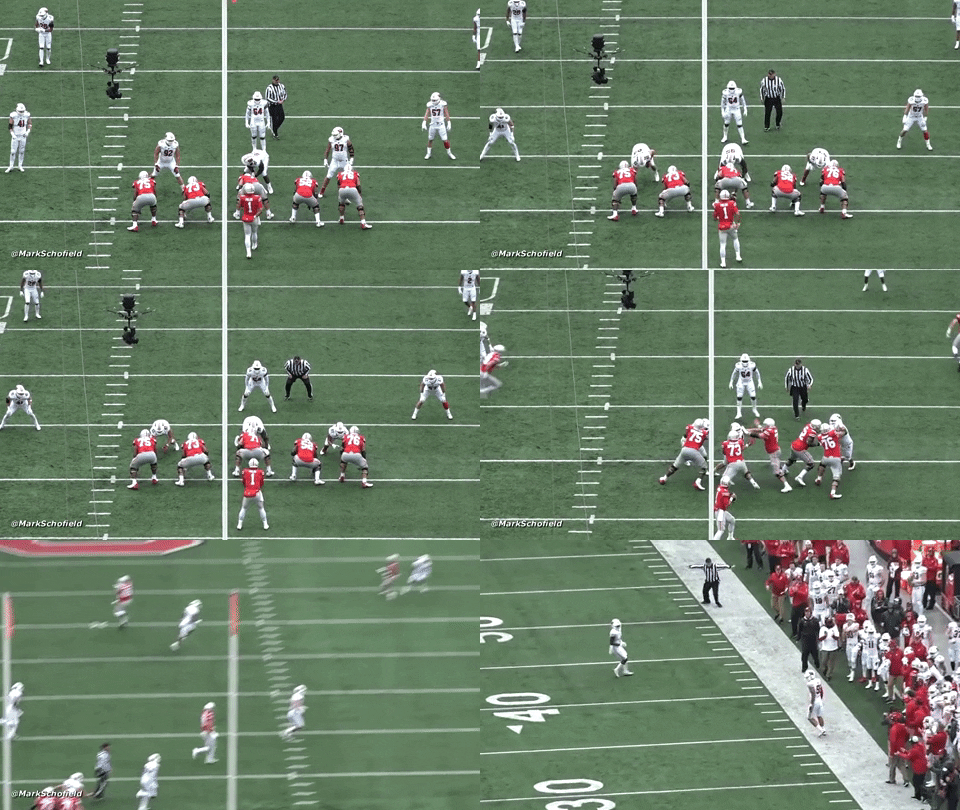
Here, Jackson short-sets to the outside, but the defensive tackle tries to knife inside of him. On this play you see the guard’s lateral quickness, as he can shuffle his feet quickly enough to cut off the defender’s path and prevent a free rush at the QB.
Weaknesses: Similar to Ruiz, there are not too many holes in Jackson’s game. He might already be close to his ceiling, given his age. He is not the strongest member of this class, and wins more with his technique than he does by overwhelming his opponent with power. But if you are looking for a solid plug and play guy with experience at both guard spots in multiple systems, Jackson is your man.
Conclusion: The Ohio State product is as solid as it gets in the interior offensive line. Ruiz has a higher ceiling, given his relative age and ability to play both guard and center, but what Jackson brings to the table is a Day One starter at either guard spot with refined technique, a finisher’s mentality and the mental approach to keep defenders guessing when he is tasked with pass protection.
Comparison: Jackson’s ceiling could mirror what we are seeing right now from Brandon Brooks, who is becoming one of the best guards in the league. Jackson’s experience, technique and mental approach have him on that kind of path.
3. Netane Muti, IOL, Fresno State

Height: 6’3″ Weight: 315
40-Yard Dash: N/A
Bench Press: 44 reps
Vertical Jump: N/A
Broad Jump: N/A
3-Cone Drill: N/A
20-Yard Shuttle: N/A
60-Yard Shuttle: N/A
Bio: It is rare to encounter a “living legend” during the scouting process, but to listen to his teammates tell the tales, Nehane Muti is one such player. According to the Pro Football Focus draft guade his Fresno State teammates viewed him as a “mythical being,” telling Paul Bunyan-esque tales of him lifting a moose by himself or crushing a 10-by-10 from In-N-Out on his own.
Prior to college, Muti was a two-star recruit coming out of Leilehua High School in Hawaii. Muti originally signed to stay home and play defensive tackle for the University of Hawaii, but when he learned that his application was on hold, he was released from his scholarship and signed with Fresno State to avoid losing a year of eligibility.
Muti struggled with injuries over the past few season, but on film he brings some of those mythical tales to life with his play.
Strengths: We can begin there, with his strength. Muti has one of the strongest – if not the strongest – upper body of this group. He was determined to set the bench press record at the Combine and while he fell just shy, his bench press prowess translates to the field. He has great power behind his hands and can generate a big punch on a defender with minimal load or windup. He can work combination blocks well in the running game and is agile enough to get to the second level when needed.
In pass protection, Muti uses his upper body and lower body in concert well, building his house from the insteps of his feet through his hands. He can anchor himself into the turn and use pure strength to wall off a rushing defender. Here is a great example of this showing up on film:
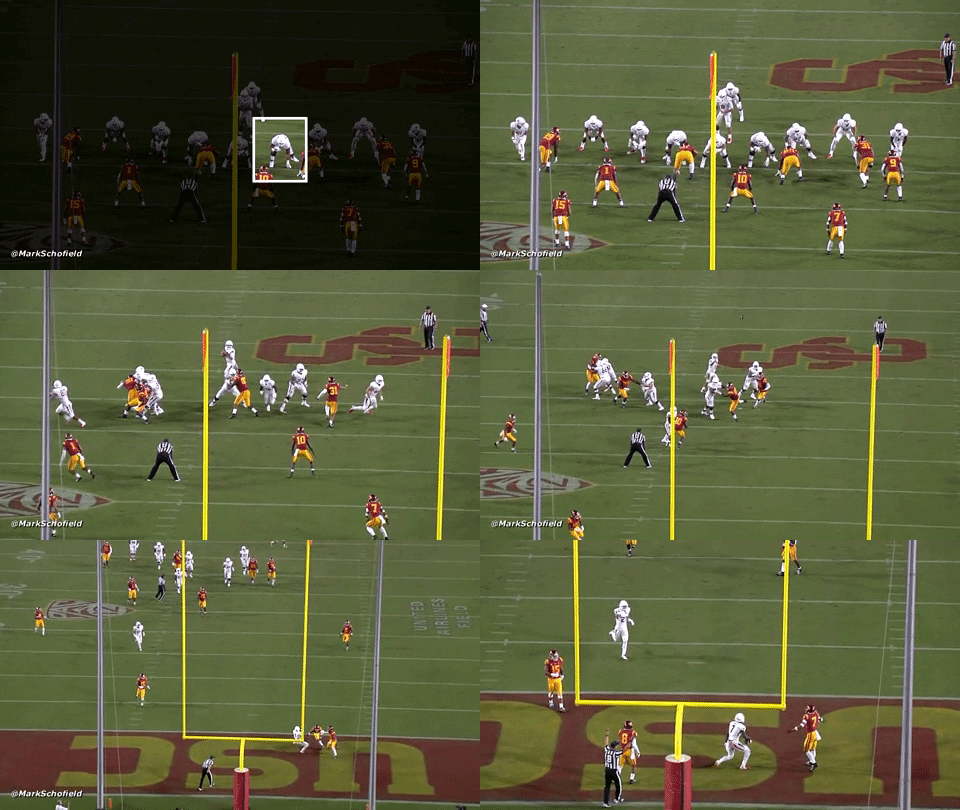
There is a lot to highlight on this one play. Muti begins by expanding his frame after the snap, forcing the defender to choose his approach. Once the defensive lineman tries to cut inside, Muti gets his big hands on him and controls him with his upper body strength. But then he drops the anchor with the lower body, carving his feet into the Coliseum turf. Pay attention to the instep of his feet, as he uses them for leverage against the defender. When someone discusses “building their house” as a pass blocker, this is what it looks like.
Returning to his upper body strength, Muti even wins when he loses the initial fight. He can rely on his brute force to twist defenders with his arms and wrestle them away from the ball-carrier or the quarterback.
Weaknesses: What drops Muti below the other two players is the scheme fit. His upper body strength and film illustrate a perfect gap/power guard, but when he is tasked with pulling or reaching on zone blocking designs, his athletic limitations are on display. He can execute those blocks, but his best fit is in a gap/power scheme.
There is also the injury history. Muti suffered season-ending injuries each of the past few years, with both a torn Achilles and then with a Lisfranc fracture in 2019. He was cleared to participate fully at the Combine, but decided to just throw the weight around and complete his testing at his Pro Day. When that was canceled due to the COVID-19 crisis, he did not get an opportunity to finish his agility and running drills. Teams might have medical concerns that they cannot address before the draft.
Conclusion: Even with those concerns, Muti is a powerhouse of a guard. His brute strength at the point of contact and ability to anchor against defenders in pass protection make him a solid option in the interior. There will be questions about his versatility and scheme fit, and the medical issues are something to keep in mind, but as the draft gets into Day Two there are certainly worse options at the interior spots along the offensive line.
Comparison: Muti’s power at the point of attack is reminiscent of Andrew Norwell, who relied on a blend of power and technique on the inside to be a force as a run-blocker and also in pass protection.
4. Nick Harris, IOL, Washington

Height: 6’1″ Weight: 302
40-Yard Dash: 5.1 seconds
Bench Press: 20 reps
Vertical Jump: 29.5 inches
Broad Jump: 8 feet 7 inches
3-Cone Drill: N/A
20-Yard Shuttle: N/A
60-Yard Shuttle: N/A
Bio: Nick Harris was a three-star offensive lineman coming out of Junipero Serra High School in California during the 2016 recruiting class, but his phone was not exactly ringing off the hook. Washington was the only FBS program to offer him a scholarship, so Harris joined the Huskies.
He has been a part of Washington’s offensive line the past four seasons, beginning back in 2016 as a true freshman. Harris started four games, seeing time at both guard spots. He spent his sophomore season as the starting right guard for the Huskies, and was moved to center for his junior season and has been Washington’s starting center the past two years. Harris parlayed his senior campaign into a spot down in Mobile for the Senior Bowl.
Stat to Know: Pro Football Focus charted Harris with just four sacks allowed over the past three seasons, during which he played 1,244 pass-blocking snaps.
Strengths: There is a reason many evaluators look at Harris and see a scheme-specific center for zone blocking teams. His lateral movement skills and ability in space jump off the film when you are studying him. Harris is able to get in front of plays and operate in space, and Washington’s offense tasked its offensive lineman with blocking on a ton of screens and run/pass option plays that required Harris to move sideline-to-sideline. On zone blocking designs Harris is at his best. He hustles and uses every trick in the arsenal to execute those reach blocks or get his helmet in front of his nearest defender.
A great example of how Harris functions in a zone scheme is this play against the University of Utah:
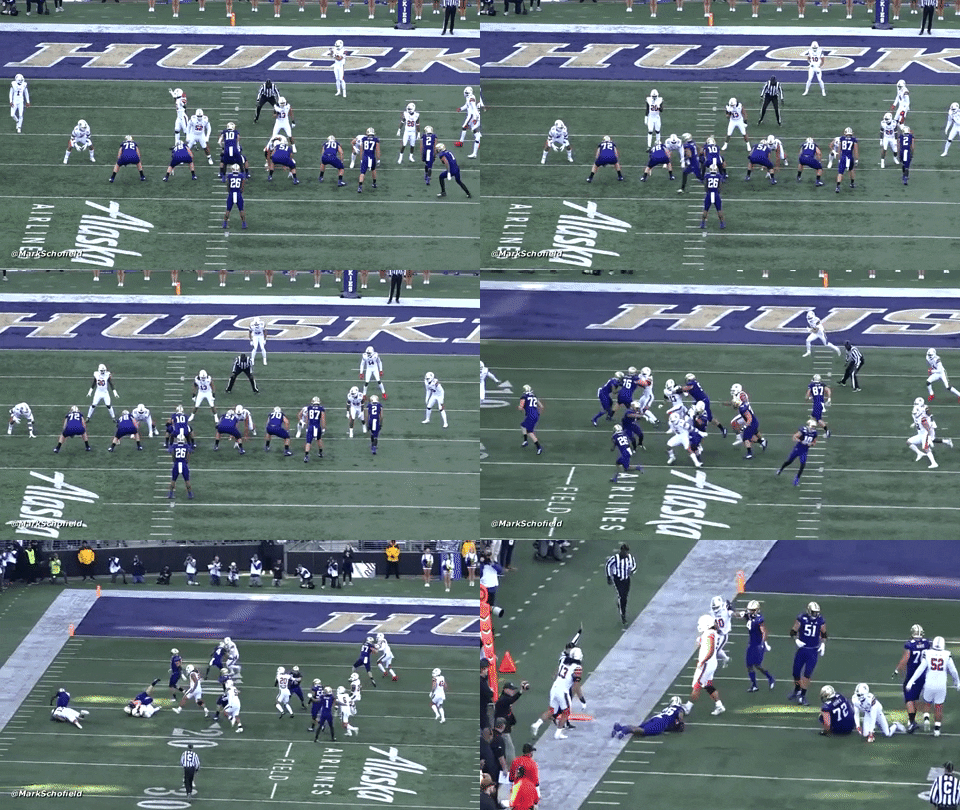
Harris is responsible for the defensive tackle playing on the inside shoulder of the left guard in a 2i technique. This is a difficult reach block, but he sets the stage for it with quick footwork off the snap, pivoting his toes to a 45-degree angle giving him the right glide path to execute the block. Then he uses a rip technique of his own, hooking his right arm under the right arm of the defensive tackle, stopping him in his tracks.
Harris struggled on gap/power designs early in his career but with some added strength over the past few seasons, he showed improvement on those plays this past year. His ability to use upper body strength when singled-up, or on double-teams, has vastly improved over the past season.
In pass protection, there are some weaknesses but he shows the ability to fight in a phone booth as well as re-anchoring when he loses the initial punch. He also does a great job of looking for work when he is uncovered, and his sense of timing in those moments is nearly perfect. Watch this play, for example, and you will almost see Harris itching to help, but he waits to make sure there is not a last second blitzing linebacker:

Weaknesses: Harris does play with a wide base at times, especially as a pass-blocker, which exposes him to some bull rushing moves and also makes it tougher for him to counter pass rushing moves from more talented defenders. He also gets a bit handsy at times, which is something to watch for. There were times on film when he could have been flagged but did not, and we all know how holding gets called in the NFL.
There are also some remaining questions about his scheme fit in a gap/power heavy offense. Part of this might be just how well he translates to a zone-based offense, with his combination of athleticism, ability in space and technique. However, looking at his 2019 film there is enough to make a fit in a more gap-based offense a solid marriage.
Conclusion: Harris is an experienced player who, according to PFF grading, has improved every single season of his collegiate career. He has experience playing at both guard and at center, and while his size probably makes him a center only in the NFL, creative teams might be willing to give him a shot at guard and he could at least be a depth option at guard in the league. But his athleticism, technique and growth at the gap/power part of the game have his arrow trending in the right direction.
Comparison: Harris seems like a player in the David Andrews mold at the next level. Before his health scare last season, Andrews was a heady player on the inside of the New England Patriots’ offense trusted with protecting Tom Brady’s A-Gaps, but who also handled zone-blocking designs extremely well.
5. Damien Lewis, IOL, LSU

Height: 6’2″ Weight: 327
40-Yard Dash: 5.24 seconds
Bench Press: 27 reps
Vertical Jump: 30 inches
Broad Jump: 9 feet
3-Cone Drill: N/A
20-Yard Shuttle: N/A
60-Yard Shuttle: N/A
Bio: In contrast to many of the prospects in this year’s draft, Damien Lewis was an unknown coming out of Canton High School in Senatobia, Mississippi. Despite playing on both the offensive and defensive lines, he was an unranked prospect and chose to go the community college route, becoming a two-time junior college All-American at Guard for Northwest Mississippi Community College. By the end of his two years as a stater at guard, he was now a three-star recruit and the second-ranked JUCO guard in the 2018 class according to 247Sports.com. He committed to LSU and was an immediate starter at left guard for the Tigers the past two seasons.
Stat to Know: According to data from Pro Football Focus, Lewis had 204 “true pass sets” last season, one of the highest figures for any guard in the nation.
Strengths: Lewis has the combination of power and explosiveness to be an impact guard at the next level. His strength jumps off the film. Whether working a combination block, handling someone at the point of attack in a gap/power design or on those occasions when he can get to the outside or in space, Lewis just dominates defenders as a run blocker:
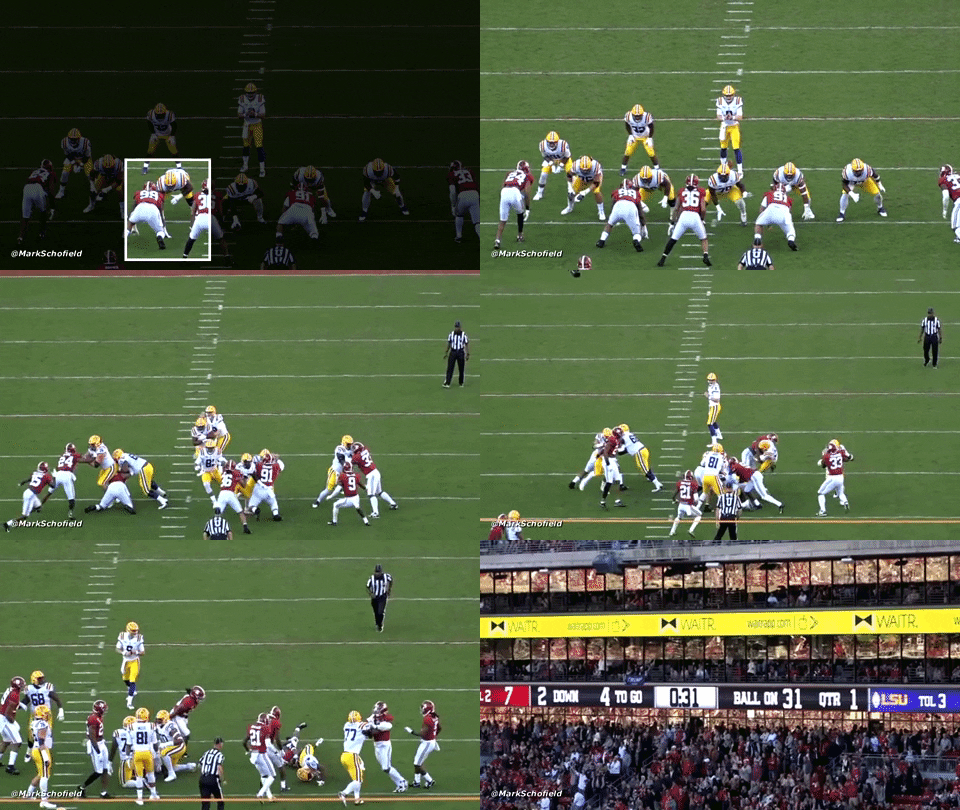
This is Lewis working against Raekwon Davis, an Alabama defensive tackle who measured in at 6’6″, 311 pounds at the Scouting Combine. Yet here is Lewis corkscrewing Davis into the ground with ease. This is power at the point of attack.
In these interior offensive line profiles, the idea of “finishing” up front has been detailed ad nauseum. But it matters for the offensive line. If you doubt that, just log onto Twitter and declare that it does not, and brace for the impact from OL Twitter. Before long those who at and breathe the position will have video evidence and reasoned arguments to prove you wrong.
If they do provide a clip for you, it might look like this:
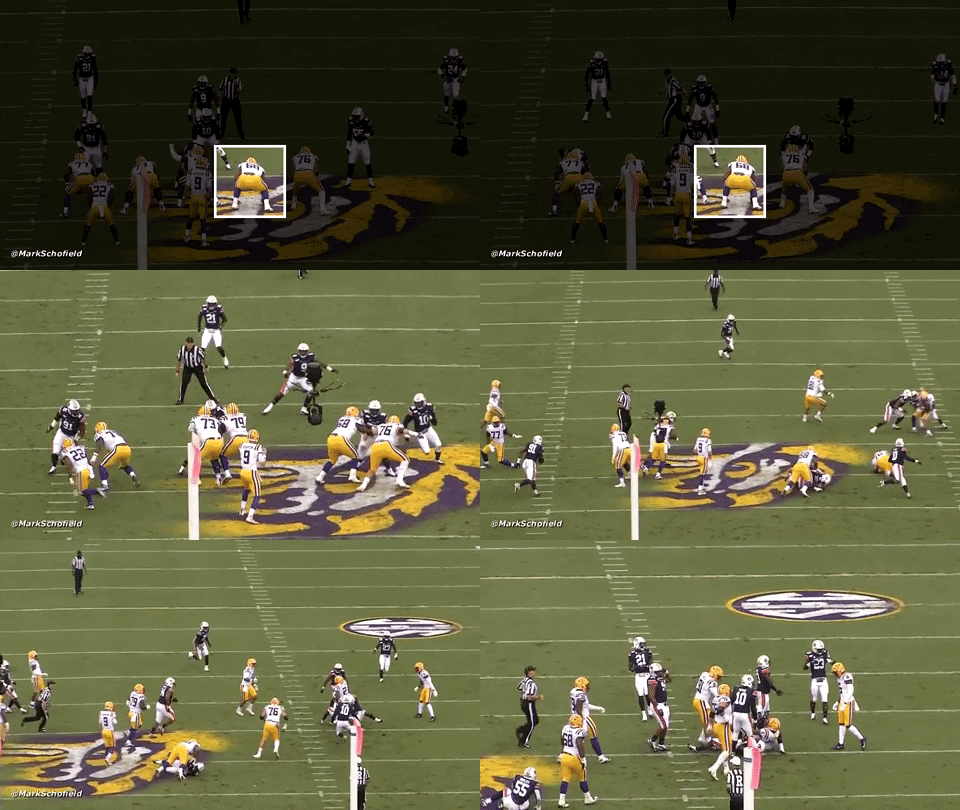
There’s completing your block and then there’s finishing him into the turf. That’s finishing.
In pass protection Lewis has some flaws, which will be covered in a moment. But he has great awareness in protection when it comes to identifying stunts and twists. His upper body strength allows him to handle most pass rushing moves that he sees, and perhaps the best trait to highlight here is that he has room for improvement when it comes to handling this part of the game.
Weaknesses: Lewis does have some technique and execution issues to clean up in pass protection. He plays with a very wide base, which almost eliminates his ability to reset and counter pass rushers who attack him with a set and array of moves. In addition, he also plays a bit high in pass protection, which his chest exposed to the rusher. That leaves him vulnerable to bull rushing type of moves, and on one play against Auburn he tried to absorb a blitz and found himself right on his back in the blink of an eye. Cleaning up what he does technique wise will make him a much better pass blocker.
Conclusion: PFF described Lewis as someone who “[w]ants to take your soul in the run game.” That fits him to a T. He is a complete finisher in the run game who wants to embarrass his opponent at the point of attack. Lewis swallows linebackers when he works to the second level, works combination blocks extremely well and is a force in the gap/power part of the playbook. Sure there are things to clean up in pass protection but if you’re looking for an interior offensive who is going to just take no prisoners on the inside, your search ends here.
Comparison: Josh Sitton was a great finisher as a blocker, and you can see how Lewis could be that kind of player in the league.
6.Matt Hennessy, IOL, Temple

Height: 6’4″ Weight: 307
40-Yard Dash: 5.18 seconds
Bench Press: 23 reps
Vertical Jump: 30 inches
Broad Jump: 9 feet 2 inches
3-Cone Drill: 7.45 seconds
20-Yard Shuttle: 4.6 seconds
60-Yard Shuttle: N/A
Bio: Matt Hennessy was a two-way player for Don Bosco High School in New Jersey, starting on the offensive and defensive lines. As a two-star recruit, Hennessy did not have a ton of offers but did garner attention from schools such as Old Dominion, Air Force and Army. He chose to enroll at Temple and eventually earned a starting spot in 2017 at the center spot. Over his three years as a starter, Hennessy has allowed just a single sack. That encapsulates 1,353 pass blocking opportunities.
Stat to Know: Beyond those pressure numbers, Pro Football Focus charted Hennessy with 240 true pass sets the past two seasons. The Temple center allowed a pressure on just three of those.
Strengths: While those pass protection statistics are impressive, Hennessy’s calling card is as a dominant run blocker on the inside. He has great balance and tremendous sense of timing when working combination blocks. Watching him on film there are numerous examples from each and every game where you can see him taking care of two different defenders on a single play. He knows how long to stay on his initial block to make it count, while knowing just when he needs to come off defender one to make sure he can get a piece of defender two.
Here is a prime example of this:
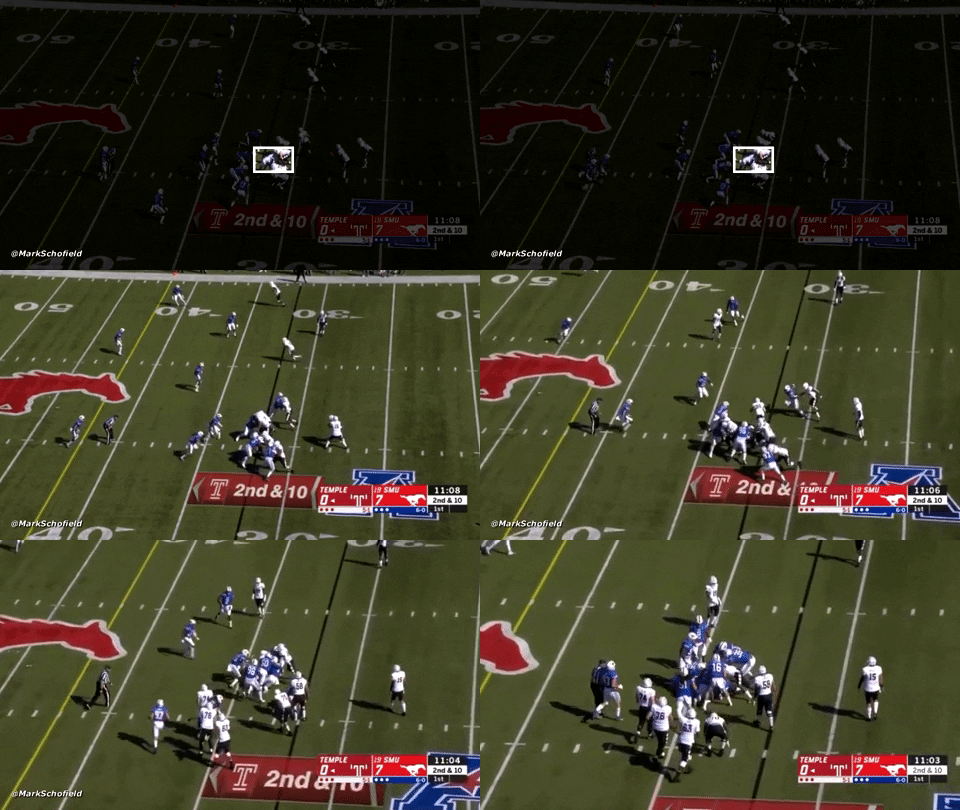
Sure, this play is just a minimal gain, but the fact that it actually is a positive play is due to Hennessy’s timing and awareness. He starts with the down block on the defensive tackle, but he knows that the safety raced into the box right before the snap and is coming like a freight train for his running back, so the center peels off the combination block and stops that freight train cold, giving his RB a chance to cut off the secondary block and get yardage.
He also moves extremely well, both in the screen game as well as when he is executing a zone blocking design. He gets to the reach blocks quickly when needed and is able to use some secondary moves, such as we saw with Nick Harris, to make sure his responsibility is erased from backside pursuit. In pass protection, Hennessy is solid as the numbers suggest, and is technically sound with a solid base under him and with his hand placement when dealing with counter moves.
Weaknesses: The level of competition is something to consider, as Temple did not exactly play an SEC schedule. This is why the Senior Bowl was a massive opportunity for him, and he did not disappoint. He held his own down in Mobile and was one of the best interior offensive lineman down at Ladd-Peebles Stadium over the week. Hennessy was also protected a bit in pass protection. He was given a lot of help in the Temple passing scheme, and they employed a ton of slide protections that left him with a smattering of one-on-one opportunities. That might be something to watch for as he transitions to the next level.
Conclusion: Offensive line coaches would love to get a young player to have the kind of awareness that Hennessy brings to the locker room as a rookie. His timing for combination blocks, his awareness in pass protection for loopers and stunters, and his ability to handle multiple defenders on a single play on almost every single run-blocking opportunity make him a valuable asset in the interior of an offensive line. Teams that rely on the outsize zone running game and have a need at the center spot – such as the Los Angeles Rams – would be wise to get him into their system.
Comparison: Jason Kelce might be a very lofty comparison, but if Hennessy develops as well as possible he might have a similar career path. Kelce is one of the game’s best centers at playing in space, and that is exactly what Hennessy offers as a prospect.
7. Robert Hunt, OT/IOL, Louisiana-Lafayette

Height: 6’5″ Weight: 322
40-Yard Dash: N/A
Bench Press: N/A
Vertical Jump: N/A
Broad Jump: N/A
3-Cone Drill: N/A
20-Yard Shuttle: N/A
60-Yard Shuttle: N/A
Bio: There are some prospects who enter college having played for massive high school programs, or like Cesar Ruiz for the prestigious IMG Academy. Then there is Robert Hunt. The Louisiana-Lafayette offensive lineman played for Burkeville High School in Texas, a program that had just 18 players on its entire roster. While in high school, Hunt experienced victory just twice.
He was a two-star recruit coming out of Burkeville, and his only offer was ULL. But he was a four-year starter for the Ragin’ Cajuns, first at left guard and then eventually at right tackle.
Stat to Know: Hunt allowed just one sack last season from the right tackle spot, and one additional quarterback hurry. What makes this all the more impressive is that ULL’s starting quarterback was left-handed, meaning Hunt served as the blindside protection last year.
Strengths: At the outset, it is important to note that Hunt is looking to play offensive tackle in the NFL, and could stick in the league at that position. However, his size is ideal for the guard position, and given his experience at guard he is considered an interior lineman for our purposes.
As previously mentioned, Hunt was the right tackle for an offense that featured a left-handed passer, making him the blind side protector last season. In that role he showed good awareness for stunts, twists and blitzes, moved extremely well laterally both in pass protection and on zone blocking designs, and showed the ability to anchor well against pass rushers. He also has great footwork from both an athletic and a technique perspective. Take, for example, this play against Appalachian State from last season:
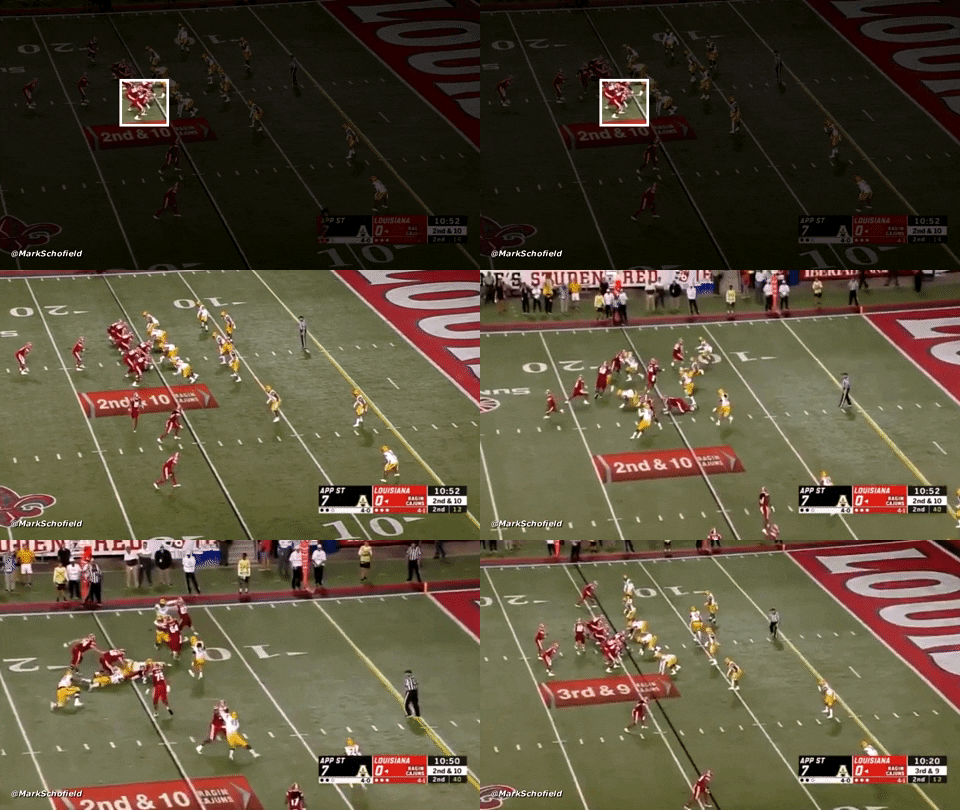
Hunt is on the backside of an outside zone running play, and he executes a hinge block to cut off the backside pursuit. He flashes a downhill block first, chopping his feet a yard or two past the line of scrimmage. But he has the athleticism to then double back and hinge on the backside defensive end, cutting him off from a pursuit angle. A technically sound block.
Hunt also has what some may call “throw you out of the club” power. An homage to Rob Gronkowski, Hunt has the ability to drive block defenders out of the broadcast view of the play.
To get a feel for how he might fare at guard you can look back at his 2017 games. While he was obviously younger and not as experienced back then, there are some great traits to see from him. He was extremely active in pass protection, always looking for work and deftly able to use his hands to protect his quarterback. He handled blitzes well when aligned as a guard, and showed the footwork and athleticism to work combination blocks and/or climb immediately to the second level, where he could swallow up linebackers and erase them from the play.
Like this, from his 2017 game against Texas State:
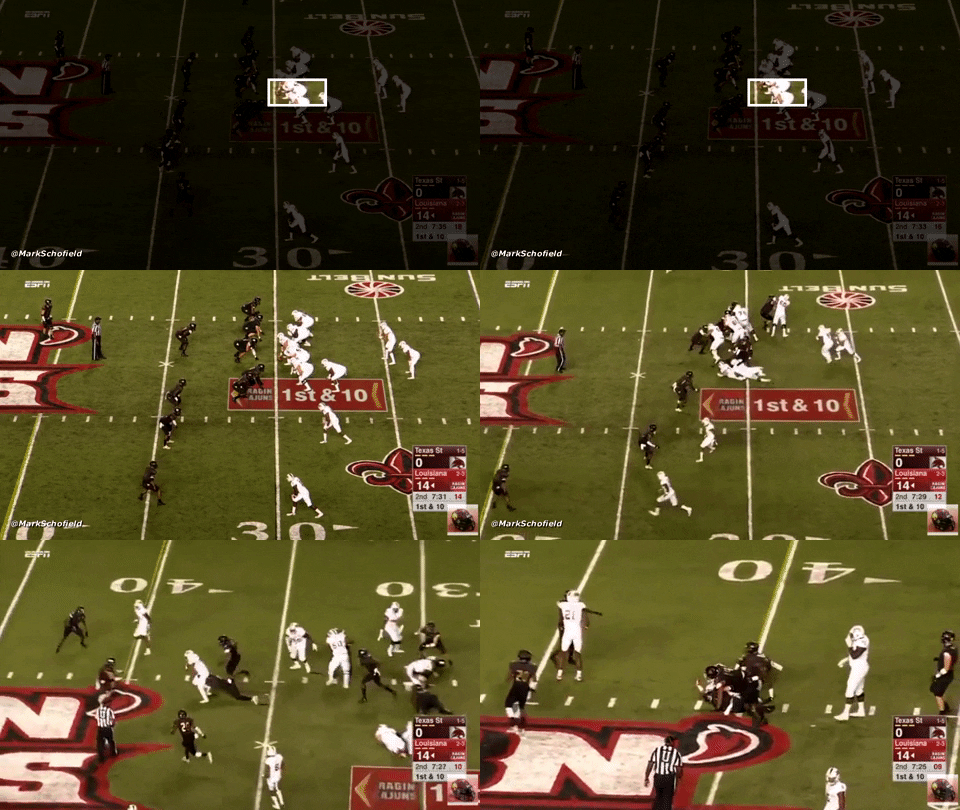
Hunt gets to the second level, takes on the linebacker and you don’t see that defender when the play is over, as he blocks him through the whistle and almost back into the offensive backfield.
Weaknesses: At times Hunt can get beaten to the inside when tasked with pass protection, and this happened both as a guard and as a tackle. When he uses a quick or short set in protection, he would open up to the outside and leave the inside lane vulnerable, and failed to slide quickly enough to cut off the defender. While he can generate tremendous power with his upper body, at times he relies on it too much, and gets a bit over his skis both in pass protection and in run blocking. There is also an injury history to consider, as Hunt played only 412 snaps last season due to a groin injury that ended his season and required sports hernia surgery.
Conclusion: What moves Hunt up the board a bit is his positional flexibility combined with what he demonstrated on the field over his ULL career. He has the power and punch that can make him a stout interior player, but also showed that he can be a tackle at the next level with some of his technical prowess as well as his awareness at the position. Given that combination, he should be a very enticing prospect as the second day of the draft unfolds.
Comparison: Joe Haeg was another prospect who had the versatility to play both guard and tackle, and that similar flexibility makes Hunt an attractive option to teams. The technical prowess that Hunt brings, especially with his footwork, might be ahead of where Haeg was coming out, but they are similar players in many respects.
8. Tyler Biadasz, IOL, Wisconsin

Height: 6’3″ Weight: 318
40-Yard Dash: N/A
Bench Press: N/A
Vertical Jump: N/A
Broad Jump: N/A
3-Cone Drill: N/A
20-Yard Shuttle: N/A
60-Yard Shuttle: N/A
Bio: The University of Wisconsin has a reputation for producing solid offensive line prospects, and that tradition can continue this year with Tyler Biadasz. Originally a three-star defensive lineman coming out of Amherst, Wisconsin, and the winner of the 2015 Krumrie Award as the state’s most outstanding defensive lineman, Biadasz committed just two days after his unofficial visit on campus.
He was moved to offensive line after his redshirt year, and started 14 games at center as a redshirt freshman in 2017. He has never looked back, starting every game on the inside ever since.
Stat to Know: Biadasz allowed only 22 total pressures over his three years as a starter for the Badgers.
Strengths: Given his experience, Biadasz checks many of the technical and mental boxes you look for in a center. He processes interior blitzes well, he constantly looks for work, and comes from a “pro style” offense that uses a varied run blocking scheme as well as a variety of protections when the quarterback drops to throw. His battle with Davon Hamilton from Ohio State was a fascinating one to watch. The big defensive tackle got the better of Biadasz on a few times with a bull rush, but the center was able to handle Hamilton on a variety of pass rushing opportunities as well as in the running game.
Biadasz shows great leg drive in the run game, and does a solid job of working combination blocks, as well as getting to the second level when needed. Technically he is sound, both in firing out of his stance, using his hands and working into defenders at both levels before they even see what is headed their way.
Weaknesses: Biadasz lacks the athleticism that you see from other players in this class. He is adept at trap blocks and short pulls, but when asked to move laterally on zone schemes or pull to the edge, the lack of athleticism is evident on film. In space there are moments when he misses blocks, either due to dropping his eyes prior to contact or that lack of athletic ability. He could also finish his blocks better, when working to the edges. In his battle with Hamilton you saw evidence of him struggling against bull rushes, he is much better at handling finesse pass rushing moves. Finally, he lacks the positional flexibility of other options in this class.
Conclusion: Biadasz could be an ideal fit for a gap/power team looking for a center in this class. Teams that work off of play-action in the passing game would consider him a strong option at the position as well. He is technically sound, experienced and well-versed in a variety of different concepts, but lacks some of the athleticism and movement skills that others in this draft bring to the table.
Conclusion: JC Tretter. Both players relied on technique and experience to get the job done, and that would be a career that Biadasz could model his career upon.
9. Lloyd Cushenberry III, IOL, LSU

Height: 6’3″ Weight: 312
40-Yard Dash: 5.27 seconds
Bench Press: 25 reps
Vertical Jump: N/A
Broad Jump: N/A
3-Cone Drill: N/A
20-Yard Shuttle: N/A
60-Yard Shuttle: N/A
Bio: Lloyd Cushenberry III was a three-star prospect coming out of Dutchtown High School in Gelmar, Louisiana, who played offensive tackle while a prep athlete. He gave serious consideration to offers from Mississippi State and South Carolina, but ultimately stayed close to home to play for the Tigers.
In 2017 Cushenverry played a handful of snaps at both guard and center, but he slid inside for the 2018 season to become LSU’s starting center. He was a rock for the Tigers during their 2018 campaign, allowing just eight total pressures.
Last year was a bit of a mixed bag. While Cushenberry was part of a team that made a run to a national title, he struggled with the protection part of the game. Unlike 2018, Cushenberry allowed a stunning 34 total pressures on the year and allowed multiple pressures in all but four of his 15 games, as charted by Pro Football Focus.
Stat to Know: In addition to those pressure numbers, Cushenberry gave up a career-high four sacks last season. Sure LSU was more of a passing team, but that is tough to do, especially with a quarterback like Joe Burrow behind you.
Strengths: In the run game, Cushenberry is a force. He works combination blocks extremely well, he has solid lateral quickness which makes him functional in a zone blocking scheme, and will anchor and move even the biggest of nose tackles on gap/power designs. His upper body strength is impressive, as he can torque and twist more talented athletes into the turf from any angle. His hands are also a weapon for him, as he can win a block early when he strikes first.
In pass protection, there are issues to address but he is constantly looking for work when uncovered, and he shows good awareness for stunts and defenders crossing his face. He saw a lot of bull rush moves from Alabama and handled them well for the most part. Against Derrick Brown in the Auburn game he had an impressive pass-blocking rep where Brown employed a bull rush but he was able to stop the bit DT in his tracks by anchoring and getting his hands inside the defender’s frame, winning the block.
Weaknesses: At the outset, he would benefit from throwing the first punch more often. On those occasions where he waits to fire his hands, it seems he has the most difficulty recovering. He should learn to press the issue more and force defenders to counter what he does quickly after the snap. That would put him in a better position to dominate his opportunities. While he does have good lateral quickness, sometimes that hurts him when he quick sets. He gave up some immediate A-Gap pressures last season when trying to quick set, particularly against swim moves. One also hast to wonder about the drop in production from 2018 to 2019. In Joe Brady’s offense, the LSU Tigers employed a five-man protection scheme on the vast majority of their passing plays, leaving their offensive linemen on an island more often than not. That might point to potential scheme fit limitations as you consider Cushenberry for the next level.
Conclusion: For what he does in the run game, and how he handles bull rushes in the interior, there is a market for what the LSU center offers a prospective NFL organization. Getting him into a play-action heavy offense that relies on heavier protection schemes would be a way to use him instantly as a rookie, by giving him help on the interior and avoiding the one-on-one situations that seemed to give him the most trouble. Also getting him to be quicker with his hands, and be more active rather than passive, will enable him to be more dominant in the protection game. There is a solid player in side of him, and with a bit more refinement and some scheme help, Cushenberry can be a solid contributor as a rookie.
Comparision: B.J. Finney. Both Finney and Cushenberry win with strength, especially in the running game. There was a time when Finney lacked the quickness to handle slants and stunts on the inside, and you can see Cushenberry having a similar transition to the NFL
10. Logan Stenberg, IOL, Kentucky

Height: 6’6″ Weight: 317
40-Yard Dash: 5.3 seconds
Bench Press: N/A
Vertical Jump: 26 inches
Broad Jump: 8 feet 8 inches
3-Cone Drill: 8.0 seconds
20-Yard Shuttle: 4.83 seconds
60-Yard Shuttle: N/A
Bio: Logan Stenberg was a three-star recruit coming out of Madison, Alabama who chose Kentucky over Troy and Southern Mississippi. He was a two-way player in high school, who totaled 34 pancake blocks his senior year while chipping in a pair of sacks and two forced fumbles as a defensive lineman. Stenberg redshirted his first year on campus, and played sparingly as a redshirt freshman, but he locked down the left guard spot as a redshirt sophomore and never looked back. He allowed four sacks back in 2017, but has not allowed a sack since. For a guard in the extremely competitive SEC, that is a tremendous statistic.
Stat to Know: Building off the previous point, Stenberg allowed just a single quarterback pressure in 2019, on 262 pass-blocking snaps, according to Pro Football Focus. That was the lowest pressure rate of any guard in this entire draft class.
Strengths: Stenberg’s style of play harkens back to an earlier era of professional football. His teammates consider Stenberg to be the most hated offensive lineman in the SEC, and he plays with a nasty streak that he will readily admit to having. He flashes solid lateral movement and footwork on reach blocks when tasked with zone blocking, and also shows good feel and timing on his combination blocks. As you might expect, Stenberg is an offensive lineman who puts that nasty streak to good use, finishing his blocks every chance he gets:
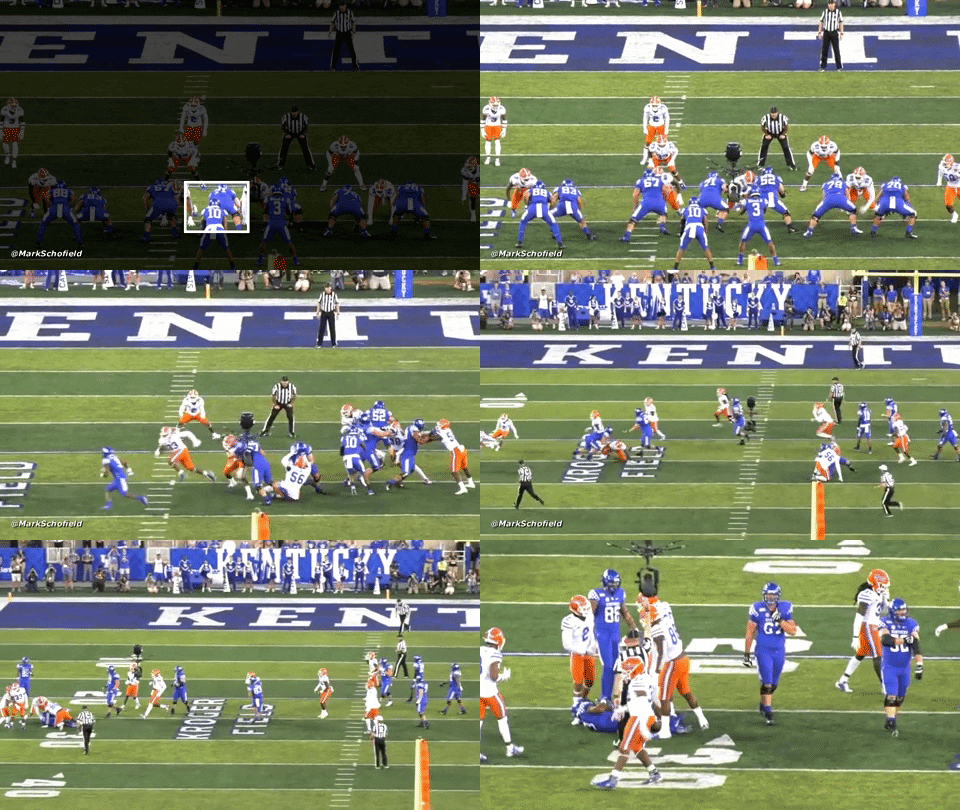
Stenberg does not want to just block you, he wants to finish you. On this play against Florida he gets into the nose tackle and wrestles him to the grounds, falling on top of him for good measure. Plays like this, which highlight his upper body strength, are why he projects to be a tremendous guard in a gap/power scheme.
(As an aside, my son walked in when I was cutting this video, saw what Stenberg did, exclaimed “oh my gosh” and then ran away. He’s eight and plays more Madden than I care to admit, so he knows someone getting pancaked when he sees it).
As a pass blocker, Stenberg shows the ability to anchor against slanting defenders and blitzers, and has the awareness to find twists and stunts coming from either side. While he waits to fire his hands in pass protection, unlike others in this class it plays to his advantage. He has the ability to see a defender commit to a move and immediately counter it, making him a stud in pass protection as the numbers bear out.
Weaknesses: He is going to get flagged in the NFL. Last year he was flagged 14 times, and he is not going to stop who he is once he gets to the league. He also had a supporter behind him in Mark Stoops, who told the media back during the season that “[i]f I though there was a lot of selfish intent, then we would have a bigger problem than we do. A lot of times that’s not the case. He understands that. He does not want to hurt this football team at all, in any way, shape or form. And he’s not selfish, but plays it extremely nasty on every play.”
Beyond the nasty streak, Stenberg is not the most athletic of the guards in this class. That was on display both last season and in Indianapolis during the Combine. That might limit him schematically to a heavy gap/power team rather than an offense that relies heavily on the outside zone game. While the pass blocking was solid, with injuries at quarterback he did not have a ton of pass blocking opportunities this past year, with Lynn Bowden Jr. taking over at quarterback.
Conclusion: A team looking for a tone-setter on the inside will love Stenberg. He is a nasty mauler in the running game, and plays with a mean streak that will endear him to his teammates and infuriate his opponents. He has ideal size to play guard in the next league, and while not the most athletic prospect he moves well enough to handle life in the NFL. He has done enough on film in the pass protection part of the game to make him a solid selection and early contributor in the league.
Comparison: Conrad Dobler. Sure, Dobler is viewed as one of the meanest and dirtiest players of all-time, but with Stenberg’s reputation and nasty streak, is there a better comparison?
11. Ben Bredenson, IOL, Michigan

Height: 6’5″ Weight: 320
40-Yard Dash: N/A
Bench Press: N/A
Vertical Jump: N/A
Broad Jump: N/A
3-Cone Drill: N/A
20-Yard Shuttle: N/A
60-Yard Shuttle: N/A
Bio: Coming out of Arrowhead High School in Hartland, Wisconsin, Ben Bredeson was one of the most decorated players and prospects during the 2016 recruiting class. He was named the Gatorade Player of the Year in Wisconsin and ESPN ranked him as the fifth-best offensive tackle nationally. Wisconsin, Notre Dame and Alabama came calling, but he chose to play for Michigan.
Bredeson was a four-year starter for the Wolverines, and players with that kind of resume do not come around often. He improved every year while in Michigan’s lineup, and this past season was his best as a pass blocker, as he allowed just eight quarterback hurries, one quarterback hit and not a single sack.
Stat to Know: The improvement in him from his first two years on campus to his last two can be measured in pressures. His first two seasons he allowed 36 total pressures, but in the last two he allowed just 15.
Strengths: Bredeson is an experienced and technically-sound offensive guard who has a tremendous floor as a prospect. His hand placement is teaching tape, and he does a great job of keeping his feet moving on his blocks and up until the whistle. If you want to see how an offensive lineman can use his feet and hands in unison, then put on his film. Bredeson is a high-motor type of player, who keeps fighting until the whistle to make sure the job gets done. In pass protection, he is always looking for loopers and stunts, and keeps his head scanning for targets. If left uncovered, he is more than happy to drive into the side of a defender that is occupying a teammate.
Weaknesses: With his level of experience he might be close to finished as a prospect, which brings into question his ultimate ceiling in the league. He is not the most explosive player, and at times he lags behind the flow on outside zone running plays. His best fit is likely in a gap/power heavy team, that allows him to fight at the point of contact rather than flow with the play using lateral athleticism.
Conclusion: Players with high floors are often the type that get drafted sooner than you expect. With NFL decision-makers looking to avoid risk, and in a current climate where the film might matter more than the testing or the interviews, selecting a blue-chip player with four years of starting experience is a safe bet. Bredeson might not be boom type prospect at the position, but sometimes you need that experienced, lunch-pail type of player who is just going to get the job done. His technique gives him a solid starting point as a rookie, and his veteran savvy will carry him through as he transitions to the league.
Comparison: Shaun Lauvao. Like Lauvao, Bredeson relies on his technique to get the job done, but might lack the pure athleticism and lateral agility to be an impact player in zone blocking offenses.

.png?w=600)