
Up next in Touchdown Wire’s position-by-position look at the top prospects in the 2020 NFL Draft is the interior defensive line. While EDGE players get the bulk of attention during draft season, this year’s interior DL class has some impressive players who are getting more first round buzz than some of the outside pass rushers. Both Javon Kinlaw and Derrick Brown are considered to be first-round locks, and some view players like Jordan Elliott and Ross Blacklock to be potential early picks as well. How does this group stack up?
1. Javon Kinlaw, DL, South Carolina

Height: 6’6″ Weight: 302
40-Yard Dash: N/A
Bench Press: N/A
Vertical Jump: N/A
Broad Jump: N/A
3-Cone Drill: N/A
20-Yard Shuttle: N/A
60-Yard Shuttle: N/A
Bio: Javon Kinlaw chose the junior college route coming out of Goose Creek High School in South Carolina, enrolling at Jones County Junior College in Ellisville, Mississippi. During the 2016 season, he was a standout at defensive tackle, who was named a second-team All-America selection, a first-team All-Region 23 selection, and the MACJC South Division’s Most Valuable Defensive Lineman when he tallied 26 tackles (including 8.5 for a loss) and 4.5 sacks.
He committed to South Carolina for the 2017, and made 10 starts his first year on campus. He took on an increased role for the Gamecocks over the past two seasons, and had a career-year as a senior in 2019. He posted seven sacks and 26 quarterback hurries. Kinlaw rode that production to a spot in Mobile for the Senior Bowl, where it was apparently early on that he was arguably the best non-quarterback in attendance.
Stat to Know: According to charting data, Kinlaw was second among interior defensive lineman with a pass-rush win rate of 18.1%.
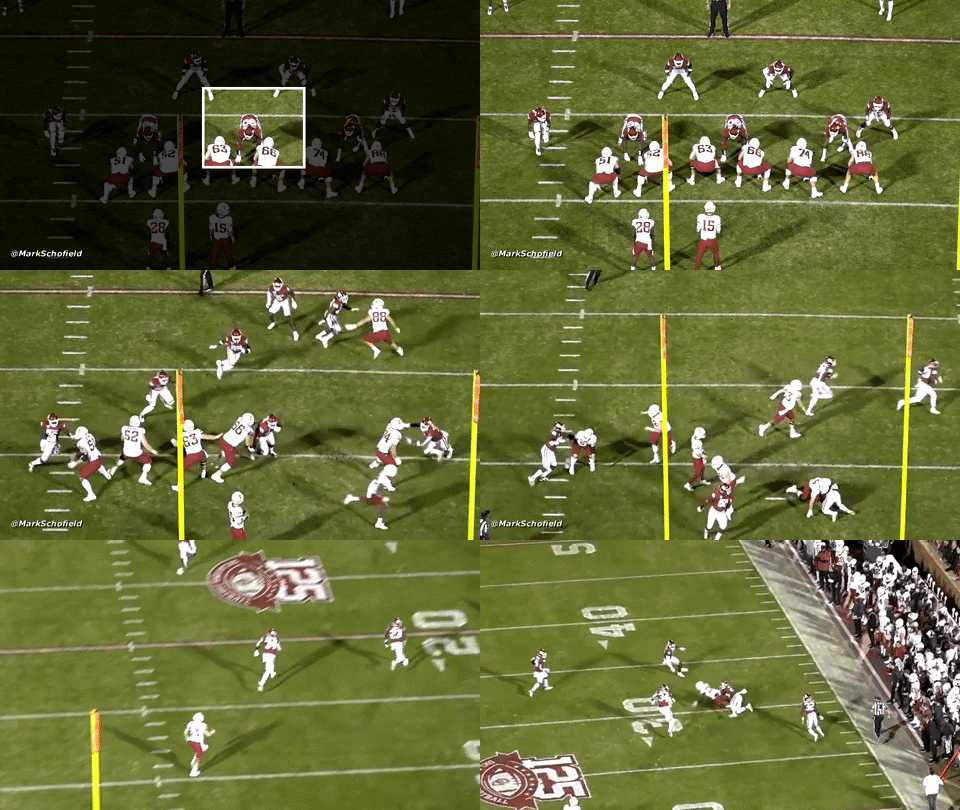
Strengths: Kinlaw explodes off the snap. Simply turn on South Carolina’s game against Alabama and you will see his burst off the line from the opening play of the game. He plays with incredible pad level, but it is his first step that attacks gaps and threatens the structural integrity of the offensive line from the second plays begin. Kinlaw commands double-team blocks in the run game, and constantly frees up those around him to flow to the football and make plays. He also brings incredible lateral agility to the table, and is going to be a problem against zone running plays, and you can imagine how a creative defensive coordinator could employ him in the stunt and twist game.
As a pass rusher, his ability to convert strength to power as well as his bull rush move might be unparalleled in this class. His hands are constantly moving, forcing blockers to counter and second-guess their own actions. Proponents of the concept that “pressure equals production” are going to enjoy seeing plays like this against North Carolina:
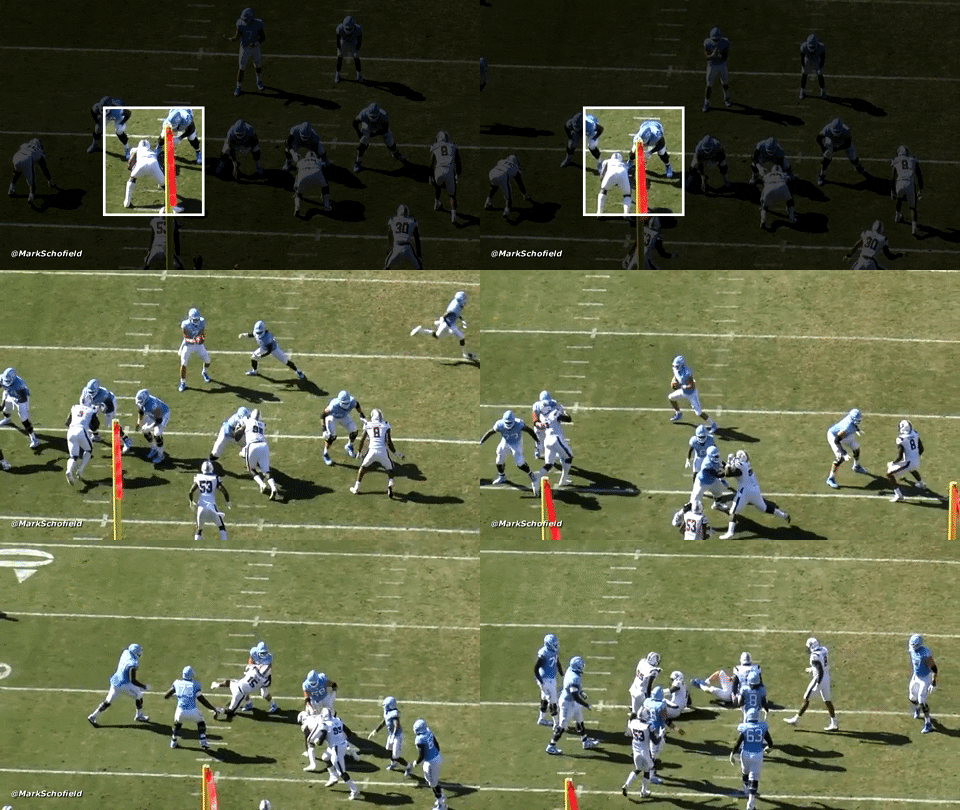
If your interior defensive lineman is going to get double-teamed when the QB drops to pass, you’ll love seeing him fight through the first blocker with violent hands, spin into the second blocker and manage to drive him backward – initially with his back – and still get the QB to move off his spot. Leading to a big sack from the defensive end, left isolated with the right tackle. Pressure equals production.
Weaknesses: Kinlaw often loses track of the play and gets caught peeking into the backfield, which leads to him missing some misdirection plays and running away from the football. He has tremendous hands, but relies on his bull rush too much as a pass rusher. You can see evidence – such as in the above video – of him having other options in his tool kit as a pass rusher but he relies on the bull rush far too much to be a complete player right now.
Conclusion: Kinlaw’s length and size cannot be taught, nor can his explosiveness. This is a tremendous foundation for a disruptive force on the interior of NFL defensive lines. His explosiveness, coupled with that hand work he has developed to date, is enough to make him productive as a rookie. What he learns along the way is can make him special.
Comparison: Retired NFL defensive end Stephen White, in this meaty breakdown of Kinlaw, compared him to current Chicago Bears’ defender Roy Robertson-Harris. This makes a ton of sense, as Robertson-Harris began as an edge rusher before moving inside, and Kinlaw’s disruptive ability on the interior compares to the finished product that Robertson-Harris is now.
2. Derrick Brown, DL, Auburn

Height: 6’5″ Weight: 326
40-Yard Dash:5.16 seconds
Bench Press: 28 reps
Vertical Jump: 27 inches
Broad Jump: 9 feet
3-Cone Drill: 8.22 seconds
20-Yard Shuttle: 4.79 seconds
60-Yard Shuttle: N/A
Bio: In contrast to Javon Kinlaw, who went the JUCO route, Derrick Brown was one of the top recruits in the nation coming out of Lanier High School in Georgia. He was considered the top prospect in the state, and had offers from Georgia, Alabama, Tennessee, Missisippi State and countless others as a five-star recruit. Brown chose Auburn, in large part due to a relationship he forged with Tigers’ defensive line coach Rodney Garner.
He was a rotational player along Auburn’s defensive line as a freshman, playing 243 snaps for the Tigers. Brown became a starter his sophomore season, and has held down a starting job ever since. He has been productive against the run and the pass, and was largely viewed as the most complete interior defensive lineman in this class until the rise of Kinlaw.
Stat to Know: Pro Football Focus charted him with just five missed tackles over his entire career. Given the amount of time he played, that is darn impressive.
Strengths: Where to begin? Brown is a beast on the inside, with a high motor and active hands from snap to whistle. His hands are impressive, as he gets into the blockers on every play and has a chance to control them at the point of attack as a result. He gets double-teamed a ton, but is willing to not just eat those but will keep fighting through them to remain disruptive even when he is the focal point of the protection or blocking scheme. He also brings to the table a vast array of pass rushing moves, from rip moves to swim moves to bull rushes and everything in-between.
A fascinating game of his to study is Auburn’s game against LSU. The Auburn defense employed a lot of 3-man “Tite” fronts, leaving him as a nose tackle. In this game he had an almost Aaron Donald-like impact on the field. He commanded every single double-team in this alignment, creating a host of one-on-one opportunities for his teammates.
Then there are times when he just wrecks worlds.
Like he does here:
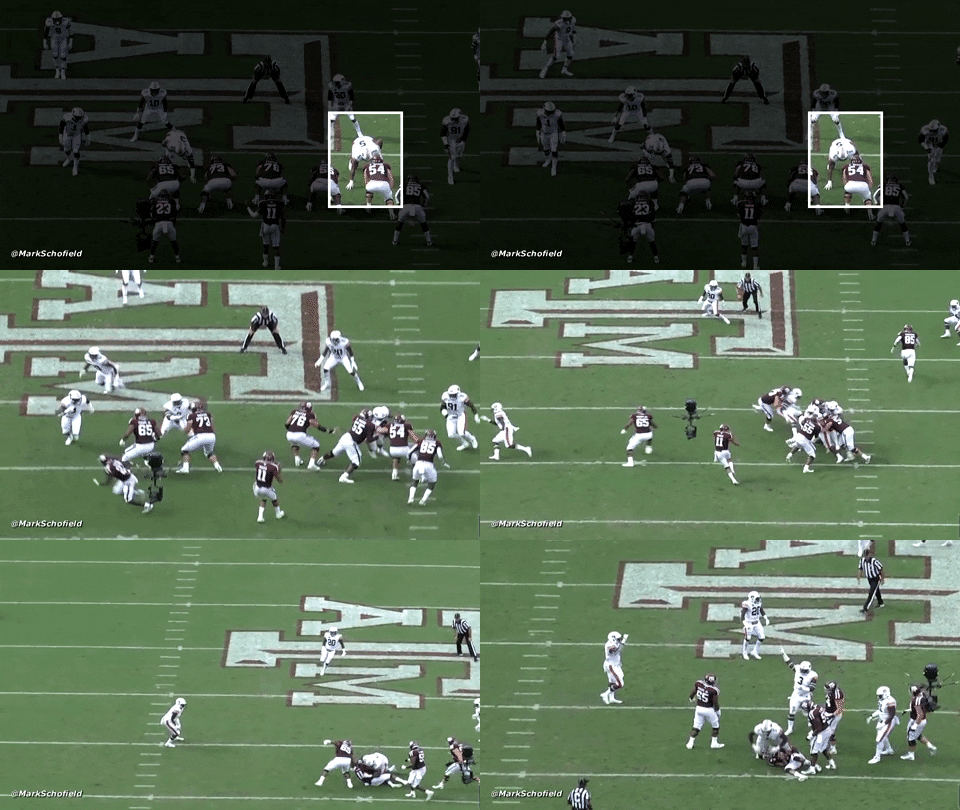
On this “tackle/end exchange” or TEX stunt, Brown loops to the outside to occupy two blockers, to free up the defensive end cutting inside. But viewing the job as “half-done,” the big DT fights through the double-team and gets the sack himself.
Weaknesses: There are times when Brown plays too high with his pad level, exposing his chest to blockers and creating situations where he can be washed out by the play. As his Combine testing showed, he is not the greatest athlete, so his best plays come when he is moving north/south. He struggles at times to make an impact on outside runs or wide zone plays unless he gets immediate penetration.
Conclusion: The bottom line is pretty simple. If you are intrigued by a disruptive, pocket-pushing defensive tackle who can swallow double-teams, pressure the passer and be a stopper against the run on the inside, then you’ll love Brown. He lacks the ceiling that Kinlaw has, given the South Carolina product’s incredible combination of size, length and athleticism, but it is easy to see Brown having the higher floor to him.
Conclusion: Picture Ndamukong Suh without the nasty streak, and that is what you are getting in Brown. Many have compared him to the former Nebraska standout, and Brown’s floor, disruption in the interior and ability to stuff the run makes it a reasonable justaposition.
3. Justin Madubuike, DL, Texas A&M

Height: 6’5″ Weight: 326
40-Yard Dash:5.16 seconds
Bench Press: 28 reps
Vertical Jump: 27 inches
Broad Jump: 9 feet
3-Cone Drill: 8.22 seconds
20-Yard Shuttle: 4.79 seconds
60-Yard Shuttle: N/A
Bio: Justin Madubuike was another top-flight recruit coming out of high school, ranked as a four-star player as a defensive lineman for McKinney North High School in Texas. With offers in hand from Alabama, Auburn and Baylor, among others, he chose to play for the Aggies at Texas A&M. Madubuike was a multi-sport athlete at McKinney North, starring as a defensive lineman (16.5 sacks as a senior) but also contributing on the hardwood and in track-and-field.
He took to the field as a redshirt freshman in 2017, and increased his role for the 2018 campaign. That redshirt sophomore season was probably his best statistically, as he notched eight sacks and 11 quarterback hits. His numbers dropped a bit last season, but he also played fewer snaps and had more tackles in the run game than he did in 2018.
Stat to Know: Madubuike had seven pressure in his game against Mississippi, which highlights his ability to take a game over when he gets going.
Strengths: Turn on his game against Clemson and you will see him making an impact very early. On the first play from scrimmage Madubuike uses a push-pull into a rip combination move to pressure Trevor Lawrence and flush the Clemson passer from the pocket. (Of course, Lawrence still manages to complete the throw, as he is wont to do). Maduibuke can be a force as a pass rusher, with good burst and a nearly-full compliment of pass rushing moves. His ability to string pass rushing moves together is perhaps the best in this class, as he demonstrates here from that outing against Ole Miss:
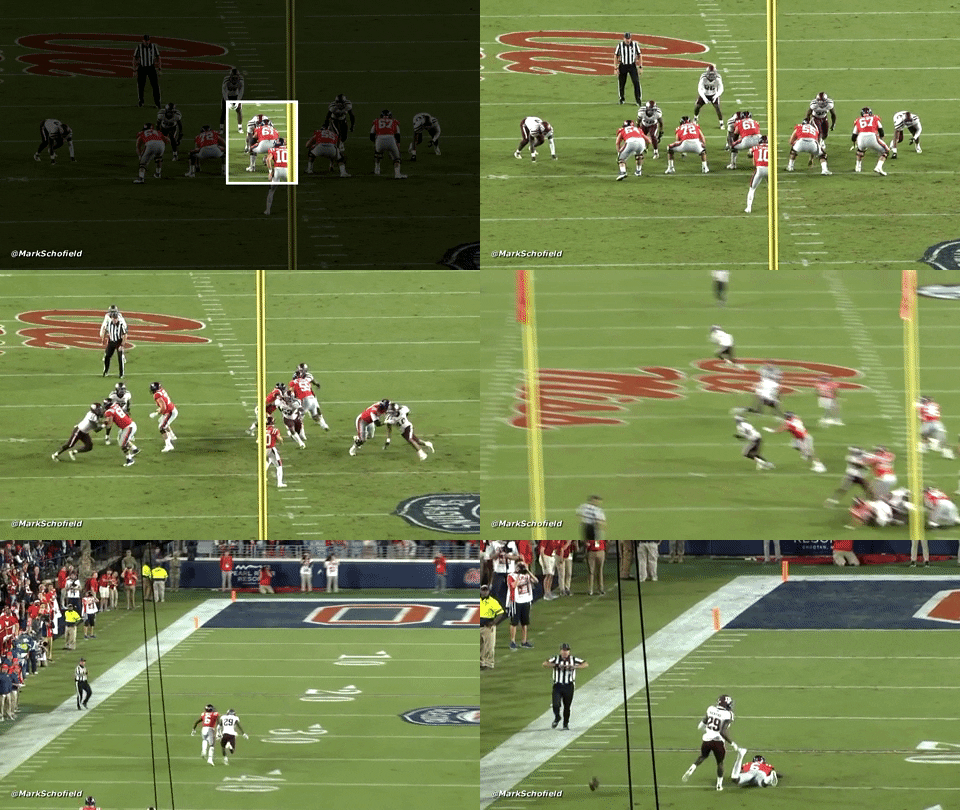
Madubuike uses a two-armed hand swipe to beat the center’s initial punch, then immediately transitions to a rip move to knife past the attempted counter from the blocker. From there he bursts into the chest of the quarterback, preventing him from stepping into this throw and perhaps completing a long TD throw. Texas A&M often used him as the sole down lineman in their “Radar” alignment, with every other defender in a two-point stance flowing freely until just before the snap. Think of how the New England Patriots employed Trey Flowers at times during the 2018 campaign.
Against the run he shows violent power at the point of attack, with the ability to long-arm trap blockers and fight the half man, enabling him to make some plays behind the line of scrimmage. He has powerful hands at the strike point against singles or doubles, and is able to maintain his balance when knocked from the side, allowing him to stay effective in a variety of scenarios.
Weaknesses: While his hands are powerful, he could be quicker to engage them after the snap. At times whether against the pass or the run the offensive lineman “fires first,” giving them the advantage at the outset. He is an average athlete for the position, good enough to be effective against a variety of designs but he will not blow you away with how he can contribute sideline-to-sideline. There are also moments where he seems to disappear on film, and might lack the effort and motor that both Javon Kinlaw and Derrick Brown showed during 2019.
Conclusion: Even with some of those weaknesses and inconsistent moments, he provides his NFL team with an array of moves and game-changing ability on the inside. On nights like the one he had against Ole Miss, you’re watching a pure force on the defensive of the football. Maybe you will not get that for each game of a 16-game slate, but you’ll take it every chance you get.
Comparison: Over at NFL.com Lance Zierlein equated Madubuike to Davon Godchaux, and it is hard to find a better comparison for the Oklahoma defender.
4. Ross Blacklock, DT, TCU

Height: 6’3″ Weight: 290
40-Yard Dash: 4.9 seconds
Bench Press: N/A
Vertical Jump: 29 inches
Broad Jump: 8 feet 11 inches
3-Cone Drill: 7.77 seconds
20-Yard Shuttle: 4.67 seconds
60-Yard Shuttle: N/A
Bio: Given his upbringing, it is a surprise that Ross Blacklock is finding his way on the gridiron, and not the hardcourt. His father Jimmy Blacklock was a basketball player for first the University of Texas and then the Harlem Globetrotters, and he now coaches the legendary basketball team. But the younger Blacklock chose a path on the football field, and was a four-star recruit coming out of Elkins High School in Texas.
Blacklock chose TCU over schools like Alabama and Texas A&M, and despite some injury struggles (he missed the entire 2018 season) he still has two solid years of production and film to put on his resume. Last year was his best on campus, as he notched three sacks, 24 quarterback hurries and 20 run stops.
Stat to Know: Of his 40 total tackles last season, an impressive nine of those were for a loss.
Strengths: At the outset Blacklock is an important reminder that as evaluators, it is imperative to “scout the traits not the scheme.” In TCU’s defensive system, the defensive linemen are tasked with a lot of stunts, slants and twists up front. TCU head coach Gary Patterson gave a tremendous presentation on his defense back in 2015, and if you read through that clinic you will see just how big the emphasis on slanting up front was in that system. Which means that a lot of Blacklock’s production was due to this aggressive, one-gap penetration scheme. Meaning what he can do on his own, or in a different system, is a bit of a projection.
But to fit in such a defense, you need to be athletic. Blacklock checks those boxes well for an interior offensive lineman. He displays solid lateral quickness and has a tremendous first step, as you might expect given Patterson’s philosophy. He can get upfield and penetrate against any run design, including zone blocking schemes. His lateral quickness allows him to string such plays out and force the running back to cut in the backfield, and it also allows him to be a pass rushing force when stunting or twisting.
He is also not afraid to do the dirty work of an interior offensive lineman. While some of the players in this class hate getting double-teamed, Blacklock thrives in those moments. Perhaps one of my favorite plays of any player in this group is this play against Oklahoma State:
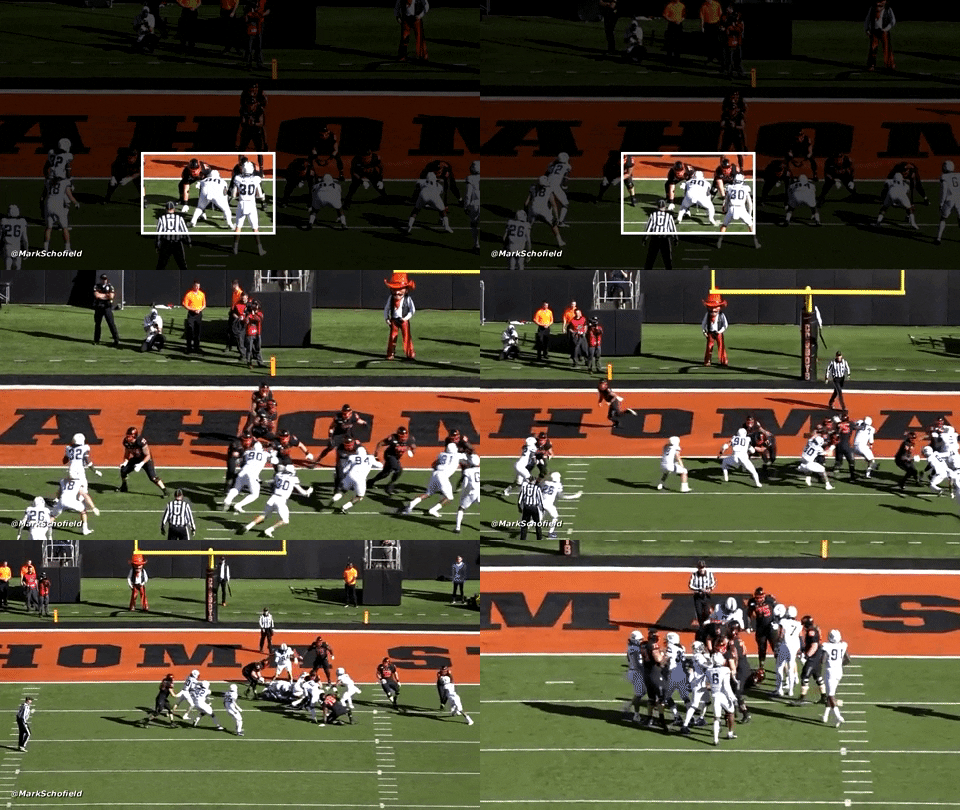
Blacklock sees the outside zone scheme headed to his right. Seeing this, he engages the right guard and then tries to reach the center with his big right arm, grabbing at the center’s right shoulder to try and prevent him from getting to the next level. While doing so, he manages to beat the guard and get to the ball-carrier to stop this play at the line of scrimmage.
Weaknesses: Returning to the scheme for a moment, Blacklock might not be for every system. While not to many defenses these days rely heavily on two-gap defenders, he is best suited as a one-gap penetrator given his experience and quickness up front. Since his game is quickness, there are times when he struggles to anchor at the point of attack or against double-teams. Additionally, he relies on quickness and burst – as well as scheme – to generate pressure. He will need to develop an array of pass rushing moves as he transitions to the NFL.
Conclusion: His athleticism and quick first step make him very enticing. Disruption on the interior is not something you can get every play, but Blacklock brings that potential to an NFL team. His effort and motor will endear him to his defensive line coach, and his willingness, or even his desire, to attract double-teams will endear him to the linebackers flowing to the football from behind him. The scheme fit piece will be a big component, but in the right environment he can be a disruptive force for a defensive front.
Comparison: Michael Kist from Bleeding Green Nation and Bleeding Green Radio told me that he saw a lot of Timmy Jernigan in Blacklock, and that is a comparison I cannot get out of my head. The quick step, the ability to swallow doubles on the inside, and the potential all make sense.
5. Jordan Elliott, DL, Missouri

Height: 6’4″ Weight: 302
40-Yard Dash: 5.02 seconds
Bench Press: 24 reps
Vertical Jump: 27.5 inches
Broad Jump: N/A
3-Cone Drill: N/A
20-Yard Shuttle: 4.73 seconds
60-Yard Shuttle: N/A
Bio: Jordan Elliott was a four-star recruit from the Houston area, playing his prep ball at Westside High School in Texas. He originally signed to play at the University of Michigan, but de-committed to stay in-state and play for the University of Texas. He played just 89 snaps as a true freshman and then decided to transfer to Missouri. Elliott sat out the 2017 season due to transfer rules, and slid into a rotational role for the 2018 season. Last year was his first and only as a full-time contributor and he made the opportunity count, notching four sacks, 21 quarterback hurries and 22 run stops.
Stat to Know: As mentioned in the discussion of Javon Kinlaw, Elliott led interior defenders with a pass-rush win rate of 18.7% according to Pro Football Focus.
Strengths: Elliott does not quit on a play, whether as a pass rusher or a run stopper. He keeps his feet and hands working until the whistle and forces his blocker to counter his every move. He can push the pocket with power and strength, or he can use a good swim move to win those one-on-one situations. But he has a more complete toolkit as a pass rusher, and he flashed a great rip move in his game against Kentucky. When left singled up, that is when he is at his best. When his initial move is taken away and he is forced to counter he often turns to brute strength, relying on a bull rush power move.
While his defense did not ask him to slant as much as say Ross Blacklock did for TCU, Elliott flashes a quick first step and some impressive lateral quickness when he is asked to penetrate a gap.
Weaknesses: There are moments when Elliott is slow to get off the line or fire his hands, and that lead to instances where his array of rushing moves are left in the holster and he simply fights with strength. While Blacklock seems to love getting doubled, Elliott was not a fan of those moments. Rather than drop the anchor – and certainly rather than seek them out – Elliott would keep fighting against them, losing ground in the process. There is also the issue that he has just the one season of full-time production, but that could work in his favor if you view it through the most optimistic, “he has room to grow,” lens.
Conclusion: Some of those negatives might cause him to slide down into the later parts of Day Two. That might make him an intriguing option for a team looking for a rotational contributor as a rookie. Elliott has the athleticism and frame to be a stout interior defender, and while he might not do some of the things that others in this class do, he will not quit on a play and has a well-rounded set of pass rushing moves that will serve him well in the league. Teams that miss out on the top tier guys will love what they find in a Plan B like him.
Comparison: Athletically, Elliott reminds one of Shariff Floyd, the former defensive tackle from the University of Florida. Both players combined effort, violent hands and the ability to shoot gaps into a solid package at the defensive tackle position.
6. Neville Gallimore, DL, Oklahoma

Height: 6’2″ Weight: 304
40-Yard Dash: 4.79 seconds
Bench Press: 23 reps
Vertical Jump: N/A
Broad Jump: N/A
3-Cone Drill: 7.97 seconds
20-Yard Shuttle: N/A
60-Yard Shuttle: N/A
Bio: Hailing from the Great White North, Neville Gallimore was a four-star recruit coming out of Ontario, Canada. He received scholarship offers from more than 20 schools, including Auburn, Ohio State and Florida State. But he committed to Oklahoma and saw playing time early as a redshirt fresham. He notched two sacks as a redshirt sophomore in 2017 while playing on a rotational basis, but settled into more of a starting role over the past few years for the Sooners. His 2019 season was his best from a production standpoint, as he tallied career-highs in sacks (4), quarterback hurries (24) and quarterback hits (4).
Stat to Know: After notching just 22 total pressures in 2016 and 2017 combined, Gallimore was responsible for 32 total pressures last season.
Strengths: Gallimore has the first step necessary to be an impact player as both a pass rusher and a run stopper. He is very bursty when attacking off the snap or angling into a gap, and has an impressive toolbag of pass rushing moves. He can put together a quick first step combined with a swim move to get immediate pressure, but also has a bull rush, a stutter/swim combination, and some two-hand swipe moves. One of the more impressive plays I saw from him came from his game against Iowa State, where he actually mis-timed the snap. However, he somehow still managed to do this:
That is a swim move that will work in the NFL.
Against the run, Gallimore shows the ability to fight to his gap and handle his assignment. He can reset the line of scrimmage when singled up or against double teams. He also has the ability to play sideline-to-sideline, and while some of his testing at the Combine was worrisome, a 4.79 40-yard dash at his size is extremely impressive.
Weaknesses: Gallimore, as you can probably glean from the above clip, can be a snap-jumper at times. He was flagged for an offsides penalty against South Dakota from a 0-technique alignment, meaning with the football still in front of him he managed to jump offsides. When he uses his bull rush, he far too often exposes his chest and attacks with a high pad level, enabling the offensive lineman to get their hands into his chest and control him at the point of attack. He could stand to improve how he uses his hands at the strike point.
Conclusion: There is a lot to love about his game, and his array of moves as a pass rusher tops the list. Sure, he could benefit from refining his technique and adjusting his pad level on some of his rushes, but he could be an impact player early in his career even if just limited to sub package situations. But he has the potential to be a true difference-maker on the inside against the run and the pass after a year or two in the league.
Comparison: Bryce Rossler, who covers the NFL for Sports Info Solutions, suggested Maliek Collins for a Gallimore comparison, and that makes a great deal of sense. They both have the ability to contribute heavily as pass rushers in the interior.
7. Davon Hamilton, DL, Ohio State

Height: 6’4″ Weight: 320
40-Yard Dash: 5.14 seconds
Bench Press: 33 reps
Vertical Jump: 29.5 inches
Broad Jump: 8 feet 6 inches
3-Cone Drill: 7.72 seconds
20-Yard Shuttle: N/A
60-Yard Shuttle: N/A
Bio: Davon Hamilton was a three-star recruit coming out of Pickerington Central in Ohio, where he was a three-year starter on both sides of the football. He originally committed to Kentucky, but flipped to Ohio State. After a few years as a rotational player he had a breakout season of sorts in 2017 as a redshirt junior. That year he played 357 snaps and tallied five quarterback hurries and 13 run stops for the Buckeyes’ defense. Last year was his best as a pass rusher, as he accounted for six sacks along with six quarterback hits and eight hurries, all career-highs.
Stat to Know: Hamilton has played just 1,053 snaps in his career, and his season-high of 357 snaps was two years ago.
Strengths: Hamilton has impressive power at the line of scrimmage, and shows the ability to dominate in the interior by controlling the center, finding ball and hitting ball. He does a good job of lowering his hips into contact and when doubled maintaining his leverage and ground. When he gets double-teamed, he will work to maintain contact with both blockers and keep his linebackers clean. He has a quick first step when tasked with slanting or one-gap defending. Ohio State also used him at a few different spots, sometimes aligning him as a 4-technique head up on the offensive tackle. When used in that alignment he actually continued to show some burst off the edge. That positional versatility might make him a bit more valuable in the eyes of defensive coordinators.
Weaknesses: If you are looking for a complete array of pass rushing moves from a fifth-year senior, keep looking. Hamilton relies on the bull rush more than anything else, and at times it fails to get the job done. It would benefit him to add a few more clubs to the bag. Then there is the fact that he was never a full-time player. Will he be able to handle a full workload at the next level despite having not done so yet at college?
Conclusion: There are things to like about Hamilton, and his ability at the point of attack, willingness to swallow double-teams and prowess at setting the line of scrimmage against them are things that defensive coordinators value at the position. What he can do as a pass rusher might make him more of a dinosaur in the modern NFL, but if he works at his craft and adds to his repertoire of moves, he can develop into a solid interior option.
Comparison: Joe Marino from The Draft Network compares Hamilton to B.J. Hill, and that is a near-perfect equivalent.
8. Raekwon Davis, DL, Alabama

Height: 6’6″ Weight: 311
40-Yard Dash: 5.12 seconds
Bench Press: 24 reps
Vertical Jump: 28 inches
Broad Jump: 9 feet 3 inches
3-Cone Drill: 7.95 seconds
20-Yard Shuttle: 4.86 seconds
60-Yard Shuttle: N/A
Bio: One of the top players in the state of Mississippi coming out of high school, Raekwon Davis was a four-star recruit with offers in hand from a number of programs including Mississippi State, Florida, Florida State and Georgia. He committed to Alabama – while also signing with Jones Junior College as a potential backup in case academic matters did not clear up – but was able to enroll with the SEC school and play as a true freshman. He became a starter at defensive tackle for the 2017 season and has been a prominent player on their defensive front ever since.
Stat to Know: As we will discuss in a moment, pass rushing is not his forte as a player. But Davis still managed seven sacks back in 2017, his career-high.
Strengths: Davis has tremendous power in the upper body and can win a lot of his one-on-one matchups with the strength behind his hands. He can take on double-teams at the point of attack, sink his hips to maintain leverage and reset the line of scrimmage in the offensive backfield. Like other prospects in this group, Davis is willing to take on those doubles because he knows that the talent around him will make plays if he just does his job.
Davis also has great vision at the line of scrimmage, and combines that with an ability to reset his hands and counter blockers, shedding them at the line and finding a way to the ball carrier. His calling card is as a run defender, and he has the ability and length to long-arm blockers – even trap blockers – and use his other arm to reach for the running back and drag him to the turf. His impressive length and wingspan is certainly a help with that.
As a pass rusher, Davis has never recaptured what he did back in 2017, when he notched those seven sacks. He has an impressive bull rush move for someone of his stature, and can implement a quick swim move from time to time, but someone with his pedigree and experience should have more of a refined pass rushing plan than he does.
Weaknesses: One might wonder if Davis is a finished product. Despite opportunities to do so, he has never refined his pass rushing toolkit beyond what he brings to the table now, and he seems almost the same player now as you can see when you turn on his tape from previous seasons. He needs to develop more of a varied approach as a pass rusher to be an impact player at the next level, otherwise he might get pigeon-holed as a two-down run stuffer.
Conclusion: There are things you can teach, like pass rushing moves and how to consistently strike with your hands. There are also things that you cannot teach, like size, length and power. Davis has the things that you cannot teach a defensive lineman. If a coach is able to take care of the things he does not have in the tool bag yet, someone could be getting a steal in the later rounds. But there will need to be a bit of patience. He might be that two-down run stuffer at first, but with work he could be something more.
Conclusion: Davis seems similar to A’Shawn Robinson, the former Detroit Lion who just signed with the Los Angeles Rams. Their athletic profiles and size are similar, and both seem run stoppers first and pass rushers second.
9. Rashard Lawrence, DL, LSU

Height: 6’2″ Weight: 308
40-Yard Dash: 5.07 seconds
Bench Press: 22 reps
Vertical Jump: N/A
Broad Jump: N/A
3-Cone Drill: 8.03 seconds
20-Yard Shuttle: N/A
60-Yard Shuttle: N/A
Bio: Rashard Lawrence was one of the top prospects in the country coming out of Monroe, Louisiana. He was graded by 247Sports.com as the number two player in the state of Louisiana, and the 23rd overall prospect in the 2016 recruiting class. Lawrence had offers from a number of schools and narrowed his choices to Ohio State and LSU, and he ultimately decided to stay close to home and play for the Tigers.
He played sparingly as a true freshman, seeing just over 100 snaps back in 2016, but took on a bigger role as a sophomore and did not look back. His 2018 campaign was his best in terms of production, as he notched four sacks, 23 quarterback hurries, and 22 run stops, all career-highs.
Stat to Know: Lawrence also saw 709 snaps back in 2018, which was also a career-high. He has battled injuries, however, and was on the field for 407 plays in 2017 and 475 snaps a season ago.
Strengths: Lawrence is an interesting player to watch on film. He has an array of pass rushing moves including a two-handed swat, a swim move and others that he can use both inside and outside. LSU also aligned him at times on the edge, and he showed the ability to penetrate against offensive tackles as a pass rusher. On the very first play against Clemson in the National Championship Game, he aligned at defensive end and flashed a push-pull move to get quick pressure in the pocket. He is also agile enough with his hands to beat cut blocks by pushing the blocker into the turf and climbing over them.
His true forte is as a run stopper, and that is where he does his best work. He can wrong-arm trap blockers well, can disengage from blockers well, and can reset the line of scrimmage and force ball-carriers to adjust their plan of attack. This play from the Clemson game is a prime example of what he does against the run:
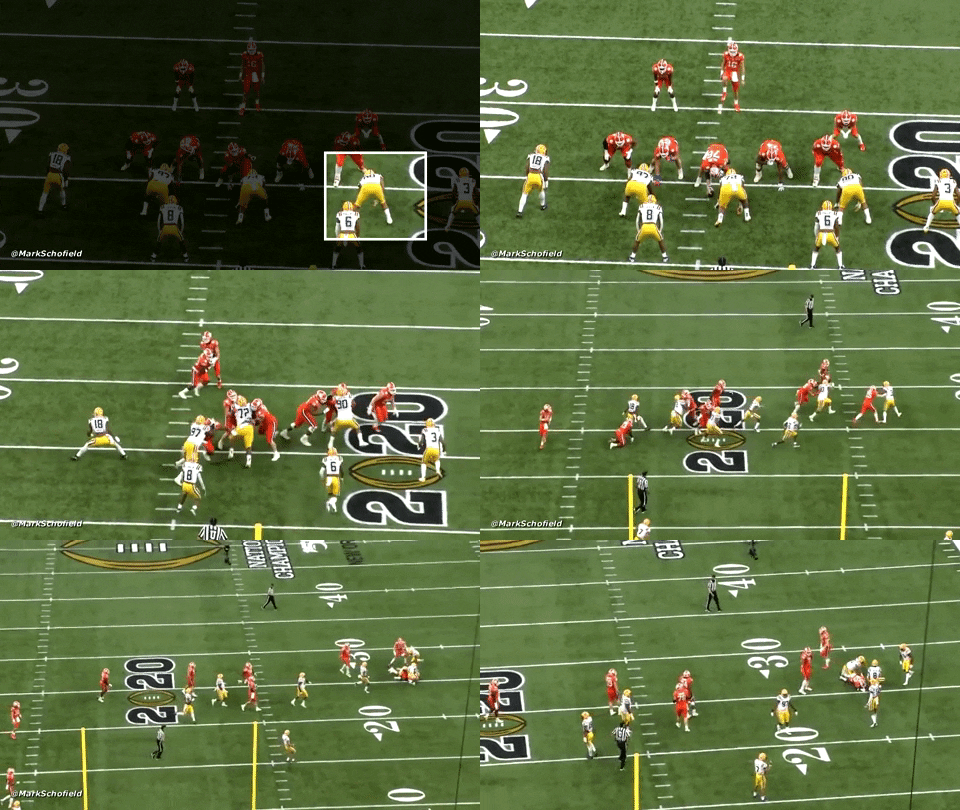
Lawrence aligns on the outside shoulder of the tackle, gets into him with his hands and controls him at the line of scrimmage, and then drives him back into the backfield while keeping hie syes scanning for the ball-carrier. The Clemson offense runs an outside zone play, and the running back tries to bounce this outside. Lawrence sees this, disengages from the tackle, and makes the stop just behind the line of scrimmage. This is him at his best.
Weaknesses: While he has an array of rushing moves in his pocket, Lawrence could benefit from finishing those moves better. Sometimes he seems to be tentative with them, and completing them with more force and violence would be huge for his development. It is more consistency than inability, because on some plays you see the violence and force more than others. He would rather fight and disengage from double-teams, rather than dropping the anchor and eating them at the point of attack. His vision into the backfield can lead him astray, as there are times when he gets caught peeking and ends up chasing ghosts. Lawrence’s play strength is also a question mark for someone who might have to play in a phone booth at the next level.
Conclusion: There are a lot of things to like about his game. The ability to flash on the edge, and the potential positional flexibility he could offer, is a huge plus. With some technical refinement he could have a blistering array of pass rushing moves. Of course his ability to stop the run is a huge plus. It is just the lack of consistency, coupled with the stagnant production, that is a concern. If he can put it all together, he would be a massive boost to a defense. The question becomes, will he?
Comparison: Lawrence Guy. The New England Patriot has been stout run-stopper for Bill Belichick, but can also be a penetrating pass rusher inside or even off the edge.
10. McTelvin Agim, DT, Arkansas

Height: 6’3″ Weight: 309
40-Yard Dash: 4.98 seconds
Bench Press: 27 reps
Vertical Jump: N/A
Broad Jump: N/A
3-Cone Drill: N/A
20-Yard Shuttle: N/A
60-Yard Shuttle: N/A
Bio: McTelvin Agim endured a difficult childhood, moving from school to school and even spending some time living at the Salvation Army. But he thrived on the football field. He was the 2015 Gatorade Arkansas Football Player of the Year, and ESPN graded him as the top player in the state of Arkansas in his recruiting class and a five-star recruit. Agim had plenty of scholarship offers but decided to play at Arkansas, enrolling early after graduating a semester early from high school.
During his time with the Razorbacks Agim has played all along the defensive front. He came into the program as a defensive end and played there early in his career, but last season most of his snaps were spent on the inside as a 3-technique defensive tackle or even a 0-technique nose guard. Last season was his most productive as a pass rusher, as he notched seven sacks, three quarterback hits and 18 hurries.
Stat to Know: Pro Football Focus graded him with a mark of 81.5 as a pass rusher last season, his career-best number. That came with him playing most of his snaps in the interior, including 20% of them head up on the center.
Strengths: Agim has a high motor and the quickness of the line to split double teams and slice between flowing blockers on zone run designs. His array of pass rushing moves is impressive. He can rip, bull rush, swim, two-hand swat and even cross-chop, which is rare for someone playing on the inside. His rip move is his go-to as a pass rusher, but he can even slide a spin move into the mix. One also has to appreciate his competitive toughness. Arkansas got blown out by Alabama this season, but deep into the game with the Crimson Tide holding a 48-0 lead (and most of their starters in the game) Agim put this rep on film:
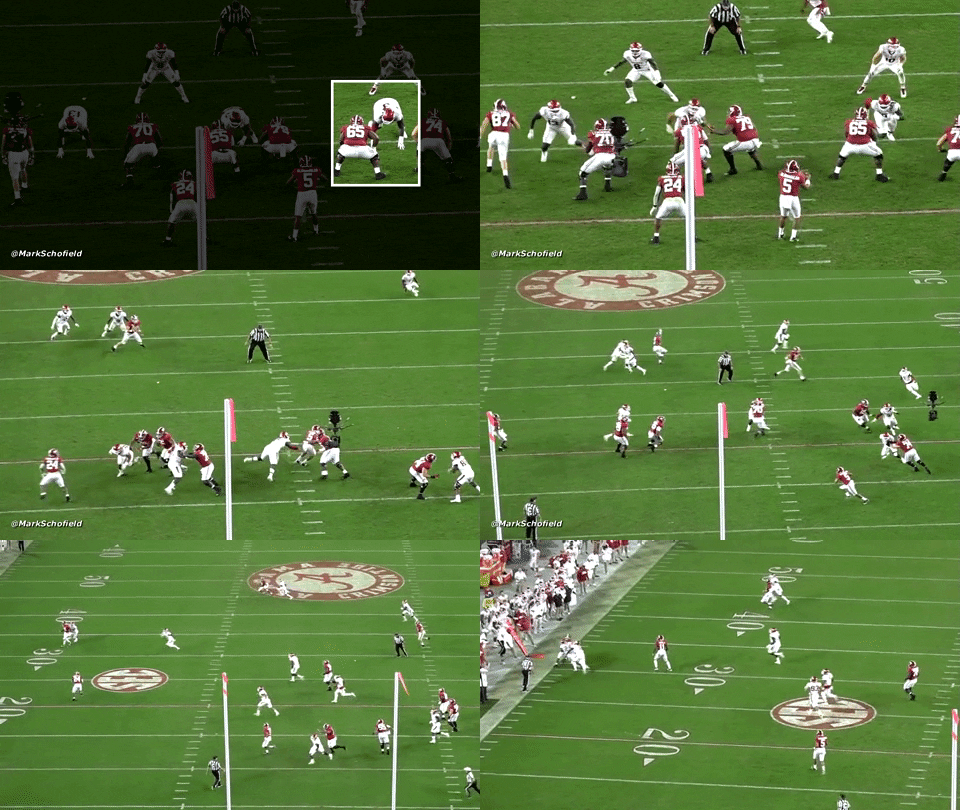
Sure, he does not get home for the sack, but that violent rip move (you can see why it is his go-to move) and burst off the line is going to work in the NFL. Plus, he is working against Alabama’s starting right guard Deonte Brown, not exactly lower-level competition.
This competitive toughness plays out on a snap-to-snap basis as well. Agim has a very high motor, and you will see him get caught in traffic or even washed out at times early in a play, but when the whistle blows and the bodies unpile, somehow he’s worked himself back to the football.
Like this:
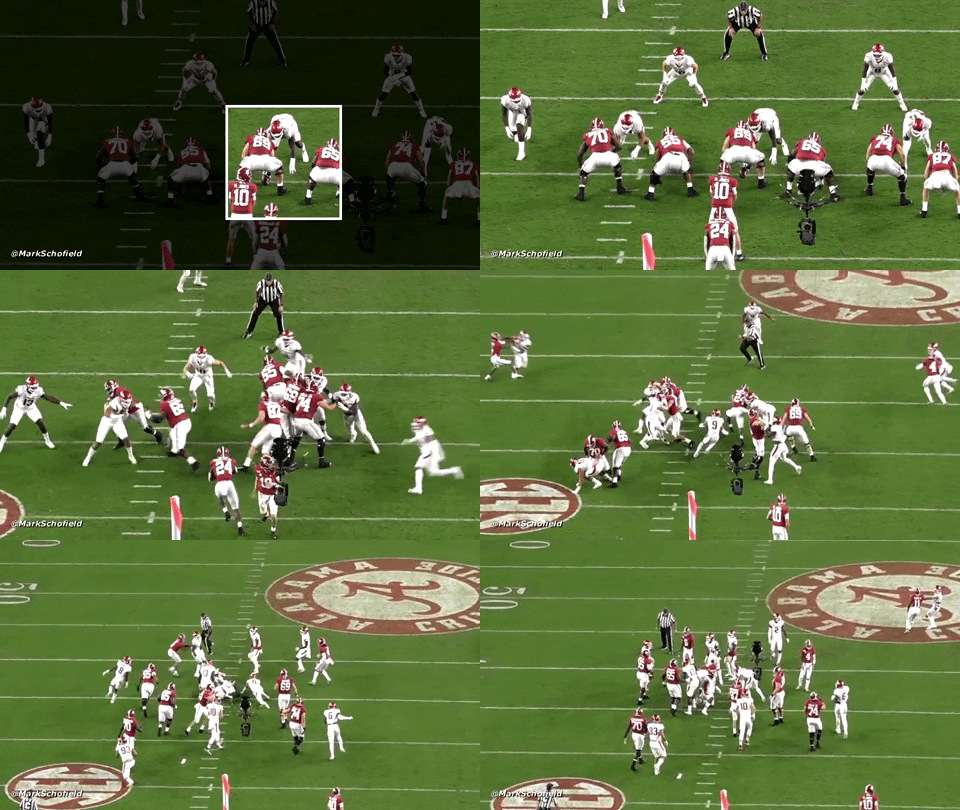
Agim gets rocked initially by the center, and pushed into a pileup with the right tackle and the defensive end. But he keeps fighting and looking for the ball, and manages to spin off the mass of humanity and make the tackle.
He also takes his gap responsibilities seriously, as you can see on this snap against Auburn:
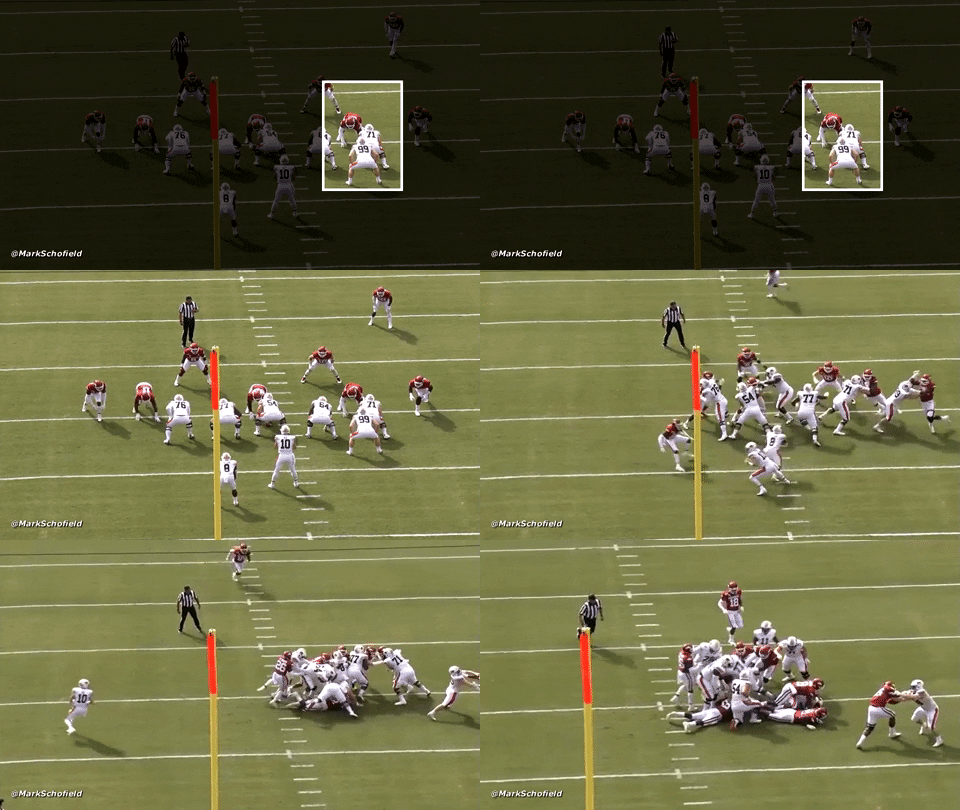
Agim begins this play aligned in the B-Gap, but needs to get outside of the tackle due to the alignment of the H-Back and the defensive front. So he jumps gaps at at the snap, taking him away from the play but forcing the runner inside to help, allowing the linebackers to stop this inside power design.
Weaknesses: Play strength is a question mark for him. As you saw on the second video there are times when the lower body strength prevents him from anchoring at the point of attack, and he is forced to rely on effort and vision to be effective. He also lacks the power up top that other players in this class offer. His vision is a plus, but at times Agim gets lost on misdirection plays and you can see him running away form the action. He could benefit from some refinement to his hand placement, and while his size is a huge plus, the lacks the athleticism and lateral movement skills of his peers.
Conclusion: Competitive toughness and effort matters in this sport. Ask any NFL scout, and they’ll tell you that it is a trait that they look for at every position and from every prospect. Agim checks that box. The athleticism might not be elite, he could stand to benefit from gaining some upper and/or lower body strength, and the technique could be better. But give me the guy willing to fight for that inch – to steal a movie quote – any day of the week. Agim will be a steal on Day Three of this draft.
Comparison: Agim reminds one of former Patriot and current New Orleans Saints DL Malcom Brown. He can be a penetrating 3-technique player up front who win with effort and explosiveness.
11. Leki Fotu, DL, Utah

Height: 6’5″ Weight: 333
40-Yard Dash: 5.15 seconds
Bench Press: 21 reps
Vertical Jump: N/A
Broad Jump: N/A
3-Cone Drill: N/A
20-Yard Shuttle: N/A
60-Yard Shuttle: N/A
Bio: Leki Fotu was a three-sport athlete coming out of high school, but not in the three sports you traditionally see from high school football players. Fotu was a football, basketball and rugby athlete who excelled on both the gridiron and the pitch. He played for the USA Rugby Boys High School All-American team, and trained with the London Wasps, a professional club in Coventry, England, in 2013.
But Fotu turned his attention to the football field, and after taking a year off from the sport in 2014 he returned to the defensive line and led Herriman High School in Utah to a 5A State Championship. In the championship game he had ten tackles in a victory over Lone Peak. Graded as a three-star recruit, Fotu enrolled at Utah and earned significant playing time in 2017 as a true sophomore. Ever since he has been a mainstay on the Utes’ defensive line.
Stat to Know: 2018 was his best year in terms of pass rushing production, as he contributed three sacks, nine quarterback hits and 23 QB hurries to the Utah defense.
Strengths: Fotu moves incredible well for a man of his size, with a quick first step and even a little bit of burst. He has tremendous lower body strength and leg drive, and can push the pocket from the interior or reset the line of scrimmage against double-teams or when singled up. He will swallow double-teams with willingness and ease, keeping his ‘backers free and clear. Fotu seemed to relish short-yardage situations, getting immediate penetration in those moments and forcing plays to the outside and help. Fotu’s ability to get that quick penetration with his first step forces many running backs to make snap decisions behind the line of scrimmage. He also has the lateral movement skills to make plays all along the defensive front.
As a pass rusher, the potential is there but there is also room for growth. He relies on upper body strength as his primary pass rushing plan, with either a bull rush or a push-pull move.
Weaknesses: Fotu needs a better plan as a pass rusher. He relies on those two moves and those alone, and sometimes his pad level is too high and he lets the offensive lineman into his chest, and without a counter attack he is stopped in his tracks. He did show against Washington a rip/spin counter move, so it is clear he is trying to piece together a more varied arsenal, but he’ll need that in the NFL. He could handle cut blocks better, as there were times against Washington and Colorado when he failed to fire his hands out in time, allowing the blocker to get into his ankles and to chop him down to the turf.
Conclusion: There is an argument to be made that outside of Utah’s defense, which asked him to be a run stopper first and a pass rusher second, that Fotu could flourish with more freedom and ability to attack the passer. The raw talent is there and with some development and refinement as a pass rusher he could be a true three-down player in the NFL. His feet and first step are a tremendous starting point, and with some improvement in hand usage he could be a fine NFL defensive tackle.
Comparison: Fotu’s play style, size and athleticism are very similar to Kendrick Ellis when he was coming out of college.











