The Scottish government will urge the BBC’s director general to consider federalising the corporation.
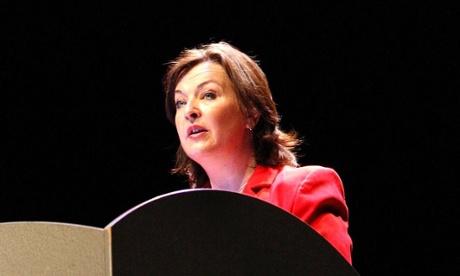
Describing current discussions with BBC figures, including head of strategy, James Purnell, as “very cooperative”, the Scottish culture secretary, Fiona Hyslop, set out at a conference in Glasgow on Thursday the three keys areas she plans to raise with Tony Hall in the coming weeks.
These include changing the structure of the BBC to better reflect constitutional changes across the UK over the past decade; the development of a distinct BBC Scotland TV channel and an additional radio station; and the role of additional platforms in addressing representation.
She also called for full editorial control to be passed to Scotland, “as a mark of trust”, while reaffirming her commitment to independent public service broadcasting.
Hyslop told the audience of leading figures from Scotland’s television sector: “If we want the BBC in Scotland to better reflect our national life, I believe that it should operate under a federal structure.”
The minister argued that a federal structure would also benefit Wales, Northern Ireland and the regions, with the potential for regional boards for Northern England and the Midlands.
She said the new structure would allow for the development of a fully independent system of assurance, which she is asking to be considered through the review of governance announced last week by the UK culture secretary, John Whittingdale, and would require a unitary board for each nation, with a mix of BBC staff and independent members.
This model would be based on a transfer of budgets, Hyslop explained, later telling journalists: “What we would like to see is a fair share of the license fee, which would of course see an increase.”
At present, the BBC collects a licence fee income of £320m from Scotland, while official figures say its overall spending in the country varies from £180m to £200m a year, while unofficial estimates suggest it is far lower.
Asked how much more of the licence fee she would like to see coming to Scotland, she responded: “We have to get a consensus that that is the shape we want before we start working out the detail. We are having very cooperative discussions with the BBC: I met with James Purnell this week and will meet with Tony Hall in the next few weeks so this is a live discussion.”
The Guardian previously learned that the ambitious proposals for new BBC TV and radio channels, originally announced by the first minister, Nicola Sturgeon, in her Alternative MacTaggart lecture in August, were based heavily on an official BBC blueprint that was scrapped after the latest £750m funding cuts.
The proposals, which the BBC forecast would cost about £75m, were leaked to the first minister’s staff after being shelved when the broadcaster was forced to accept devastating cuts under the latest licence fee settlement with the UK government.
Hyslop also told the audience she was “fully committed to defending the principles of a high-quality public service broadcaster – foremost amongst these is the independence from government of editorial and commissioning decisions.”
But she added: “What I do want to ensure, is that the BBC in Scotland is equipped to make decisions with a full understanding of the context in which it operates, something which it has not been equipped to do to its full capacity.
“It is on this basis that I would call for full editorial control to be passed to Scotland, as a mark of trust that - when equipped with these new tools - the BBC in Scotland can make the right decisions and that this will benefit the quality of media output.”
Responding to Hyslop’s speech, BBC Scotland’s head of public policy, Ian Small, said the corporation shared the ambitions of Scotland’s creative sector.
Small said that, in response to “calumnies” and accusations of bias: “My response is Katie Morag, Bannan, Stonemouth, Shetland, The Harbour, Earth’s Natural Wonders, Hebrides, Planet Oil, award-winning investigations, Commonwealth Games coverage, BBC Four Goes Pop, Transgender Stories, Billy Kay’s History of Scottish Literature – all of them ambitious, popular and successful and many the product of Scotland’s independent production sector.”
• This article was amended on 24 September 2015 to remove a reference to the Welsh and Northern Irish executives considering a similar move.