The Scottish ferry operator CalMac has been forced to cancel two-thirds of its routes as a strike by RMT union workers caused more disruption than expected.
CalMac said the 24-hour strike, prompted by a dispute over a potential privatisation, meant only nine of its 27 routes were running.
The publicly owned ferry company, which is facing fierce competition from the private operator Serco for a new contract, said all of its larger vessels sailing to the Outer Hebrides, Coll, Tiree, Colonsay, Islay and Arran remained at the quayside.
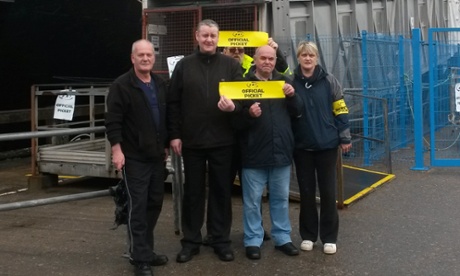
Gordon Martin, the RMT’s regional organiser for Scotland, said up to 700 crew were taking part in the strike and that picket lines at Gourock – CalMac’s headquarters – Ardrossan, Stornoway on Lewis, Oban and Lochranza were well-attended. “The vessels are tied up and are going nowhere,” he said.
Friday’s strike followed two days of work-to-rule by the RMT in a dispute over the preservation of jobs and terms of employment under the next eight-year contract, which starts in 2016.
Talks with the RMT will resume next week but the dispute could escalate further after a second CalMac staff trade union, the Transport Salaried Staffs’ Association (TSSA), which represents 100 ticket office staff and managers, ballots its members on industrial action next week.
Serco, which has already taken over CalMac’s contract to serve Orkney and Shetland, is thought to be the favoured bidder for the far larger and more lucrative contract for 27 routes on the Firth of Clyde, inner and outer Hebrides.
Scottish government ministers insist they are required by EU law to put the contract out to open tender, and deny opposition and union charges that awarding the tender to Serco woud amount to privatisation.
The government would still own all of the ferries and infrastructure and would set the timetables, routes and fares. Serco would be running a public service contract and would not own the service, the government argues.
CalMac’s managing director, Martin Dorchester, said he was disappointed the strike had gone ahead and said extra sailings overnight and on Saturday would help some travellers reach their destinations.
Those included runners heading for the Barrathon race on Barra and guests travelling to seven weddings in the Western Isles. “Putting weddings at risk is just one of the very human consequences this strike is having,” Dorchester said. “I’m grateful for the efforts of staff to salvage people’s big day, but this cannot go on. It is damaging the social and economic fabric of our communities.”
He said the RMT should have accepted CalMac’s offer to include a guarantee of no compulsory redundancies in its bid, in a last-minute deal to avert the strike.
Martin welcomed the offer but said it did not bind Serco or the Scottish government. “If CalMac doesn’t win the contract it means nothing. As well as being in their bid, we want it written into our collective bargaining agreements and contracts of employment,” he said.
• This article was amended on 30 June 2015 to correct an editing error that placed Coll, Tiree, Colonsay, Islay and Arran in the Outer Hebrides.