Afternoon summary
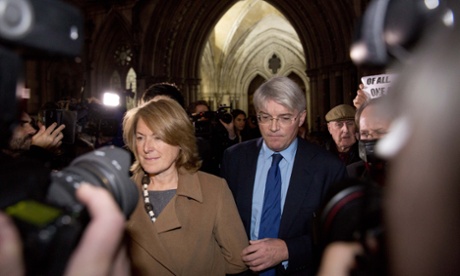
- Andrew Mitchell, the Tory MP and former cabinet minister at the centre of the Plebgate row lost his high court libel case on Thursday in a ruling which sees him facing a legal bill of millions of pounds and leaves his political career in tatters. As Karen McVeigh reports, outside the court, Mitchell told reporters he was bitterly disappointed with the ruling and that it had been “a miserable two years” for him, but that he now hoped to move on with his life. He had sued News Group Newspapers (NGN) over a September 2012 story in the Sun which claimed he had launched an offensive and arrogant attack on Downing Street police officers who refused to allow him to cycle through the main vehicle gates, branding them “fucking plebs”. The Sun based its report on the account given in his log by PC Toby Rowland.
- The Scottish parliament is to be handed direct control over an estimated £14bn of income tax and welfare benefits in a cross-party deal that will bring about the biggest upheaval of Britain’s taxation system in the modern era. Downing Street has also hinted that David Cameron could use this as a pretext for pushing for Scottish MPs to lose the right to vote on certain aspects of the budget. (See 1.45pm.)
That’s all from me for today.
Thanks for the comments.
The Sun says the Mitchell verdict is 'a victory for all journalism'
Stig Abell, the Sun’s managing editor, has described the verdict as a victory for journalism. Here’s his statement.
Today represents vindication for The Sun and its journalists. We’ve always stood by our story and continue to do so. We’re delighted that the judge has ruled that what we reported about evidence on Downing Street and the evening in questions was the truth, and accurate.
There’s been a lot of speculation and comment about Mitchell’s outburst and criticism of our newspaper. This judgment today lays all that to rest. Our article broke the important public interest story and it has been independently and conclusively confirmed today. The Sun can be proud of its journalism.
More importantly, today marks a victory for all journalism. We now live in a world where the task of uncovering what goes on in our institutions has never been more difficult. It is the job of journalists to shine light into the dark corners of public and political life. There are many in the establishment who do not wish us to do so.
A mute press does not serve the public interest, it only serves the interests of the political classes. Today this verdict has endorsed the values of a robust and irreverent journalism and we’re absolutely delighted with the result.
In his statement PC Toby Rowland said that he had tried everything to avoid the case going to court. My colleague Vikram Dodd has filed more on this.
Before the trial all sides had attended mediation to try and avoid a trial, and the costs and the risks involve.
But Mitchell could not compromise enough to satisfy PC Rowland’s anger at the direct attack on his integrity when the former cabinet minister called the officer a liar for sticking by his claim he had been called a “pleb”..
One source with knowledge of the discussions to reach a pre-trial settlement said of PC Rowland’s decision to sue Mitchell: “This is not the same as a scrote calling him a liar, this is a high ranking politician, a former cabinet minster.”
For the Police Federation, Plebgate and the making up of evidence by some officers and leaks to the media had damaged its tarnished reputation. At a national level they are desperate to end the saga as they try to reform and repair their reputation with disillusioned members and a government that has threatened to impose reforms on them if they stay wedded to old and discredited ways ...
One source said the defeat was all down to Andrew Mitchell’s temper: “Mitchell made an error of judgment by calling Toby Rowland a liar. If that didn’t happen we would not have had this case.”
Here’s my colleague Joseph Harker on the Mitchell verdict.
Now Andrew Mitchell really does know what it's like to be black. Courts will always believe an officer's word over yours #duggan
— joseph harker (@josephharker) November 27, 2014
Here’s the Conservative MP David Davis, a friend of Andrew Mitchell’s and someone who attended court to support him, on the result.
I’m disappointed and shocked by the judgment. I am really sorry for my good friend Andrew Mitchell, as a good man brought down.
PC Toby Rowland says he tried 'everything possible' to avoid a trial
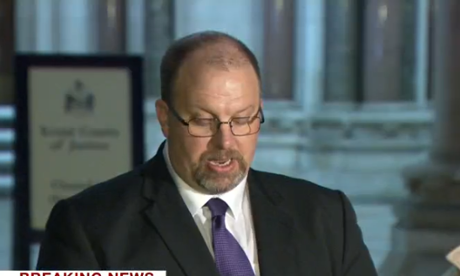
Here is PC Toby Rowland’s statement outside the Royal Courts of Justice.
The following statement is made in a personal capacity and I do not speak on behalf of the Metropolitan Police Service.
I would firstly like to thank Mr Justice Mitting for his judgment, my legal team and my family and friends for their unwavering support through what has been the very worst of times for me personally.
It is a huge regret that what happened at the gates of Downing Street more than two years ago has ended up here.
It should be pointed out that I and my team tried everthing possible to stop the need for court action.
Even before this trial began, I had already been cleared of any wrong-dong by four expensive, wide-reaching investigations, including criminal ones.
I’m delighted here again my innocence, my integrity and my reputation as a police officer has been recognised.
The pain myself and my family have been through is indescribable. And it is particularly saddening because I was merely following procedures, I was doing my job without fear or favour.
I also recognise how difficult this must have been for Mr Mitchell’s family and I hope now that a line can be drawn and everyone can be left in peace. Thank you.
After he made his statement, Channel 4 News’s Michael Crick asked him if he wanted an apology from Mitchell. But Rowland did not seem to reply.
Updated
PC Toby Rowland is speaking outside the Royal Courts of Justice now.
He says he and his team did all they could to avoid this coming to court.
He says it has been very difficult for him and his family.
He would now like to move on, he says.
I’ll post the full quotes in a moment.
And here is a statement from Steve White, chair of the Police Federation of England and Wales, welcoming the result.
Toby [Rowland’s] name has been cleared and his integrity restored. Toby has conducted himself with dignity and professionalism in relation to this incident and subsequent inquiries and legal cases.
It is important that this incident is now brought to a close to allow Toby and his family to look to the future.
Mitchell says he is 'bitterly disappointed' but that he wants to move on
Here is the key quote from Andrew Mitchell.
[I want to thank] all my friends, in the international development community, my constituents, for their loyalty and support during the last two years.
Obviously I’m bitterly disappointed by the result of the judgement today. This has been a miserable two years. But we now need to bring this matter to a close and to move on with our lives.
Updated
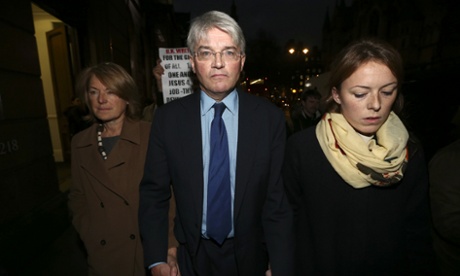
Andrew Mitchell has spoken briefly to reporters outside the steps of the Royal Courts of Justice.
He said he was “bitterly disappointed” by the result. He had had a “miserable” two years, he said.
But he said he wanted to move on, implying he will not appeal.
Andrew Mitchell ordered to pay £300,000 by early January
Andrew Mitchell has been ordered to pay interim costs of £300,000 by early January.
Andrew Mitchell has been ordered to make interim payments of £300,000 to News UK&Police Federation. He has until early January to find it.
— Chris Mason (@ChrisMasonBBC) November 27, 2014
This has been said already here today, by someone else, but I’ll post it again because it’s such sound advice.
Two lessons to draw from the #plebgate case. 1. Never get involved in a libel action. 2. Seriously, NEVER get involved in a libel action.
— Daniel Hannan (@DanHannanMEP) November 27, 2014
Now a Tory MP, Stewart Jackson, has taken to Twitter to criticise another Tory MP, Michael Fabricant, for using Twitter to comment on Andrew Mitchell. (See 3.49am.)
Poor old @Mike_Fabricant just can't keep his trap shut and show just a little decorum #mitchelllibelcase
— Stewart Jackson MP (@SJacksonMP) November 27, 2014
Tim Montgomerie, the ConservativeHome founder and Times columnist, is speaking up for Andrew Mitchell.
I still don't think Andrew Mitchell said pleb and he was certainly a superb international development secretary. A personal tragedy.
— Tim Montgomerie ن (@montie) November 27, 2014
The BBC’s Danny Shaw says the total costs could run to £3m.
Police Fed says pleased w ruling. It's spent almost £1m on legal fees. "Toby’s name has been cleared and his integrity restored" #plebgate
— Danny Shaw (@DannyShawBBC) November 27, 2014
Lawyers for Sun & Rowland want Mitchell to pay legal costs. Browne for Rowland wants £200k within 14 days (1st instalment). #plebgate
— Danny Shaw (@DannyShawBBC) November 27, 2014
Gavin Millar for the Sun (News Group) also wants £200k as interim payment. I reckon total costs likely to be £2m - £3m. #plebgate
— Danny Shaw (@DannyShawBBC) November 27, 2014
The judge is now putting off the conclusion of the case for 14 days.
That is not because the central conclusion is in any doubt; it’s just to allow the lawyers to tie up all the legal threads.
Mitting J: I don't entirely agree. Mitchell disappointed, deserves time to consider. 14 days & hearing if necessary in new year #plebgate
— 5RB Barristers (@5RB) November 27, 2014
Mitting J: Mitchell to have 14 days to formulate undertaking to Rowland & court; 14 days too to agree next steps if not resolved #plebgate
— 5RB Barristers (@5RB) November 27, 2014
Mitting J: Claimants in each action to come back to the court if not agreed. Browne QC: Costs - costs follow the event #plebgate
— 5RB Barristers (@5RB) November 27, 2014
There has also been some discussion about costs, which run to well over £1m. Desmond Browne and Gavin Millar said Mitchell should pay £200,000 within 14 days. But it is getting very technical. There are more details on the @5RB twitter feed.
Updated
Here’s Gavin Millar, the Sun’s barrister.
Millar QC: Mitchell's response "disappointing" & not consistent with what we thought coming into this hearing. #plebgate
— 5RB Barristers (@5RB) November 27, 2014
Millar QC: Judge makes finding of fact, finds central sting of defamatory statement. #plebgate
— 5RB Barristers (@5RB) November 27, 2014
Millar QC: Now found 3 toxic phrases were said, were said to police officers as alleged. No meaning possible avoids that sting #plebgate
— 5RB Barristers (@5RB) November 27, 2014
In the media we are reporting that Andrew Mitchell has lost his libel case (which he has - the key matter has been resolved) but the news has not got through to the courtroom, where the case is still being debated.
But Desmond Browne, PC Rowland’s PC, is trying to kill it off.
Browne QC: no need to read transcript with a microscope. HO a "non-starter"; QP "no basis alleged for saying Rowland responsible" #plebgate
— 5RB Barristers (@5RB) November 27, 2014
HO is honest opinion, and QP is qualified privilege. These are the two other defences to libel that Andrew Mitchell could argue, in addition to truth, which has fallen.
(Remember, this was a double libel action. Mitchell was suing Rowland, and Rowland was counter-suing.)
Price QC: no question of Mitchell repeating allegation of Rowland lying. No need for an injunction; could give undertaking #plebgate
— 5RB Barristers (@5RB) November 27, 2014
Browne QC: in light of "massive hostile media campaign" vs Rowland in media, would ask for undertaking to be required. #plebgate
— 5RB Barristers (@5RB) November 27, 2014
Browne QC: if undertaking offered, I would ask Your Lordship to accept it, with same effect as an injunction #plebgate
— 5RB Barristers (@5RB) November 27, 2014
Desmond Browne represents Mitchell, and James Price represents PC Rowland.
Michael Fabricant, the Conservative MP, says Andrew Mitchell should have shown some humility.
If Andrew Mitchell had shown some humility, said he had lost his temper and not sure what he'd said, but was sorry - he'd still be in Gov't.
— Michael Fabricant (@Mike_Fabricant) November 27, 2014
James Price QC for Mitchell says the Sun "isn't totally off the hook" but says Mitchell won't repeat allegation that Rowland lied #plebgate
— Danny Shaw (@DannyShawBBC) November 27, 2014
James Price, Andrew Mitchell’s barrister, is now speaking.
Price QC: not clear where Mitting J's findings as to Mitchell's state of mind leave question of 'malice' (which cd defeat QP). #plebgate
— 5RB Barristers (@5RB) November 27, 2014
Mitting J says not any omission. He deliberately did not make findings on malice.
— 5RB Barristers (@5RB) November 27, 2014
Updated
Browne QC: Mitchell shown "a total lack of contrition" & not withdrawn claim of conspiracy involving Rowland. #plebgate
— 5RB Barristers (@5RB) November 27, 2014
Browne QC: effect on Rowland's career & family been awful. Without undertaking, repetition monstrous, injunction necessary #plebgate
— 5RB Barristers (@5RB) November 27, 2014
Back in the court Desmond Browne QC is now making a submission on behalf of PC Rowland.
Browne QC: matter of "public interest" pleaded as "making of false allegations by the police". They weren't false. #plebgate
— 5RB Barristers (@5RB) November 27, 2014
Mitting J interjects that there were false statement by PCs, just not any of those involved in this trial. #plebgate
— 5RB Barristers (@5RB) November 27, 2014
Browne QC on Mitchell's Defence - no misconduct by Rowland found. Says QP is just relying on facts which failed in justification #plebgate
— 5RB Barristers (@5RB) November 27, 2014
Browne QC: Says Mitting J's findings have determined all 3 defences. Damages sought - also an injunction to prevent repetition #plebgate
— 5RB Barristers (@5RB) November 27, 2014
Andrew Mitchell loses plebgate libel action
Here’s the Press Association snap story about Andrew Mitchell losing his libel action.
Former Government chief whip Andrew Mitchell has lost his High Court libel action over the “Plebgate” incident.
He sued News Group Newspapers (NGN) over a September 2012 story in the Sun which he said meant he was guilty of launching a grossly offensive and arrogant attack on Downing Street police officers who refused to allow him to cycle through the main vehicle gates, branding them “fucking plebs”.
NGN based its report, which it said was substantially true, on the account given in his log by Pc Toby Rowland.
Giving his ruling, Mr Justice Mitting said: “For the reasons given I am satisfied at least on the balance of probabilities that Mr Mitchell did speak the words alleged or something so close to them as to amount to the same including the politically toxic word pleb.”
The officer claimed statements made by the 58-year-old MP for Sutton Coldfield from December 2012 onwards falsely suggested he had fabricated his allegations.
But Mr Mitchell, who resigned as whip a month after the altercation, denied saying: “Best you learn your fucking place - you don’t run this fucking government - you’re fucking plebs.”
He said he would never call a policeman a pleb “let alone a fucking pleb” - although he agreed he muttered audibly under his breath ‘I thought you lot were supposed to fucking help us’ - but not at the officer.
He was in a hurry to get to the Carlton Club that evening and was expecting to be let through as he had been without difficulty that morning and after lunch.
He thought it “extremely odd” when Pc Rowland issued him with a warning under the Public Order Act, but apologised to the officer for his language the next day.
Mr Mitchell agreed that the chief whip’s role required a mixture of charm and menace and that he could occasionally be abrasive, but said he did not merit the “extraordinary tsunami of vitriol which descended on my head over a prolonged period of time”.
His counsel, James Price QC, said a “web of lies, deceit and indiscipline” by police officers led to a press campaign and public hostility and the version of the encounter which was leaked to the newspaper by a number of officers was “wholly false”.
Mr Price said: “In the end, the lies brought Mr Mitchell down, destroying a political career of 27 years.”
But Desmond Browne QC, for Pc Rowland, claimed Mr Mitchell was a “Jekyll and Hyde” character whose capacity for menace found its outlet in foul temper and foul language.
Browne QC (for Rowland) now going through the pleadings in Rowland v Mitchell. Says AM plea of justification disappears #plebgate
— 5RB Barristers (@5RB) November 27, 2014
Browne QC: ask whether Mitchell's 'makeweight' pleadings of Qualified Privilege (QP) and Honest Opinion (HO) survive. Says not #plebgate
— 5RB Barristers (@5RB) November 27, 2014
Browne QC: facts relied upon to found HO same as of Justification & HO doesn't arise b/c factual statements in any event #plebgate
— 5RB Barristers (@5RB) November 27, 2014
Browne QC: Mitchell's defence of HO "dead in the water". Says Mitchell's remaining defence to Rowland is QP #plebgate
— 5RB Barristers (@5RB) November 27, 2014
Twitter is cruel.
Mitchell to judge: "I thought you were here to fucking help us"
— Ern Malley (@loveandgarbage) November 27, 2014
(It’s a joke, obviously.)
They’re back.
Mitting J back in Court 13. Browne QC rises for Rowland, and says he seeks damages to be assessed & injunction v Mitchell #plebgate
— 5RB Barristers (@5RB) November 27, 2014
Although the substance of the case has been decided, the judge has not actually finished giving his judgment.
Curious: Mitting J adjourned for 10 minutes so press can rush out and file. But we are still in court, waiting to see what happens next.
— Joshua Rozenberg (@JoshuaRozenberg) November 27, 2014
Here’s the BBC’s Nick Robinson on the result.
Mitchell loses plebgate case. Was an argument about one word worth a career, a reputation and a fortune?
— Nick Robinson (@bbcnickrobinson) November 27, 2014
Little reaction from Mitchell. He looked stunned and confused. Ten minute break. #plebgate
— Danny Shaw (@DannyShawBBC) November 27, 2014
"I'm satisfied that Mitchell did speak the words attributed to him including the politically toxic words" Judge #plebgate
— Karen McVeigh (@karenmcveigh1) November 27, 2014
Mitting J: On balance of probabilities, I am satisfied that Mitchell did say the words, or very similar, as alleged #plebgate
— 5RB Barristers (@5RB) November 27, 2014
Judge rules Andrew Mitchell did call officer ‘pleb’
Andrew Mitchell did say pleb, on balance, says judge
— Michael Crick (@MichaelLCrick) November 27, 2014
Updated
Glum and worried faces on Mitchell row in court. #plebgate
— Danny Shaw (@DannyShawBBC) November 27, 2014
Mittting J: Richardson letter concluded with two sig comments. (1) Not comfortable with the reporting... unfair to Mr Mitchell #plebgate
— 5RB Barristers (@5RB) November 27, 2014
(2) Where did the Sun get their info? Serious breach of confidentiality... Questions integrity of DPG. #plebgate
— 5RB Barristers (@5RB) November 27, 2014
Mitting J: Both comments justified. Shows Richardson had no animus to Mitchell. An "honest & level-headed PC" writing #plebgate
— 5RB Barristers (@5RB) November 27, 2014
Updated
Judge says 3rd PC Ian Richardson, since retired, was "most objective" & complained events had been hijacked later by Police Fed #plebgate
— Danny Shaw (@DannyShawBBC) November 27, 2014
PC Ian Richardson (who spoke to @thetimes in Feb) praised as objective, sensible and impressive by judge #plebgate
— Sean O'Neill (@TimesCrime) November 27, 2014
Sound advice from Matthew Scott.
Looks like classic demonstration of the soundest legal principle of all: never ever litigate. Never, if you can possibly avoid it. #plebgate
— Matthew Scott (@Barristerblog) November 27, 2014
PC Richardson was within 3 weeks of retirement after 30 years' service. He wrote long letter to Commissioner about incident #plebgate
— 5RB Barristers (@5RB) November 27, 2014
Richardson letter was to complain at lack of activity by senior officers, allowing the Police Fed to fill void & media frenzy #plebgate
— 5RB Barristers (@5RB) November 27, 2014
David Allen Green is also now calling it for PC Rowland.
(Unless Mitchell gets that final punch, this match looks over.) #plebgate
— David Allen Green (@DavidAllenGreen) November 27, 2014
Updated
You can see the "police, too slow to make it up" submission being made in courts all over the country now... #plebgate
— Rupert Myers (@RupertMyers) November 27, 2014
Judge says evidence suggests ‘lack of collusion’
(It will be ironic if Mitchell loses the case because the judge ruled Rowland was too dim to invent a lie.) #plebgate
— David Allen Green (@DavidAllenGreen) November 27, 2014
Judge finds 2nd PC at the gates - Tupman - to be a "truthful witness" as well. His evidence suggests "lack of collusion" #plebgate
— Danny Shaw (@DannyShawBBC) November 27, 2014
Updated
Judge says Weatherley's notes provide "powerful support" for Rowland's account #plebgate
— Danny Shaw (@DannyShawBBC) November 27, 2014
Not only did Rowland lack wit, inclination imagination to fabricate, neither did he inclination for pantomime invention needed #plebgate
— Karen McVeigh (@karenmcveigh1) November 27, 2014
The judge plays down the possibility of an anti-Mitchell conspiracy.
Judge says Weatherley's notes don't support the conspiracy claim unless alleged conspirators were "exceptionally subtle" #plebgate
— Danny Shaw (@DannyShawBBC) November 27, 2014
Updated
Judge now saying there are too many weaknesses and inconsistencies for the police account to be a lie - tricky one #plebgate
— Rupert Myers (@RupertMyers) November 27, 2014
Weatherley was dismissed from the Police service because she sent a photo of a print out of Rowland's email to PC Glanville #plebgate
— 5RB Barristers (@5RB) November 27, 2014
She denied to OpAlice that anyone had accessed her copy of the email. Dismissed after 24 years unblemished service #plebgate
— 5RB Barristers (@5RB) November 27, 2014
Mitting J satisfied that her account of the incident on 19 Sep 2012 was clear & without rancour, notwithstanding later actions #plebgate
— 5RB Barristers (@5RB) November 27, 2014
Mitting J now discussing questions arising from Weatherley pocket notebook being apparently filled in using two separate pens. #plebgate
— 5RB Barristers (@5RB) November 27, 2014
Mitting J "I do not accept that she [Weatherley] is capable of such dishonesty". #plebgate
— 5RB Barristers (@5RB) November 27, 2014
If PCs on gate such subtle conspirators, would expect her 1st account to more fully support Rowland's account #plebgate
— 5RB Barristers (@5RB) November 27, 2014
Judge says he believes sacked officer Gill Weatherley told him the truth about #plebgate incident &'aftermath
— Danny Shaw (@DannyShawBBC) November 27, 2014
Matthew Scott, the legal blogger, is calling it for PC Rowland now.
I'll take 150/1 on Mitchell winning this now. Looks like Rowland will win. His superior stupidity is seeing him canter home. #plebgate
— Matthew Scott (@Barristerblog) November 27, 2014
Updated
Here’s David Allen Green, the legal blogger, again.
(Not looking good for Mtichell; all may come down to burden of proof.) #plebgate
— David Allen Green (@DavidAllenGreen) November 27, 2014
Now judge considering if Rowland could have invented the phrase together with 3 other officers on the gates #plebgate
— Danny Shaw (@DannyShawBBC) November 27, 2014
Call to Sgt Mills at 19:37:23 inc 'pleb' means must look before then. This involves assessRichardson, Tupman, Weatherley accounts #plebgate
— 5RB Barristers (@5RB) November 27, 2014
Judge emphasises he doesn't think PC Rowland performed "the pantomime" invention of alleged phrase required #plebgate
— Danny Shaw (@DannyShawBBC) November 27, 2014
Judge: Rowland made arrest threat because he was surprised at Mitchell's words #plebgate
— Sean O'Neill (@TimesCrime) November 27, 2014
The judge says PC Rowland did not help the Police Federatio:
For Rowland account to be false, must (1) hear AM words (2) decide to unlawfully arrest (3) invent words (4) recount falsity #plebgate
— 5RB Barristers (@5RB) November 27, 2014
Mitting J: Rowland did nothing to help or support those in Police Fed who had a dispute with Gvt. #plebgate
— 5RB Barristers (@5RB) November 27, 2014
Updated
Here’s the BBC’s Daniel Sandford on the latest assertion from the judge. (See 2.59pm.)
That is close to a killer blow against Mitchell #plebgate
— Daniel Sandford (@BBCDanielS) November 27, 2014
This judge certainly understand suspense.
If he ever tires of the law, a career as a thriller writer may be available.
Judge says gaps and inconsistencies in Rowland's account don't demonstrate he fabricated his account, as Mitchell lawyers claim #plebgate
— Danny Shaw (@DannyShawBBC) November 27, 2014
Mitting J now discussing Price QC's claims of inconsistencies in Rowland's accounts (pocket book entry, email, OpAlice interviews) #plebgate
— 5RB Barristers (@5RB) November 27, 2014
Inconsistencies include (1) when Mitchell stopped speaking (2) the first call from the box (3) reason for going up to house etc. #plebgate
— 5RB Barristers (@5RB) November 27, 2014
This is from Matthew Scott, a legal blogger.
Judge is doing a Lord Sugar and now concentrating his fire on Rowland. #plebgate
— Matthew Scott (@Barristerblog) November 27, 2014
I’m not sure the judge, Mr Justice Mitting, will be flattered by being compared to Lord Sugar.
Updated
Mitting J: Rowland would not have been justified in arresting Mitchell, and was unwise to threaten to do so. It was just surprise #plebgate
— 5RB Barristers (@5RB) November 27, 2014
The judge says PC Rowland was wrong about members of public being shocked:
#Plebgate Judge; PC Rowland said members of the public were visibly shocked. This perception and evidence was wrong.
— Carl Dinnen (@carldinnen) November 27, 2014
(Judge for second time doubting Rowland's evidence. First, POA warning; now "shocked" public.) #plebgate
— David Allen Green (@DavidAllenGreen) November 27, 2014
Updated
For those who care, yes Mr Justice Mitting is saying the word "f***ing" a lot #plebgate
— Daniel Sandford (@BBCDanielS) November 27, 2014
Here’s David Allen Green’s verdict on how it’s going so far.
(Too early to call #plebgate but Mitchell's lawyers will not be enjoying this so far. Will Mitchell be saved by the burden of proof?)
— David Allen Green (@DavidAllenGreen) November 27, 2014
This is from 5RB Barristers, who are also tweeting the judgment.
There was discussion between various officers on bus back to Apex House including discussion of words like toxic phrases #plebgate
— 5RB Barristers (@5RB) November 27, 2014
Sgt Mills also called Inspector Booth, who testified that in that phone call he was told about use of the word 'plebs' #plebgate
— 5RB Barristers (@5RB) November 27, 2014
Booth instructed that Rowland should set out fuller account for superior officers. Rowland wrote email of 21:22 from Apex House #plebgate
— 5RB Barristers (@5RB) November 27, 2014
Mitting J is now reading the email Rowland sent to the senior officers. Incs ref of members of the public being 'visibly shocked' #plebgate
— 5RB Barristers (@5RB) November 27, 2014
More from the BBC’s Daniel Sandford.
This is not looking good for Mitchell #plebgate
— Daniel Sandford (@BBCDanielS) November 27, 2014
It's the first criticism of Andrew Mitchell by the judge. His family are looking tense now. #plebgate
— Daniel Sandford (@BBCDanielS) November 27, 2014
Mitchell's wife and two daughters looking strained. He is slightly less upright than usual. PC Rowland staring straight ahead #plebgate
— Daniel Sandford (@BBCDanielS) November 27, 2014
Updated
The BBC’s Daniel Sandford reminds us of what’s at stake for the Police Federation financially.
If this goes against Andrew Mitchell MP the Police Federation legal costs alone are close to a million pounds #plebgate
— Daniel Sandford (@BBCDanielS) November 27, 2014
Judge says Pc Rowland impressed him as ‘old-fashioned policeman’
Judge says Rowland "impressed me as a rather old fashioned policeman" - not imaginative - well-suited to job - defensive #plebgate
— Danny Shaw (@DannyShawBBC) November 27, 2014
Here’s some sound advice from David Allen Green, the legal blogger.
(Never try to read - ie, guess the thoughts of - a judge. You will usually get it wrong.) #plebgate
— David Allen Green (@DavidAllenGreen) November 27, 2014
Judge: PC Rowland not the sort of man to have invented what a politician said
Judge says Rowland is not the sort of man who had the "wit" to invent on "spur of the moment what a senior politician said to him" #plebgate
— Daniel Sandford (@BBCDanielS) November 27, 2014
Judge said Rowland not sort of man to have "wit the imagination " to make up story on spur moment of what Minister said #plebgate
— Karen McVeigh (@karenmcveigh1) November 27, 2014
Judge on PC: "not sort of man to have had the wit, imagination or inclination to invent account of what a senior politician said" #plebgate
— Sean O'Neill (@TimesCrime) November 27, 2014
Updated
Judge - Mitchell ‘did lose his temper’
My colleague Karen McVeigh is tweeting live from the high court as Mr Justice Mitting rules on the Andrew Mitchell plebgate affair. Follow her tweets here.
Judge says "absolute precision" impossible but the words alleged would have taken around 4.2 seconds #plebgate
— Karen McVeigh (@karenmcveigh1) November 27, 2014
Judge not satisfied that Rowland said all of the words he said he did to Mitchell #plebgate
— Karen McVeigh (@karenmcveigh1) November 27, 2014
Judge says Mitchell's claim that he was ill-tempered but did not lose his temper was "hair-splitting and unconvincing" #plebgate
— Daniel Sandford (@BBCDanielS) November 27, 2014
Judge says Mitchell "did lose his temper" & that it can lead to "loss of inhibition in speaking & imperfect recollection" #plebgate
— Danny Shaw (@DannyShawBBC) November 27, 2014
#Plebgate Judge; I am satisfied that Andrew Mitchell did lose his temper and as he told John Randall he did not remember what he said.
— Carl Dinnen (@carldinnen) November 27, 2014
Updated
Clegg also hints Scottish MPs could be prevented from voting on some budget matters
Nick Clegg has given an interview about the Smitcommission. He was also asked if this would mean Scottish MPs should stop voting on budgets, and he replied in not dissimilar terms to those used by the prime minister’s spokesman. (See 1.45pm.)
Well, the bands and the rates of the income tax system will be devolved to Scotland. But the tax base, in other words, who you raise income tax from and the allowance and the exemptions and so on, all of that will still be determined in the UK, in the UK parliament in Westminster. And, of course, all MPs from across the UK can vote in that.
Separately, of course we need to look at this issue of how you deal with matters which come up from time to time which only affect England and Wales. And my party, the Liberal Democrats, have a plan on how you can deal with that. English votes, if you like, for English matters. The Conservatives have got a rival plan which is all about Conservative votes on English matters, which I don’t think is acceptable.
This suggests that he too is open to the possibility of Scottish MPs being stopped from budget votes on income tax bands and rates. I’ll try to get some more clarification.
(His point about “Conservative votes on English matters” was a point about PR. The Lib Dems want English votes for English laws, but on a proportional basis: ie, if the Lib Dems were to have 20% of English votes, but only 10% of English MPs (or 10% and 5%, which might be more realistic post-2015), they would get 20% of the Commons Evel votes (or 10%).
Number 10 hints Cameron favours stopping Scottish MPs from voting on some aspects of budget
Lord Smith only managed to achieve consensus because Labour agreed to the full, or near-full, devolution of income tax. This was the most important concession during the negotiations. Labour was wary about this, because it worried that this would strengthen the case for Scottish MPs being banned from voting on the budget, but, as our overnight story reports, Labour thinks it has won safeguards on this point. Gordon Brown stressed those safeguards in the statement he released this morning. (See 8.59am.)
But Downing Street is hinting that Scottish MPs could be banned from voting on some aspects of the budget under plans for “English votes for English laws” (Evel) being drawn up by David Cameron. At a briefing, the prime minister’s spokesman was not explicit about this, and he stressed that details would be announced in due course.
My colleague Rowena Mason has filed me some direct quotes from his briefing. Here they are.
There will need to be arrangements in a series of areas including financial matters to recognise the principle of Evel.
[The PM’s] very clear view is that what the Smith Commission does - alongside meeting that vow to the people of Scotland - is underline the extent to which this point around Evel is irrefutable. The Smith Commission is entirely consistent with the principle of Evel. The PM will be bringing forward proposals for Evel before the Christmas recess. You’ll get the details then.
If you have the principle of devolution in areas including Scotland, I think it’s right that that is fully reflected in terms of the proposals that come forward for Evel. That applies to all financial matters.
In terms of things that are UK-wide, then of course UK MPs will, as the Smith Commission says, retain their full responsibilities. There is going to continue to be a UK budget, of course. There are elements where you have seen devolution on financial matters and in that respect I would say the principle of Evel applies in that context as well. There will continue to remain a UK budget. There will be UK ... I’ve just discussed, the UK elements of income tax. Personal allowance for example.
There are important elements that remain UK-wide. We have a UK parliament for those. Where you see significant areas of devolution there is an important principle there of Evel. The PM is going to bring forward proposals that reflect that because that is the fair thing to do ...
What the Smith Commission is devolving in terms of income tax are the bands and rates. There are a series of bits of income tax. The personal allowance threshold would be the headline but there are others: the definition of what is income versus what is capital. Those elements remain UK-wide and of course in terms of things that are UK-wide, UK MPs will retain full responsibility.
There is going to continue to be a UK budget. Of course there are elements where you have seen devolution on financial matters, and in that respect I would say the principle of EVEL applies. In terms of what is for the UK, that will remain UK-wide.
It has always been implicit in what Cameron has said that Evel could apply to financial matters. But this is the first time, I think, that Downing Street has explicitly acknowledged that Evel would apply to “financial matters”.
And the spokesman seems to be implying that, while all MPs would vote on aspects of income tax that are UK-wide, such as the personal allowance, Scottish MPs could be excluded from a report stage vote on the rate of income tax.
(Cameron set out his thoughts on how Evel might work in more detail at a committee last week. Sadly, he was not asked about budgets.)
Updated
Smith Commission - Reaction from business
Here is some business reaction to the Smith Commission report.
In a statement, John Cridland, the CBI director general, welcomes the fact that the plans will preserve the integrity of the UK’s single market. He says he is glad that “common sense has prevailed” and that corporation tax has not been devolved. But he says devolving income tax could cause problems.
Businesses are pragmatic about plans to devolve income tax but it does raise significant practical questions that need answering. We cannot overlook the implications for firms with employees both sides of the border and issues like how PAYE works must be properly thought through. Attention must also be given to the impact on the administration of pensions tax relief.
And he criticises the decision to devolve air passenger duty (APD).
We’re disappointed that air passenger duty will be devolved which risks creating an inefficient bidding war between the UK’s regions.
The Board of Airline Representatives, which represents airlines, says APB should be abolished across the whole of the UK.. This is from its chief executive, Dale Keller.
The Scottish government has already indicated it would slash or scrap the world’s highest air passenger tax to stimulate the local economy. The right time is now for the whole of the UK to share equally in the benefits a phasing out of APD would deliver.
And John Longworth, the director general of the British Chambers of Commerce, urges the government to proceed carefully.
The commission’s recommendation to devolve further tax powers to Scotland will provide Holyrood with greater powers to boost economic growth, create jobs and deliver future prosperity. However, any devolution deal must avoid creating unintended barriers to trade between Scotland and the rest of the UK. Businesses on either side of the border rely on the free movement of goods and services, and any divergence in levels of regulation and tax could harm the future growth prospects of firms. Politicians must take this opportunity to ensure that the devolved settlement for Scotland is considered and appropriate - rather than rushed to meet a deadline.
For a very different take on the Smith Commission report, here’s a post from the Rev Stuart Campbell on Wings Over Scotland, the nationalist website, headed “And now for the truth”. It claims the significance of the proposals has been vastly over-stated by the media.
Scotland is already enduring an outpouring of concentrated spin and outright deception that perhaps even exceeds that seen in the last few weeks before the independence referendum ...
The Smith report represents the absolute bare minimum the unionist parties thought they could possibly get away with. In terms of giving Holyrood the ability to create jobs, grow the economy or improve social justice, it offers nothing whatsoever. It won’t rescue a single family from a single foodbank.
Here’s David Cameron welcoming the Smith Commission proposals.
The Law Society of Scotland has put out a statement welcoming the Smith proposals. Here’s an extract from the statement from Alistair Morris, the society’s president.
We are particularly pleased to see that reserved tribunals, such as employment tribunals, are to be devolved. This will undoubtedly benefit those seeking recourse through the administrative justice system. We also welcome the proposals for improving the cooperation between the UK and Scottish governments in relation to EU matters and that Scottish Ministers are to be fully involved in agreeing the UK position in EU negotiations relating to devolved policy matters.
Carwyn Jones, the Labour first minister of Wales, is also calling for a UK-wide constitutional convention.
I have long said we cannot continue with this piecemeal approach to devolution and changing the UK #smithcommission
— Carwyn Jones (@fmwales) November 27, 2014
We need a proper conversation that treats all 4 nations as equals & develops a long-term view on what new UK should look like
— Carwyn Jones (@fmwales) November 27, 2014
ITV Border’s Peter MacMahon has this summary of first minister’s questions in the Scottish parliament.
Summary of #fmqs Unionists: SNP should accept Smith and get on with governing inside UK. SNP: It's not good enough. We need more powers.
— Peter MacMahon (@petermacmahon) November 27, 2014
And the BBC’s Douglas Fraser has this take on it.
FMQs at Holyrood: rarely can there have been such a stairheid rammy about a consensus. #smithcommission
— Douglas Fraser (@BBCDouglasF) November 27, 2014
Updated
The Local Government Association, which represents councils in England, is calling for a constitutional convention to agree more devolution for England. This is from its chair, David Sparks.
The Smith Commission’s findings should be used as a blueprint for devolution across the whole United Kingdom. Putting powers beyond Holyrood will ensure people in Scotland can benefit from more of the important decisions affecting their lives being made close to where they live.
We would now urge William Hague, as chair of the cabinet committee for devolution in England, to seize this opportunity to do the same by ensuring that the answer to the English question goes much wider than Westminster.
All the evidence shows that the economic benefits of devolving powers to local areas in England are simply too big to ignore. Across a wide range of issues, there is compelling evidence that taking decisions closer to the people affected achieves better results and saves money.
Giving local areas greater control over skills funding could reduce youth unemployment by half. Freeing councils to invest in housing, create land trusts and work with developers could create an extra 500,000 homes. Fully integrating funding for health and social care would help people live independently at home longer into their older years and save almost £4bn.
On behalf of councils across the country the LGA is calling for an urgent constitutional convention on the future of devolution in England, to debate and agree a fair devolution settlement across the UK.
Government should use next week’s autumn statement to set out a new settlement for England which devolves decisions about housing, transport, skills and economic development as well as health and social care, down to local areas.
Labour is formally calling for a constitutional convention, although Ed Miliband does not envisage it starting until after the election next year. The Lib Dems have also backed the idea of a constitutional convention, but the Tories have been less enthusiastic about the proposal.
Nicola Sturgeon describes Smith plans as an 'opening offer' at first minister's questions
Nicola Sturgeon, Scotland’s new first minister, has been responding to the Smith Commission report at first minister’s questions in the Scottish parliament. Here are the key points.
-
Sturgeon described the Smith plans as “an opening offer”. But they were disappointing, and fell short of what the unionist parties offered, she claimed. She said people should vote SNP to get more.
.@NicolaSturgeon says people can vote @theSNP to get powers Scotland needs: "Thanks very much for your opening offer, now let's up it" #FMQs
— Kevin Pringle (@KevinJPringle) November 27, 2014
.@NicolaSturgeon tells #fmqs that @stuc described #smithcommission as underwhelming and falling short of the vow.
— Elizabeth Lloyd (@eliz_lloyd) November 27, 2014
-
She said Tory comments about English votes for English laws raised the possibility that the Smith plans would never get through parliament.
.@NicolaSturgeon says sabre-rattling on EVEL puts delivery of new powers in question #smithcommission
— Libby Brooks (@libby_brooks) November 27, 2014
-
She said she would raise the top rate of income tax to 50p if she could.
So @NicolaSturgeon tells #FMQs her @scotgov would raise income tax to 50p top rate "if I was taking that decision now" #smithcommission
— Severin Carrell (@severincarrell) November 27, 2014
-
She said Labour was on the same side as the Tories, but not the Scottish TUC (see 10.51am) on Smith.
"how did Labour find itself on same side as the Tories, but opposite to the STUC?" Sturgeon asks #FMQs
— Holyrood magazine (@HolyroodDaily) November 27, 2014
-
She said she wanted more powers over welfare. Those offered were not sufficient, she said. She also highlighted the limits to what was being offered.
On welfare @NicolaSturgeon "I don't just want the power to put a sticking plaster on a broken system..I want a powerhouse parliament." #fmqs
— Elizabeth Lloyd (@eliz_lloyd) November 27, 2014
.@NicolaSturgeon tells chamber 'I don't just want power to top up Tory cuts to welfare' #fmqs #smithcommission
— Libby Brooks (@libby_brooks) November 27, 2014
Sturgeon reads list of things Smith report recommends be kept reserved, including oil and gas revenues. #FMQs
— Holyrood magazine (@HolyroodDaily) November 27, 2014
.@NicolaSturgeon ask Lib Dems to support transfer of DLA and Personal Independence Payments before Westminster cuts them #fmqs
— Elizabeth Lloyd (@eliz_lloyd) November 27, 2014
Carmichael’s Commons statement is now over.
Conservative MPs are not exactly in total revolt, but there is considerable unease amongst them about the Smith proposals. Even though they have cross-party support, it is hard to see them sailing through parliament easily.
Jonathan Edwards, the Plaid Cymru MP, accuses the government of treating Wales as a second-class citizen.
Carmichael says devolution in different places is proceeding at different speeds. Plaid should learn from the SNP, and see the benefit in cooperating with other parties, he says.
Andrew Percy, a Conservative, asks why further devolution for Scotland can be decided “in the blink of an eye”, but English votes for English laws is being postponed. Why are his constituents getting “the fluffy end of the lollipop”.
Carmichael says people have been debating Scottish devolution for more than 30 years.
On English votes for English laws, he says it would be dangerous to introduce this for the legislature without introducing it for the executive.
Labour’s Chi Onwurah asks how Newcastle airport will be able to compete with Scotland when it has power to cut air passenger duty.
Carmichael says he favours devolution to all parts of the UK.
Philip Hollobone, a Conservative, asks what proportion of funds given to Scotland under the Barnett formula will be cut because of the new arrangements.
Carmichael says the amount of money going to Scotland under the Barnett formula will be reduced.
Although the Barnett formula produces “anomalies”, no party has been able to come up with a better option.
Carmichael says Westminster will retain control over elections to Westminster.
Mark Hunter, a Lib Dem MP, asks Carmichael if he supports a similar constitutional reform for England.
Carmichael says it is not for him to tell the people of England how they govern themselves. They must decide for themselves.
Philip Davies, a Conservative, says in the Scottish referendum, yes votes and no votes are now both being taken as votes for more devolution. How were people who supported the status quo supposed to vote? And why should Scottish MPs vote on English-only laws.
Carmichael says David Cameron made it clear that a no vote was not a vote for no change.
As for the English question, there is now a process looking at that, he says.
Alec Shelbrooke, a Conservative, asks Carmichael for an assurance that, when the SNP wipes out Labour at the next election, that won’t be seen as a vote for more independence.
Carmichael says we should not try to predict the outcome of the next election.
Carmichael says, if the Scottish government wants to spend more money, it will have to raise taxes or cut spending elsewhere. “That’s how politics works,” he says.
Labour’s Kevin Brennan asks what the implications of the plans are for the Barnett formula.
Carmichael says the Barnett formula will remain, but only in relation to the share of spending not covered by the new tax powers.
The SNP’s Pete Wishart says he welcomes the proposals. He would welcome anything that would transfer powers from unelected Tories to the people of Scotland. But there is a “palpable sense of disappointment” in Scotland that the powers have not gone much further, he says.
Carmichael says Scotland had a vote on independence. Wishart lost. It is time he and his party came to terms with that lose, he says. Wishart should represent the 60% of his constituents who voted no in the referendum, he says.
Alan Reid, a Lib Dem MP, says Carmichael is succeeding where Gladstone failed.
Carmichael says he is not claiming to be as great as Gladstone.
Labour’s Thomas Docherty suggests having a referendum on these proposals. This would “flush out” where the SNP stand on them, he says.
Carmichael says the election next year will be a referendum on them.
Sir Tony Baldry, a Conservative, says he hopes these plans will lead to “healthy competition” between London and Edinburgh to set the lowest rate of tax.
Carmichael says that could be one of the consequences.
Giving the Scottish parliament power over taxation could have a “transformative effect”, he says.
Labour’s Cathy Jamieson asks Carmichael to confirm that the Scottish parliament will take control over the work programme.
Carmichael says power over the work programme is being devolved.
Sir Edward Leigh, a Conservative, says there are a number of lacunae and inconsistencies in the report. Will Scottish borrowing be underwritten by the UK government?
Carmichael says the Scottish government will have responsibility for its borrowing.
Labour’s Sandra Osborne says she is glad that abortion has not been devolved.
Andrew Robathan, a Conservative, says the Scots voted against “mean-spirited, petty-minded and spiteful nationalism”. Yet these proposals promote that. Will these proposals cement the UK, or lead to more separation?
Carmichael says the UK constitution is “a dynamic model”. He says it is up to the English to decide what a reformed constitution working better for them would look like.
Labour’s Dame Anne Begg says these proposals go further than what was in the vow. She sees it as “the Vow plus”, she says.
Carmichael says Willie Rennie, the Scottish Lib Dem leader, described it this morning as “the Vow max”.
Carmichael says the unionist parties made a vow. They have honoured that vow.
But the SNP made a vow too, he says. They said they would honour the results of the referendum. He says they should not rule out a future referendum.
Jim Murphy, favourite in the contest to be the next Scottish Labour leader, says the welfare powers are as significant as the tax powers. Can Carmichael confirm that Scotland will get power over benefits worth £3bn?
Carmichael says that is correct.
Christopher Chope, a Conservative, asks if these reforms will proceed “in tandem” with English voters for English laws, as David Cameron at one point promised.
Carmichael says Cameron has made it clear that these changes are not contingent on what happens to England.
Ann McKechin, a Labour MP, says there is a tax gap between Scotland and England. And she suggests that rich Scots, like Brian Souter, might act to minimise their tax liability in Scotland. Can the Treasury report on this matter?
Carmichael says the government should get on and implement these powers.
Andrew Tyrie, a Conservative, says the English must have a veto on all laws that affect them. The case for this is even stronger with the devolution of income tax, he says.
Carmichael says the government understands this. That is why William Hague is chairing a committee on this issue.
Carmichael says, having sat through last month’s debate on devolution, it is clear that there is not a consensus yet on constitutional reform for the UK.
(This is Andrew Sparrow, taking over again from Haroon Siddique.)
Updated
Stewart Hosie, SNP deputy leader and MP for Dundee East, says the proposals to not represent the “Scottish powerhouse” people in Scotland thought they had been promised.
Alistair Carmichael says SNP leader and first minister Nicola Sturgeon has been given extensive powers and should make good use of them.
He then holds up a picture of today’s Daily Record “one of Scotland’s leading papers”, which has the headline: “The Vow delivers” on the front page.
The @Daily_Record's front page: "The Vow delivers" http://t.co/wVvEXrOJfR
— PressData_Politics (@PD_Politics) November 27, 2014
Carmichael says the paper should be believed, rather than Hosie.
Updated
Carmichael says the recommendations will be implemented without hesitation or equivocation.
Sir Gerald Howarth, Tory MP for Aldershot, bemoans the fact that the changes have been introduced without consultation with the rest of the UK and asks whether they will simply fan Scottish separatism sentiment.
Carmichael says he is sensitive to the concerns of other parts of the UK and says Howarth should participate in the debate in the future, in what he calls an “evolutionary process”.
Alistair Darling, who led the “no” campaign, wants Carmichael to undertake that nothing is done to undermine the fiscal strength of the UK.
Carmichael says the Smith Commission was charged with not doing anything to damage the fiscal strength of the UK.
Updated
Carmichael closes by saying the agreement provides a blueprint for home rule for Scotland within the union.
The shadow Scottish secretary, Margaret Curran, is speaking now.
She says the independence referendum was “a vote for change”.
The agreement was achieved “working in the spirit of consensus that people in Scotland expect”.
We have secured guarantees of the voting rights of Scottish MPs on the budget and the continuation of the Barnett formula, says Curran.
She wants the Scottish secretary to specify a timetable for implementation.
Today marks an important moment. There are no longer ‘yes’ and ‘nos’ just Scots with new powers.
Updated
Alistair Carmichael's Commons statement on the Smith Commission
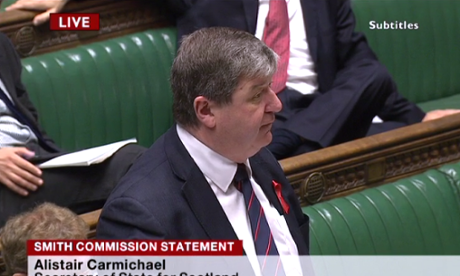
Scotland secretary Alistair Carmichael is making a statement in the House of Commons now.
He says the Smith Commission process was “thorough and extensive”. It demanded compromise from all five of the parties involved, says Carmichael.
This is a significant achievement and an historic day for Scotland ...This work will deliver a substantial power of packages to the Scottish Parliament.
He says over 50% of the money spent by the Scottish parliament will, for the first time, be raised by the Scottish parliament.
Carmichael says people, voting in the independence referendum, were “unequivocally clear” that they wanted the security of remaining within the UK and the recommendations ensure there is no damage to the UK’s constituent parts.
The draft clauses will be drafted by Burns night, the 25th of January. A bill will be delivered in the UK parliament following the next general election.
Updated
Here’s some more criticism of the role of the Westminster parties, this time from the first minister of Scotland.
Para 75 of #smith report - 'income tax will remain a shared tax'. So not 100% devolution as spun by Westminster parties.
— Nicola Sturgeon (@NicolaSturgeon) November 27, 2014
Patrick Harvie, Green MSP for Glasgow, has accused Labour of restricting the extent of devolved powers
The #Smith report contains some powers worth having, but it will be clear to voters that Labour in particular have blocked a stronger deal.
— Patrick Harvie (@patrickharvie) November 27, 2014
Updated
Here’s some reaction from the Scottish Labour and Conservative parties gathered by the Guardian’s Scotland reporter, Libby Brooks:
Anas Sarwar, interim leader of the Scottish Labour party, said the Smith Commission agreement was “not in our own interests but in the interests of the Scotland and the people we serve. People wanted more decisions taken closer to home and that is what we have delivered. Today is a good day for Scotland and a good day for the Scottish parliament.”
Ruth Davidson, leader of the Scottish Conservatives, said that the Smith package was “designed, built, and delivered by Scottish Conservatives and Scottish Conservative ideas.
“This is a plan which, for the first time since devolution, brings real accountability and real responsibility to the Scottish parliament. Future Scottish governments will have to look Scottish taxpayers in the eye when they are spending their money. Successive administrations have been able to claim credit for public spending, and then blame Westminster when it runs out. That now ends. The powers are there to do as they please.”
Updated
Scottish TUC says it is 'underwhelmed' by the plans
The Scottish Trades Union Congress has declared that it is “underwhelmed” by the Smith Commission proposals.
STUC general secretary Grahame Smith said:
We are underwhelmed by the package as a whole which does not meet our aspirations.
STUC continues to believe that control over employment law, equalities and minimum wages is a necessity if inequality is to be effectively challenged. We will continue to press for this.
The no detriment clause and retention of the Barnett Formula is to be welcomed but the proposals for further fiscal devolution do not go far enough. Without the key powers over inheritance and capital gains taxes meaningful tax and land reform will be more difficult.
The power to create additional welfare provision is certainly to be welcomed as is the devolution of the work programme. However, in sum total, there is not enough to empower the Scottish parliament to tackle inequality in Scotland.
As Lord Smith made clear, this is an agreement between political parties and has yet to be tested against the opinions and aspirations of the Scottish people. The STUC reaffirms its call for a citizen led process in the coming months to establish whether the vow has been fulfilled.
Updated
Cross-party consensus hasn’t lasted long. This is from the Sunday Herald’s political editor.
Differences breaking out between Lab and Tories in Smith Comm briefings about whether Scots MPs wd continue to vote on rUK income tax rates
— Tom Gordon (@HTScotPol) November 27, 2014
I’ve got to go to a meeting for a bit. My colleague Haroon Siddique is taking over the blog for a bit.
Smith Commission - What it says about income tax
And this is what the report says on the crucial issue of income tax.
Income Tax will remain a shared tax and both the UK and Scottish Parliaments will share control of Income Tax. MPs representing constituencies across the whole of the UK will continue to decide the UK’s Budget, including Income Tax.
Within this framework, the Scottish Parliament will have the power to set the rates of Income Tax and the thresholds at which these are paid for the non-savings and non-dividend income of Scottish taxpayers (as defined by the Scotland Acts).
As part of this, there will be no restrictions on the thresholds or rates the Scottish Parliament can set. All other aspects of Income Tax will remain reserved to the UK Parliament, including the imposition of the annual charge to Income Tax, the personal allowance, the taxation of savings and dividend income, the ability to introduce and amend tax reliefs and the definition of income.
The Scottish Government will receive all Income Tax paid by Scottish taxpayers on their non-savings and non-dividend income with a corresponding adjustment in the block grant received from the UK Government, in line with the funding principles set out in paragraph 95.
Given that Income Tax will still apply on a UK-wide basis, albeit with different rates and thresholds in Scotland, it will continue to be collected and administered by HMRC. In line with the approach taken for the Scottish rate of Income Tax, the Scottish Government will reimburse the UK Government for additional costs arising as a result of the implementation and administration of the Income Tax powers described above.
And the report says the Scottish government should have the power to create new benefits if it wants.
The Scottish Parliament will have new powers to create new benefits in areas of devolved responsibility, in line with the funding principles set out in paragraph 95. The Scottish Parliament will also have new powers to make discretionary payments in any area of welfare without the need to obtain prior permission from DWP. In addition it may seek agreement from DWP for the Department to deliver those discretionary payments on behalf of the Scottish Government. All administration and programme costs directly associated with the exercise of this power (either as a result of changes to existing systems or the introduction of new systems) will be met by the Scottish Government in line with the funding principles set out in paragraph 95.
Skimming through the Smith Commission report, I see that although it recommends giving the Scottish parliament power over Scottish elections, it also recommends an unusual “super majority” rule to stop the Scottish government changing the rules for its own advantage.
To provide an adequate check on Scottish Parliament legislation changing the franchise, the electoral system or the number of constituency and regional members for the Scottish Parliament, UK legislation will require such legislation to be passed by a two-thirds majority of the Scottish Parliament.
(There is no such rule at Westminster for boundary changes.)
John Redwood, the Conservative MP, told the Today programme earlier that it would be unfair to allow Scottish MPs to vote on UK income tax when Scotland could set its own income tax rate. He said he wanted to “speak for England”.
What we do need to do is make sure that now that Scotland is going to get this mighty power to choose the tax rates and the bands for income tax, that Scottish MPs don’t come to Westminster and then impose an income tax rate or income tax band on England that we don’t want.
It would be quite unjust if Scottish MPs were still able to vote on our income tax when they couldn’t vote on their own income tax and when Scotland had her right to choose her own income tax without us.
How unjust would it be if they decided to impose a 22% or 23% standard rate income tax on us in England while the Scottish parliament is having a 20p rate in Scotland?
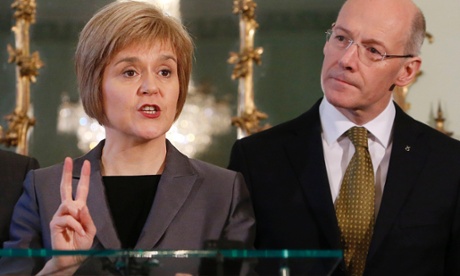
John Swinney says Smith proposals do not honour promises made in the 'Vow'
Here’s more from John Swinney, the SNP deputy first minister, explaining why the SNP thinks the main unionist parties have not kept the promises made to devolve further powers to Scotland ahead of the independence referendum.
The proposals clearly do not reflect the full wishes of the people of Scotland, and also fall far short of the rhetoric from the No campaign during the referendum. Then, Gordon Brown promised ‘nothing less than a modern form of Scottish Home Rule’ and ‘as close to a federal state’ as the UK can be. That was the context for the “extensive new powers” promised in the Vow.
Regrettably, the Westminster parties were not prepared to deliver the powerhouse parliament the people of Scotland were promised - under these proposals, less than 30 per cent of our taxes will be set in Scotland and less than 20 per cent of welfare spending will be devolved to Scotland. That isn’t Home Rule - it’s continued Westminster rule.
As polling has shown, two-thirds of people want Scotland to have all powers apart from defence and foreign affairs - Devo Max - including majorities among supporters of all political parties. 71 per cent want control of all taxation in Scotland, 75 per cent want control of the welfare and benefits system, 65 per cent want control of policy regarding the state pension, and 68 per cent want control of oil and gas revenues.
Most significantly, the proposals do not include the job-creating powers that Scotland so badly needs to get more people into work and grow the economy, or welfare powers to tackle in-work poverty.
Updated
Jim Murphy explains why Labour changed its stance on devolving income tax
On the Today programme this morning Jim Murphy, the Labour former Scottish secretary and favourite in the contest to become the next Scottish Labour leader, explained why the party had abandoned its opposition to Scotland getting full control over income tax.
Well, you are right in saying we’ve changed our mind and I’m very clear about that, and I’ve changed my mind. For two reasons, really: firstly, listening to the people of Scotland during the referendum, they wanted change but they wanted real change within the United Kingdom. So the Labour party and others changed our mind. We reflected on the wishes of the people of Scotland. Because it wasn’t enough simply to win the referendum. We had to bring Scotland together. So respecting the wishes of the 2m who voted no but also the 1.6m who voted yes, and I think this morning very many of those yyes voters who are not dyed-in-the-wool SNP people, they’ll be pretty satisfied with this deal.
The second thing is that important parts of pooling and sharing of resources within the United Kingdom remain, so the Barnett formula will remain, issues about the state pension will remain and the ability to deal with a downturn in the economy will remain by universal credit and things like that remaining part of the UK. So I think it’s a remarkable deal and it’s a ‘best of both worlds’ deal – really strong devolution but Scotland remaining part of the United Kingdom, and I welcome it.
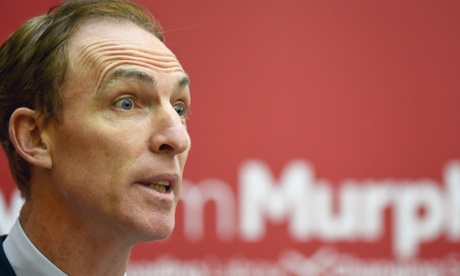
Net immigration up to 260,000 in the year to June, ONS says
The Press Association has just snapped this.
There was a net flow of 260,000 long-term migrants to the UK in the year ending June, a “statistically significant increase” from 182,000 in the previous year, the Office for National Statistics (ONS) said.
We already knew that the government had no chance of hitting the Conservative target of getting net migration below 100,000, but this shows immigration is increasing. It will heighten the pressure on David Cameron, who is due to announce plans to curb EU migration in a major speech soon.
John Swinney, the SNP deputy first minister, is speaking to BBC News now. He says the proposals to not meet the promises made by the three main parties before the independence referendum.
Michael Moore, the Lib Dem former Scottish secretary, said the opposite a few minutes ago. (See 9.32am.)
Michael Moore, the Lib Dem former Scottish secretary, and Maggie Chapman from the Scottish Green party both spoke at the news conference welcoming the report. Moore said it went even further than what was promised in the “Vow” made by the three main party leaders before the referendum.
Smith did not take questions. But, in a nice touch, he did urge the reporters to take a look around the National Museum of Scotland before they left.
(Sadly, in the era of Twitter, 24-hour news and immediate deadlines, I don’t suppose any of them will have the chance.)
Lord Smith's statement
Here is the key part of statement from Lord Smith at the opening of the report.
It is very similar to the statement he gave at the start of the press conference.
This agreement is, in itself, an unprecedented achievement. It demanded compromise from all of the parties. In some cases that meant moving to devolve greater powers than they had previously committed to, while for other parties it meant accepting the outcome would fall short of their ultimate ambitions. It shows that, however difficult, our political leaders can come together, work together, and reach agreement with one another.
Taken together, these new powers will deliver three important overarching improvements to the devolution settlement, making it more responsive, durable and stable.
The recommendations are explicitly designed to create a coherent set of powers that strengthen the Scottish Parliament’s ability to pursue its own vision, goals and objectives, whatever they might be at any particular time.
The recommendations set out in the agreement will result in the biggest transfer of power to the Scottish Parliament since its establishment.
Complementing the expansion of its powers will be a corresponding increase in the Parliament’s accountability and responsibility for the effects of its decisions and their resulting benefits or costs.
The composition of the Parliament’s income will change markedly. Significantly more devolved spending in Scotland will now come from tax raised in Scotland with the remainder coming from the block grant provided by the UK Government.
To balance this increased financial responsibility, the Parliament will be given increased borrowing powers, to be agreed with the UK Government, to support capital investment and ensure budgetary stability.
The Barnett Formula will continue to be used to determine the remaining block grant. New rules to define how it will be adjusted at the point when powers are transferred and thereafter will be agreed by the Scottish and UK Governments and put in place prior to the powers coming into force. These rules will ensure that neither the Scottish nor UK Governments will lose or gain financially from the act of transferring a power.
The Scottish Parliament will be made permanent in UK legislation and given powers over how it is elected and run. The Scottish Government will similarly be made permanent.
The Parliament will also have the power to extend the vote to 16 and 17 year olds, allowing them to vote in the 2016 Scottish Parliament election.
These increased powers demand improvements in parliamentary scrutiny and strengthened collaboration between the Scottish and UK Governments. The agreement touches on some of these issues and I have included my own recommendations towards the end of my foreword.
Within these overarching improvements to the devolution settlement, the Parliament will also assume a range of new, important, individual powers in policy areas such as taxation, welfare, employability, transport, energy efficiency, fuel poverty, and onshore oil and gas extraction.
All of these new powers have been agreed between all the political parties.
The agreement was informed by analysis from and discussions with civic institutions and the Scottish and UK Governments to ensure that they can be delivered and will work.
I would like to add four additional recommendations to those agreed by the political parties. Although these recommendations go beyond my initial terms of reference,
I consider them to be an important complement to the agreement. They are all issues that emerged strongly from the civic engagement exercise and are supported by some or all of the parties.
Throughout the course of the Commission, the issue of weak inter-governmental working was repeatedly raised as a problem. That current situation coupled with what will be a stronger Scottish Parliament and a more complex devolution settlement means the problem needs to be fixed. Both Governments need to work together to create a more productive, robust, visible and transparent relationship. There also needs to be greater respect between them. I recommend that the Prime Minister of the UK and the First Minister of Scotland meet shortly after 25 January to agree details of how this will be achieved. I would encourage them to find solutions which will carry the confidence of the public and our civic institutions.
There is a strong desire to see the principle of devolution extended further, with the transfer of powers from Holyrood to local communities. This is an issue that will require significant further thought and discussion and I welcome the enthusiasm of all parties for greater empowerment of our communities. The Scottish Government should work with the Parliament, civic Scotland and local authorities to set out ways in which local areas can benefit from the powers of the Scottish Parliament.
This agreement will increase substantially the powers of the Parliament in general and around its financial accountability in particular. The addition of new responsibilities over taxes, welfare and borrowing means that the Parliament’s oversight of Government will need to be strengthened. I recommend that the Scottish Parliament’s Presiding Officer continues to build on her work on parliamentary reform by undertaking an inclusive review which will produce recommendations to run alongside the timetable for the transfer of powers.
A challenge facing both Parliaments is the relatively weak understanding of the current devolution settlement. This is not surprising given what is a complex balance of powers. With the enhancement of these powers, improved understanding is all the more critical to sustaining the trust and engagement of the public. I recommend that the Scottish Parliament’s Presiding Officer and Speaker of the House of Commons meet shortly after 25 January to agree on action to improve public understanding of Scotland’s constitutional settlement.
Annabel Goldie, the former Scottish Conservative leader, says this report marks the next step in what will be a very important development for Scotland.
Ian Gray, the former Scottish Labour leader, is speaking now. He welcomes the proposals and says they will make the Scottish parliament one of the most powerful devolved bodies in the world.
John Swinney, the SNP deputy first minister of Scotland, is speaking now.
He says the SNP took part in the commission in good faith. He thanks Smith for his work, and says he welcomes the new powers coming to Scotland.
But he says it should have given Scotland powers over job creation.
Smith says he came into this as an impartial figure.
Now he has published his plans, based on cross-party talks, he will not be providing a further commentary on what happens next. But he will be following what happens closely.
Smith is still speaking.
He says the commission received 18,000 public submissions, and more than 400 formal ones. They had a big influence, he says.
He says he wants to highlight four particular recommendations.
First, he says there should be further devolution, to communties.
Second, he says he would like to see more powerful parliamentary oversight.
Third, he says he would like to see more inter-governmental cooperation.
And, fourth, he says he would like more done to promote public understanding of both parliaments.
Lord Smith publishes Smith Commission report
Lord Smith is speaking at the news conference now.
He says he has reached a cross-party agreement on his plans. That is remarkable, he says.
His proposals will make the Scottish parliament more powerful, more accountable and more autonomous, he says.
He says we will have a stronger Scottish parliament. The plans are designed to give it a more coherent set of powers. This will amount to the biggest transfer of powers to the Scottish parliament since it was set up.
He says the parliament will be more accountable. Much more of its revenue will come from tax raised in Scotland. And it will get increased borrowing powers. The Barnett formula will continue to govern the remaining block grant.
Neither London nor Edinburgh should lose or gain from the allocation of the new tax powers.
The Scottish government will control the first 10% of revenue raised from VAT.
And the plans will make the Scottish parliament more autonomous. The Scottish government will be made permanent. The Scottish parliament will have power over MSPs and elections. And it will be able to give 16 and 17-year-olds the vote in time for the 2016 elections.
Smith says the Scottish parliament will also get power over some welfare policies, and power over a wide range of tribunals, including employment tribunals.
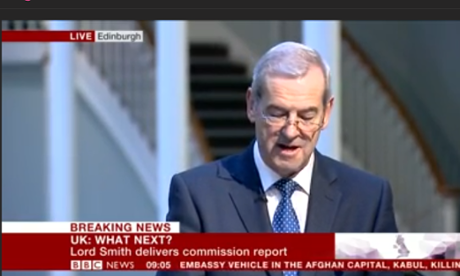
Gordon Brown welcomes Smith Commission proposals
In a debate in the Commons last month Gordon Brown warned that giving the Scottish parliament 100% control over income tax would be disastrous. Here’s an extract from his speech.
What makes for a lethal cocktail on this is that the Conservative party wants to devolve 100% of income tax to the Scottish parliament ... and then immediately end the right of Scottish members of parliament to vote on income tax on a matter as substantial as the budget ...
There is no state in the world, federal or otherwise, that devolves all of income tax from the national exchequer to regional, local or national assemblies. And there is not a parliament in the world that would impose a national income tax on only some of the country, but not all of the country. And there are very good reasons why ...
It is the combination of the two proposals, to devolve 100% of income tax and then to remove the right of Scottish MPs to vote on the matters in Westminster, that is absolutely lethal to the constitution.
But this morning he has released a statement welcoming the Smith Commission plans.
The Vow to deliver a stronger Scottish Parliament within the UK has been kept, as promised, and the timetable for draft laws to be published in January will now be honoured, as promised.
According to a note from his office, Brown believes that the safeguards contained in the commission’s proposals address the concerns he was raising last month. In particular, the commission will say that income tax is a “shared UK tax”, Brown says, and it will say that savings tax and personal allowances should not be devolved and that a reserve power to levy a UK-wide income tax rate should be retained. Brown also claims the commission has rejected a Conservative plan to stop Scottish MPs voting on budget income tax decisions. (The Conservatives did not formally propose this, although it was implicit in what David Cameron said about English votes for English laws.) And the commission is recommending that all MPs, including Scottish ones, should always vote on every aspect of UK budget tax decisions, Brown says.
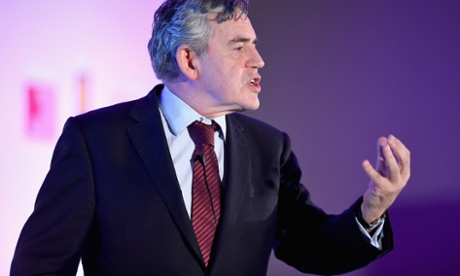
Here’s the scene at the National Museum of Scotland, where the Smith Commission report will be published shortly.
Waiting for The Smiths at National Museum of Scotland #thevow pic.twitter.com/Q0t7GXjgGq
— Tom Gordon (@HTScotPol) November 27, 2014
Well #smithcommission goes a bit kitsch - Perspex thrones and glistening pedestals at National Museum #devomore pic.twitter.com/xDHwoJ9qM8
— Severin Carrell (@severincarrell) November 27, 2014
Game of thrones: curious seating for Smith Commission press conf pic.twitter.com/yoxG6ovXkN
— Tom Gordon (@HTScotPol) November 27, 2014
My colleague Severin Carrell has sent me some new details of what will be in the report.
- The total value of the tax and welfare spending being transferred to the Scottish parliament would be £14bn, not £11bn, the figure provided last night.
- Scotland would have power over the allocation of VAT receipts, but not the power to set VAT rates.
- Scotland would be able to nationalise rail franchises, although in practice it would not be able to use this until the 2020s.
- Scotland would have power over health and safety rules.
- Scotland would have more power over authorising fracking.
It’s a huge day, not just for Scottish politics, but for UK politics too. The Smith Commission, which was set up after the Scottish independence referendum vote, is publishing its outline plans for further Scottish devolution. They will involve the biggest transfer of tax powers in the modern ear, and will raise important questions about the future of the United Kingdom.
Here’s the Guardian’s overnight preview story. And here’s how it starts.
The Scottish parliament is to be handed direct control over billions of pounds of income tax and welfare benefits after an £11bn cross-party deal which will lead to the biggest shakeup to Britain’s taxation system in the modern era.
The historic move, which had been resisted by the Labour leadership in London, means powers to set income tax rates and bands are to be wholly devolved to Holyrood as the pro-UK parties move to outflank the Scottish National party, which has surged in popularity since the referendum on Scottish independence.
High-level talks to agree the full package of new powers continued late into Wednesday as negotiators from all the main parties at Holyrood thrashed out the details of a deal due to be revealed in Edinburgh on Thursday morning.
The far-reaching reforms are due to include £3bn worth of welfare powers, including the housing elements of universal credit, attendance allowance and carers allowance, the work programme and winter fuel payments, as well as air passenger duty. Along with the income tax powers, the total package is estimated by Treasury officials on the commission to be worth about £11bn.
And here is the timetable for the day.
9am: The Smith Commission publishes its proposals. Lord Smith will speak, and there will be statements from the main parties.
Around 11.15am: Alistair Carmichael, the Scottish secretary, will make a statement on the proposals in the Commons.
I will be focusing on this announcement, and the reaction to it, this morning.
If you want to follow me on Twitter, I’m on @AndrewSparrow.