Our understanding of ancient human migration may need a rethink after scientists analysed the oldest ever human DNA evidence found in Africa.
Researchers successfully sequenced genetic material from people living in Morocco 15,000 years ago, and found they shared a genetic heritage with populations in the Eastern Mediterranean and sub-Saharan Africa.
It suggests Stone Age humans from North Africa, sub-Saharan Africa and the Middle East were interacting much earlier than previously thought.
The findings were made by an international team of scientists, led by Johannes Krause and Choongwon Jeong from the Max Planck Institute for the Science of Human History in Jena, Germany.
"Our analysis shows that North Africa and the Near East, even at this early time, were part of one region without much of a genetic barrier," said Mr Jeong.
The team analysed DNA samples of nine individuals from the Iberomaurusian culture in Taforalt, a cave in northern Morocco and the oldest known cemetery in the world.
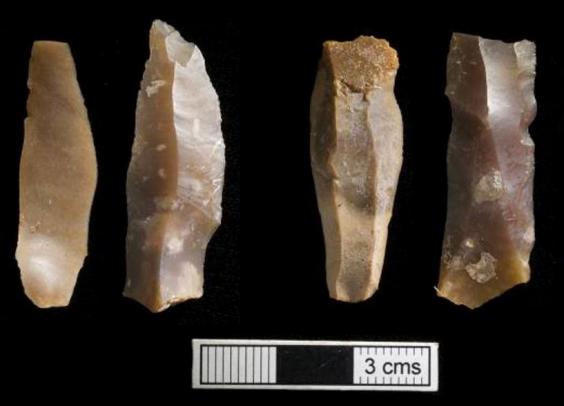
The Iberomaurusians lived between 20,000 to 10,000 years ago and are considered the first humans in North Africa to have produced finer stone tools known as microliths.
"Grotte des Pigeons is a crucial site to understanding the human history of north-western Africa, since modern humans frequently inhabited this cave intensively during prolonged periods throughout the Middle and Later Stone Age," said co-author Louise Humphrey, of the Natural History Museum in London.
Using advanced sequencing methods, the team were able to recover DNA data from humans pre-dating the agricultural revolution in North Africa – around 10,000 years ago – for the first time.
They found that about two-thirds of the Taforalt individuals’ heritage closely matched the DNA of the ancient Natufians, a culture that lived in the Eastern Mediterranean region of the Middle East until about 11,500 years ago.
The other third of the Taforalt DNA matched current populations in West Africa, suggesting interaction by peoples on either side of the Sahara Desert – a huge physical barrier to migration – were also occurring earlier than previously thought.
"Clearly, human populations were interacting much more with groups from other, more distant areas than was previously assumed," Mr Krause said.
"This illustrates the ability of ancient genetics to add to our understanding of human history."
But despite previous theories of a genetic link between ancient Europeans in Sicily or southern Spain and the Iberomaurusians, the study found no evidence of this.
The findings were published in the journal Science.