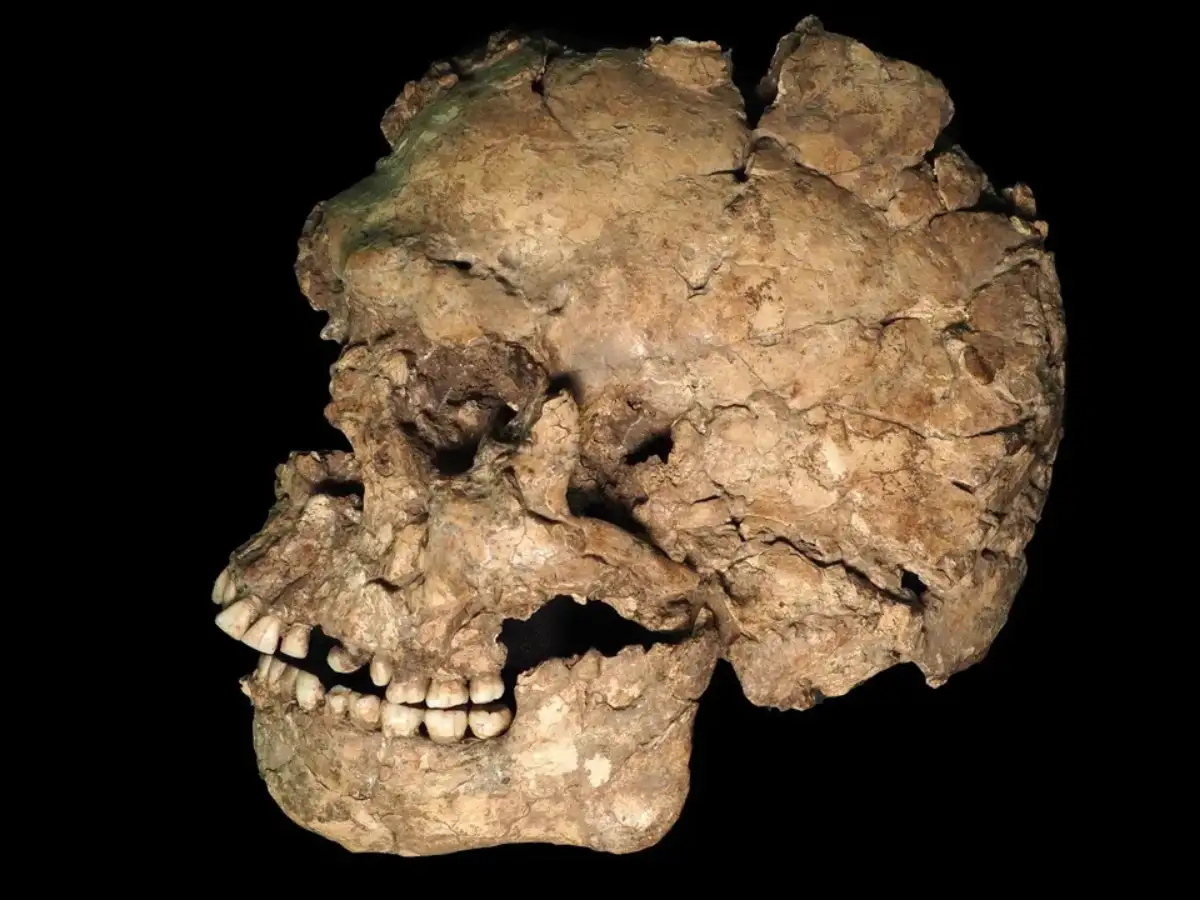
Imagine a murder mystery so old that the “crime scene” is a cave in northern Israel, and the only witness is a skull. According to a new study published in Scientific Reports, a team of researchers led by paleoanthropologist Ana Pantoja Pérez took a fresh, high-tech look at a roughly 100,000-year-old skeleton known as Qafzeh 25. What they found was a healed cut mark on the jaw that the researchers interpret as being made by a sharp stone tool, not a fall or an animal bite. If that interpretation is correct, it may be among the oldest known cases of survival after such an injury.
For millennials and Gen Z who grew up on true crime podcasts, this is basically the ultimate cold case. Except it took CT scanners and microscopes instead of detectives, and instead of decades, it took about a thousand centuries to crack.
Meet Qafzeh 25
The remains were excavated decades ago at Qafzeh Cave, a site near Nazareth that has intrigued archaeologists for almost a century. At least 27 people were buried there between about 145,000 and 92,000 years ago, making them some of the earliest known skeletons of Homo sapiens outside Africa.
That alone is what makes Qafzeh important. These were not a few old bones lying around by chance. Those buried here were placed deliberately, some with grave goods such as deer antlers placed next to their bodies. That’s a big deal because it shows early humans had rituals around death, thousands of generations before pyramids or Stonehenge.