The sound from inside a neutron star has been recreated by scientists.
Researchers from MIT listened to sound waves moving through a “perfect fluid”. For physicists, this means a fluid that flows with the smallest amount of friction that is allowable by the laws of quantum mechanics.
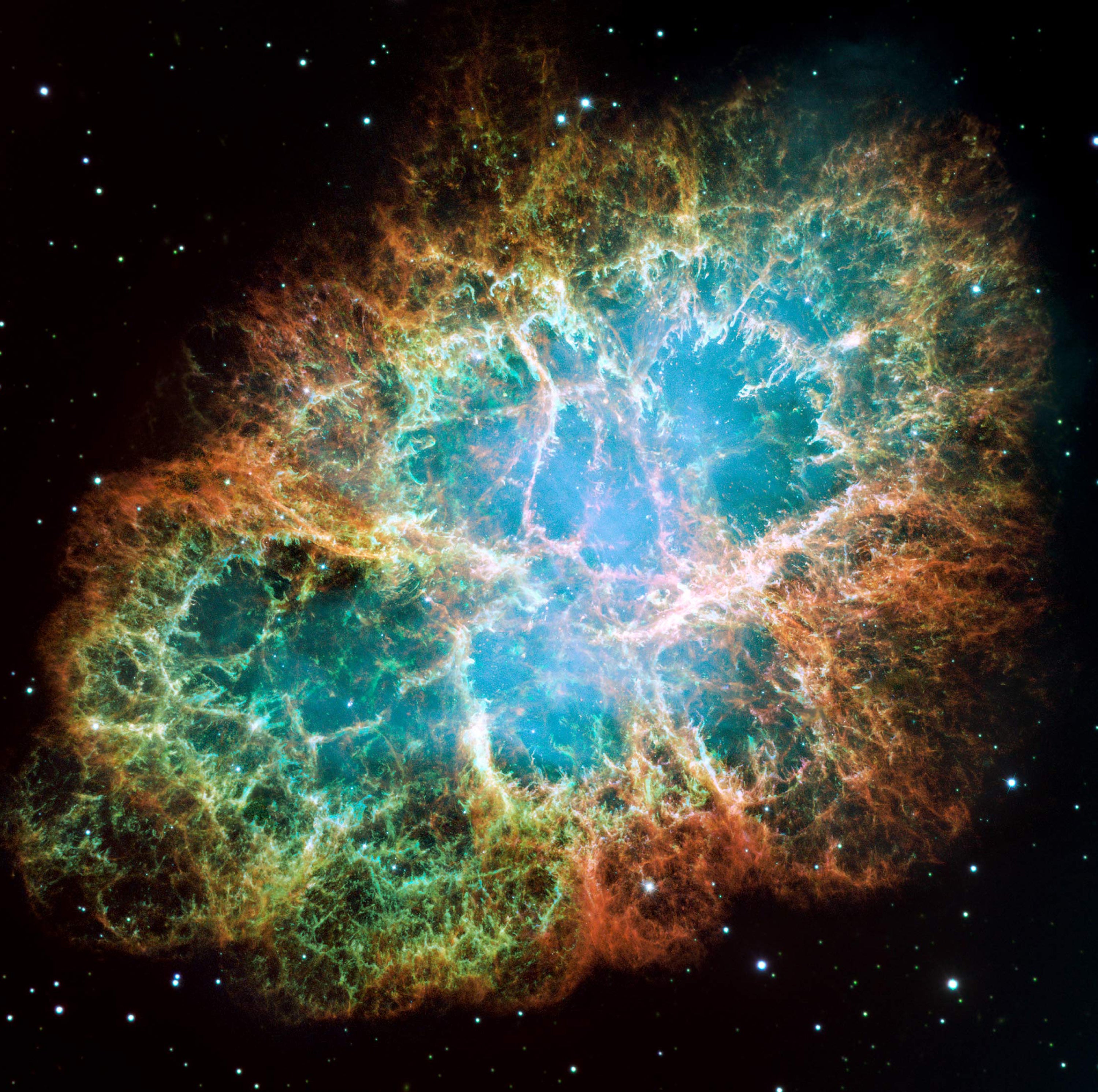
Such fluids are rare in nature, but are believed to occur in the heart of neutron stars - dense clusters of material that are remnants of a star going supernova and exploding.
The scientists took an unusual method to recreate the liquid, as they used a gas instead. Researchers sent the sound waves through a gas of lithium-6 atoms - elementary particles known as fermions - and continuously increased the pitch of the sound while it was being played.
The scientists then measured its “sound diffusion” – how quickly sound dissipates in the gas – which relates directly to the material’s viscosity, using a series of lasers.
“It’s quite difficult to listen to a neutron star,” says Martin Zwierlein, the Thomas A. Franck Professor of Physics at MIT. “But now you could mimic it in a lab using atoms, shake that atomic soup and listen to it, and know how a neutron star would sound.”
The lasers were configured to form an optical box around the gas, and so when particles collided with the laser they bounced back into the box; inside the container, the fermiums bounced into each other in every encounter, turning them into a fluid.
Fermions are defined by their half-integer spin, which allows atomic structures to be so versitile, and so are considered the building blocks of matter.
“We had to make a fluid with uniform density, and only then could we tap on one side, listen to the other side, and learn from it,” Zwierlein recalled. “It was actually quite diffult to get to this place where we could use sound in this seemingly natural way.”
Surprisingly, they found that the diffusion was so low that it resonated on a quantum level, meaning that it behaved as a perfect fluid and could be the basis to understanding other, more complicated flows, such as neutron stars.
“The quality of the resonances tells me about the fluid’s viscosity, or sound diffusivity,” Zwierlein explains. “If a fluid has low viscosity, it can build up a very strong sound wave and be very loud, if hit at just the right frequency. If it’s a very viscous fluid, then it doesn’t have any good resonances.”
It could also be used to model the viscosity of plasma in the early universe, by varying the brightness of the lights to change the sound-like vibrations through the fluid.
The sounds are actually audible, Zwierlein said, but only “if you could get your ear close without being ripped apart by gravity.”
A recording of the sound can be heard on MIT’s SoundCloud account or below.
In addition to using the findings to predict quantum friction in strange matter, the results can also be helpful in understanding how certain materials could recreate perfect, superconducting flow.
“This work connects directly to resistance in materials,” Zwierlein says. “Having figured out what’s the lowest resistance you could have from a gas tells us what can happen with electrons in materials, and how one might make materials where electrons could flow in a perfect way. That’s exciting.”