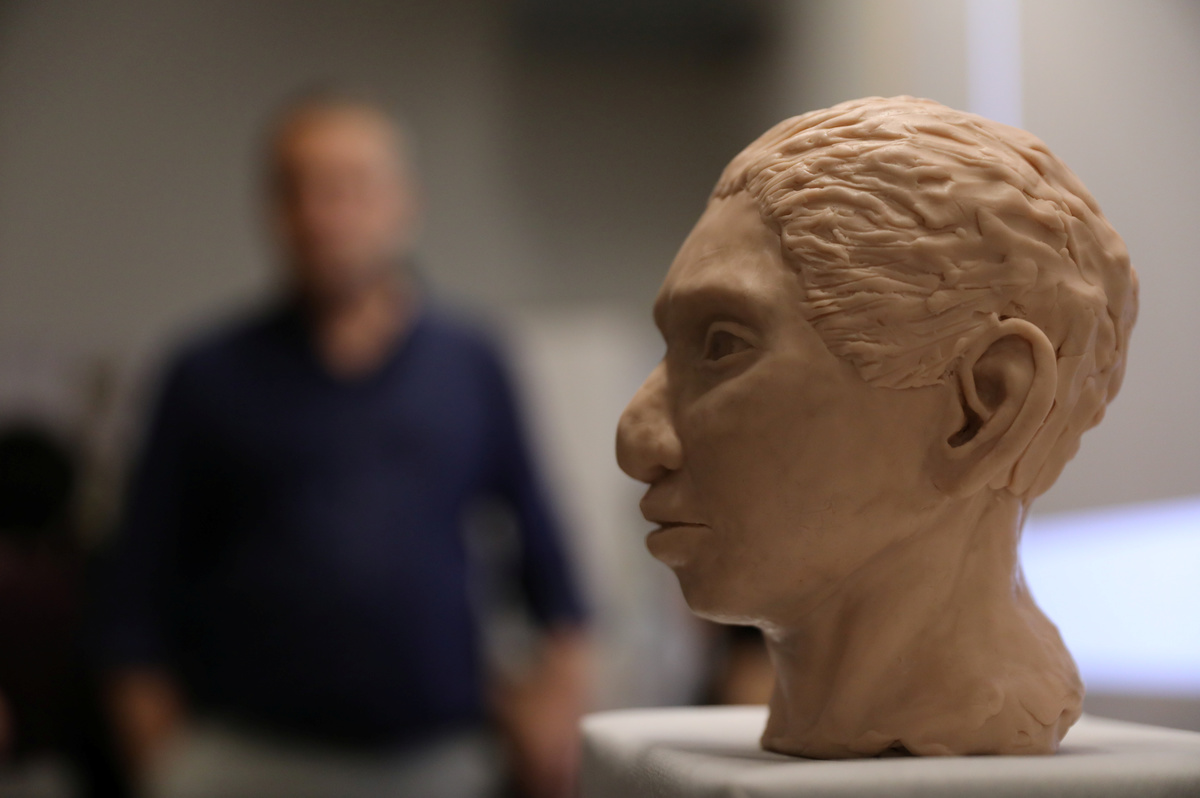
JERUSALEM (Reuters) - Researchers in Israel say they have reconstructed the skeleton of a pre-historic human from a long-extinct and elusive species using DNA found in the pinky bone of a 13-year-old girl who died 70,000 years ago.
Little is known about the Denisovans, who were ancient relatives of the more familiar Neanderthals and our own species. Their existence was only recently discovered and has fascinated scientists worldwide.
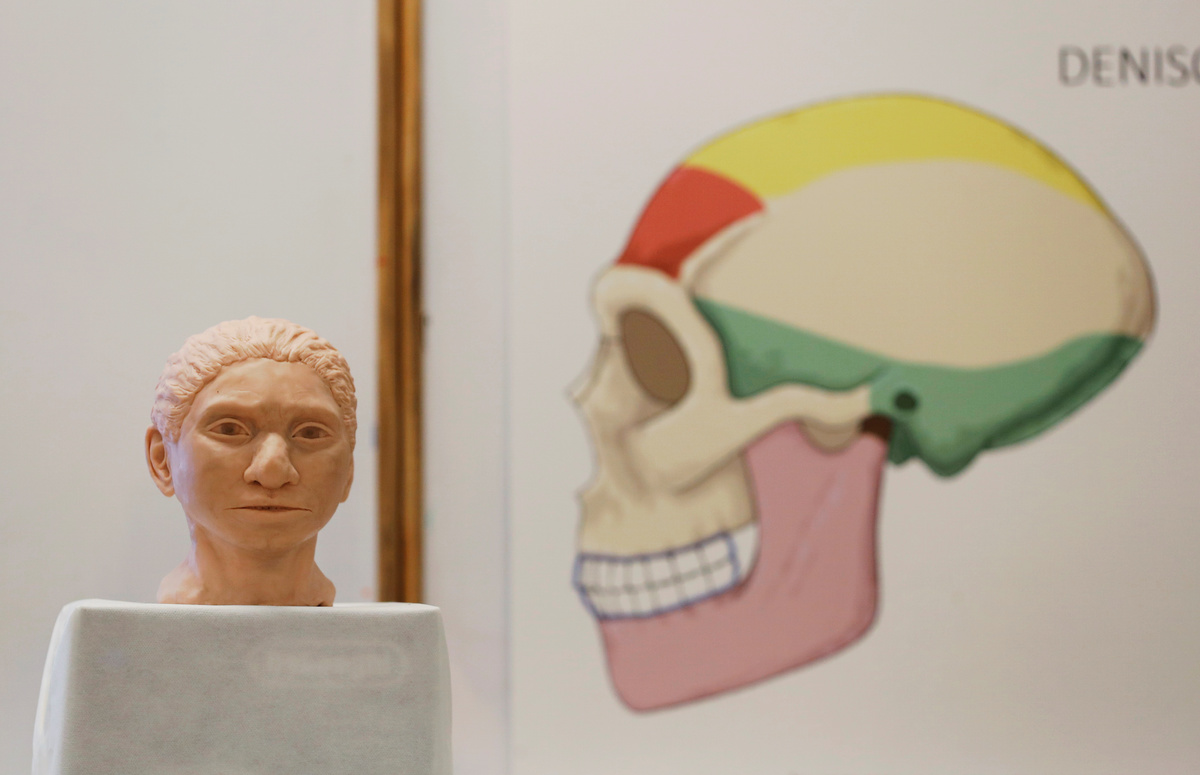
Evidence was first uncovered in 2008 in a cave in Siberia, and today it includes only three teeth, a pinky bone and a lower jaw, said Hebrew University genetics professor Liran Carmel.
It sounds like science fiction, but Carmel said that was enough to create a depiction of a full Denisovan skeleton.
"This is the first time that we provide a detailed anatomical reconstruction showing us what these humans looked like," he said.
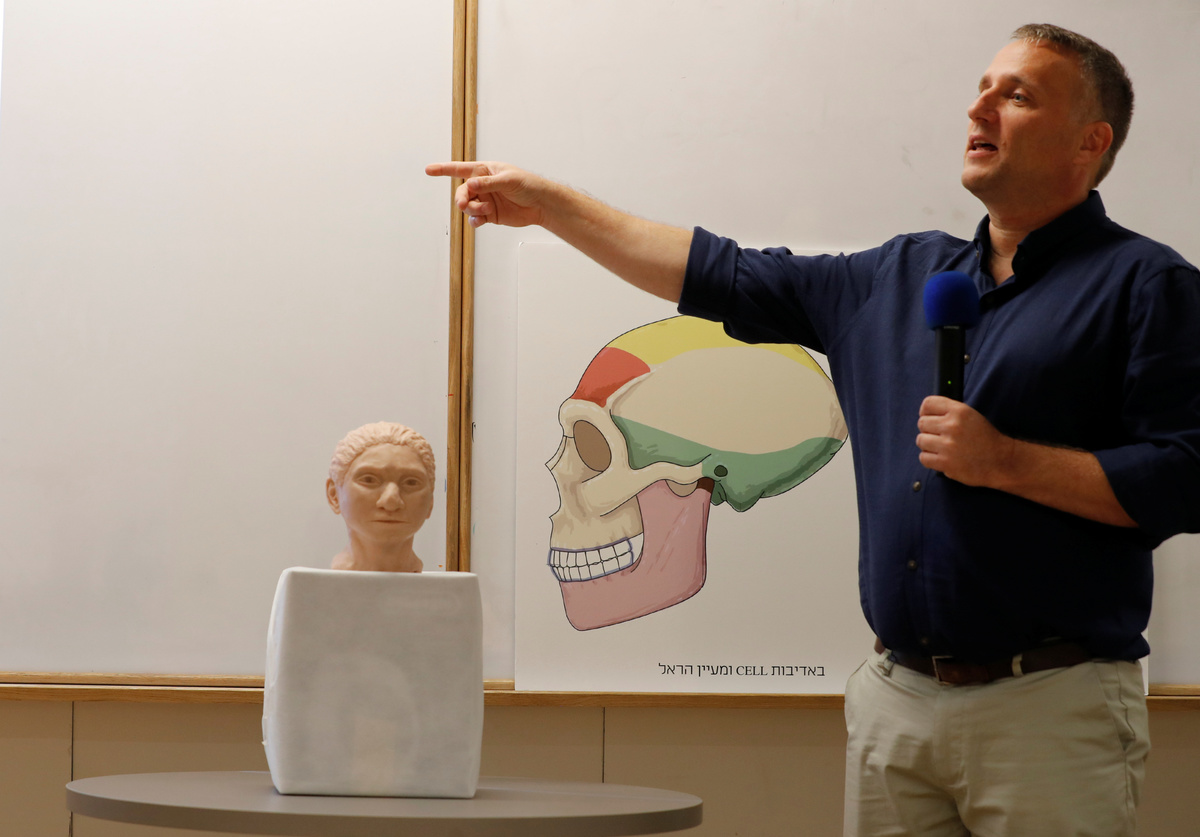
It turns out, Carmel said, "we are all very similar."
His team developed a technology to decipher the ancient DNA and, more importantly, its gene activity. Gene activity, for example, differentiates between a frog and tadpole, even though their DNA is identical, Carmel said.
DNA could indicate the Denisovan's dark skin, eyes and hair, Carmel said, but by mapping gene activity patterns, they could infer how the species stood out anatomically from modern humans or Neanderthals. They identified 56 traits, most in the skull, that differed.
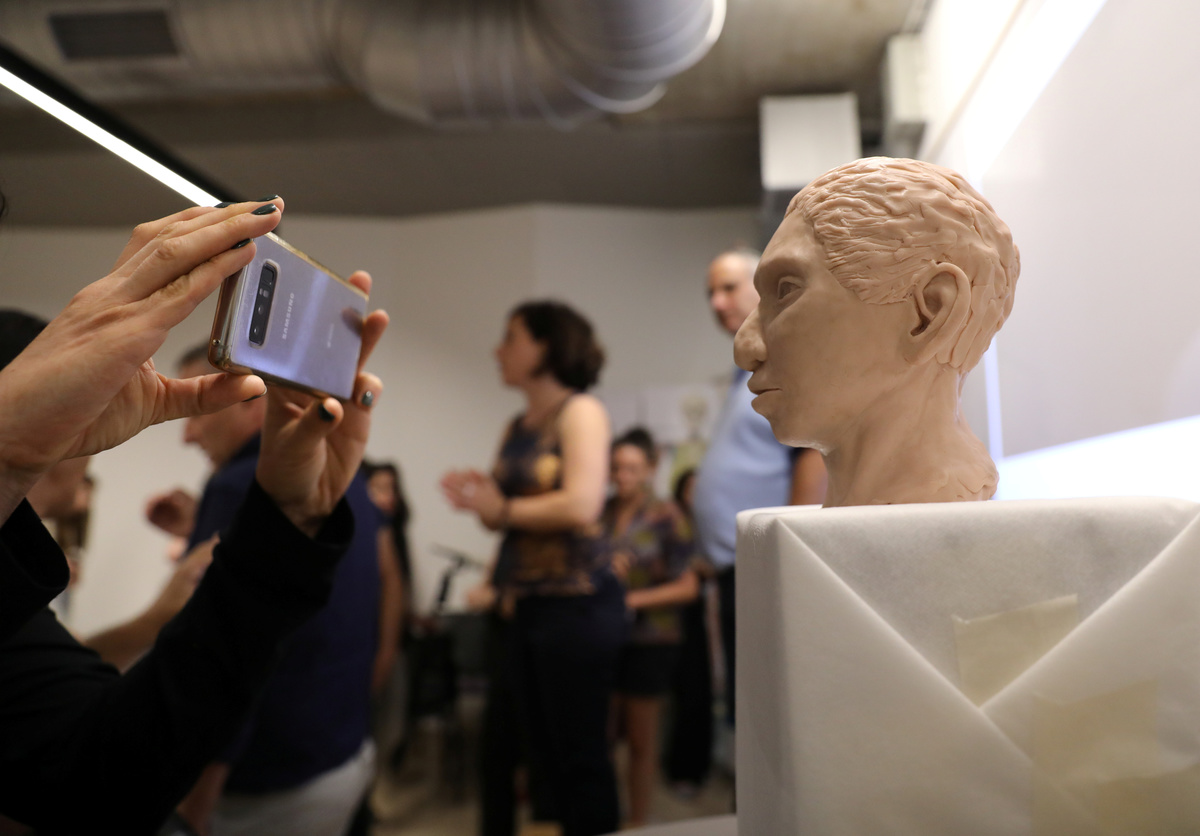
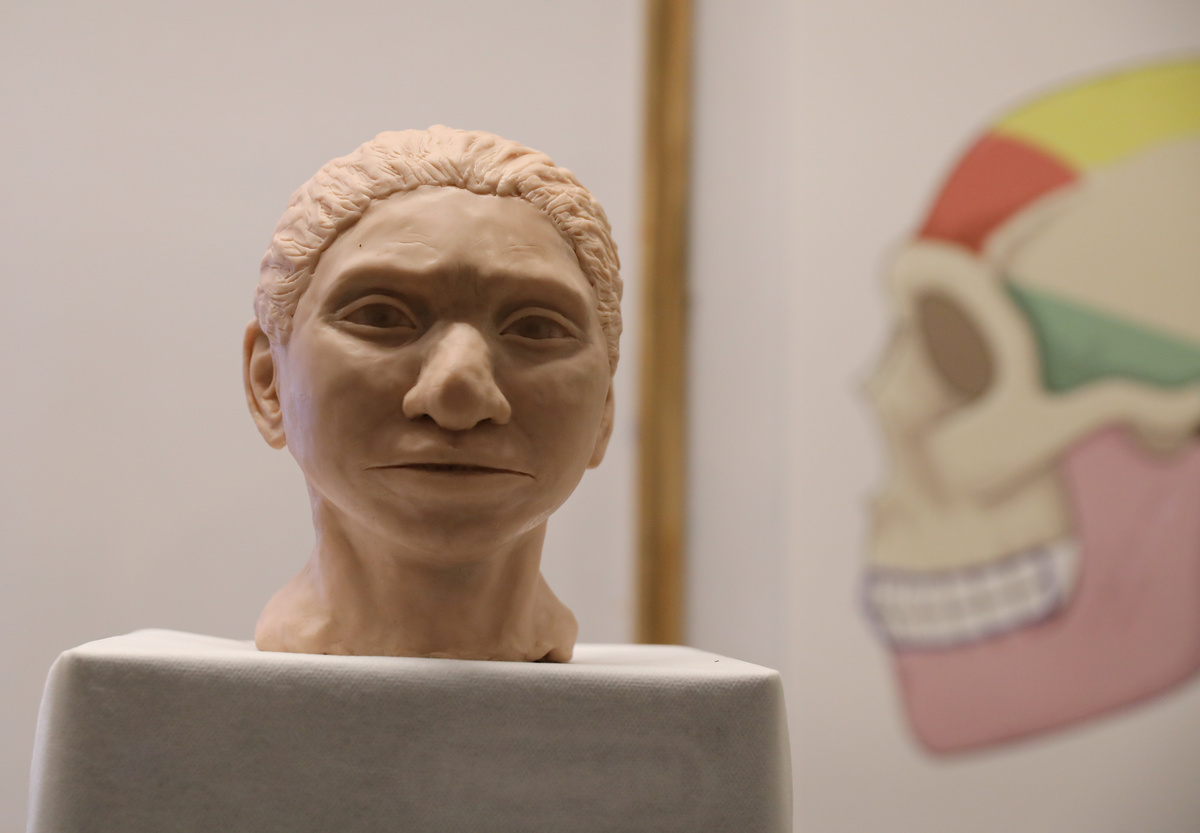
This helped them produce a rendering - claiming 85% accuracy - of a Denisovan skeleton that at first glance looks like it could be from a modern human, though differences are obvious on closer inspection.
There were similarities to Neanderthals - a sloping forehead, long face and large pelvis - but the Denisovans were also unique in their very wide skull and large dental arch.
The skeletal reconstruction, along with an artist's rendering of the 13-year-old girl's head and face, were published in the journal Cell.
The team repeated the process as a test with Neanderthals and chimpanzees, whose anatomies are known, and found the reconstruction to be 85% accurate. The discovery of more Denisovan DNA would further improve the rendering.
Some far-flung modern Asian populations possess small but significant amounts of DNA derived from Denisovans, suggesting they had a broad geographical presence.
Research suggests that Denisovan DNA may have contributed to modern Tibetans' ability to live in high altitudes and the Inuits' ability to withstand freezing temperatures.
(Editing by Bernadette Baum)