Researchers at Melbourne's Monash University have used cutting-edge microscopes to track for the first time a key cellular step in the development of migraines.
About five million Australians suffer from migraines, which can cause debilitating symptoms such as headaches, nausea, and vomiting.
"This is an example of the enormous benefits of fundamental basic research in addressing major unmet medical needs," said lead author Professor Patrick Sexton.
Many migraines are thought to be caused by blood vessel dilation, set off by receptor proteins on brain cell membranes bonding with other chemicals.
But until now it's been impossible to see what those proteins were actually up to, because they were too small and mobile for scientists to capture and study them.
The research team collected samples of the receptor proteins, and plunged them into supercooled liquid gas, snap freezing them to about minus 180 degrees Celsius.
They then examined them using cutting edge cryo-electron microscopes.
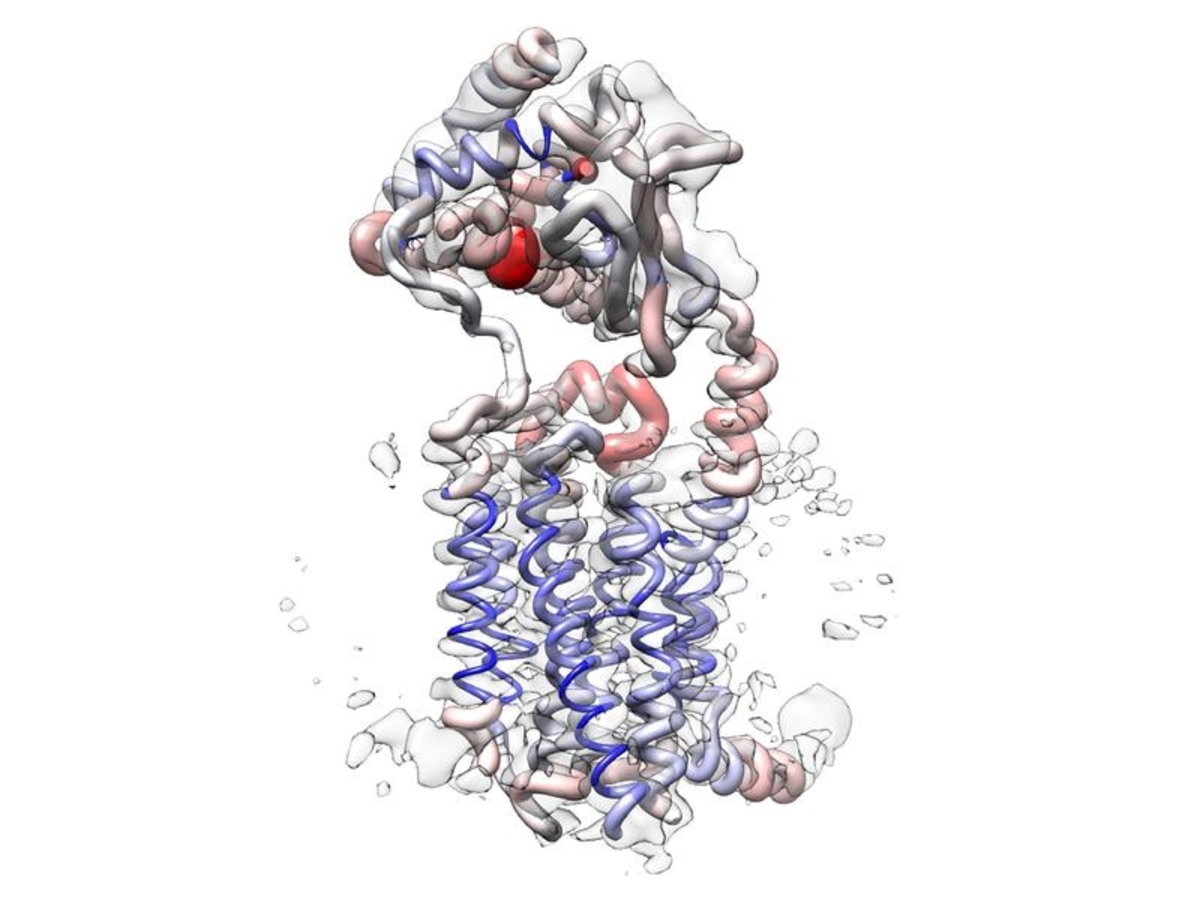
The proteins look like a tangled old-style telephone cord, or a really bad hair day, of the kind that could well be induced by a migraine.
But the scientists found they could combine lots of detailed 3D snapshots of the moment they had frozen, to create movies showing how the proteins moved.
Prof Sexton said the results were surprising.
"We were able to visualise the movements it was making - it wobbled," he said.
The team mapped the structure of the receptor proteins, and found they are constantly moving within the cell membrane - and they changed their movements after binding with other chemicals.
The research showed this then allowed new proteins to latch on, setting off the signals that trigger a migraine.
"That hasn't been done before and was very difficult to do," Prof Sexton said.
The newest migraine treatments are designed to shut down this activity.
The team collaborated with other researchers including University of Tokyo, the University of Otago and the Hudson Institute of Medical Research.
The research was published on Friday in the journal Science.