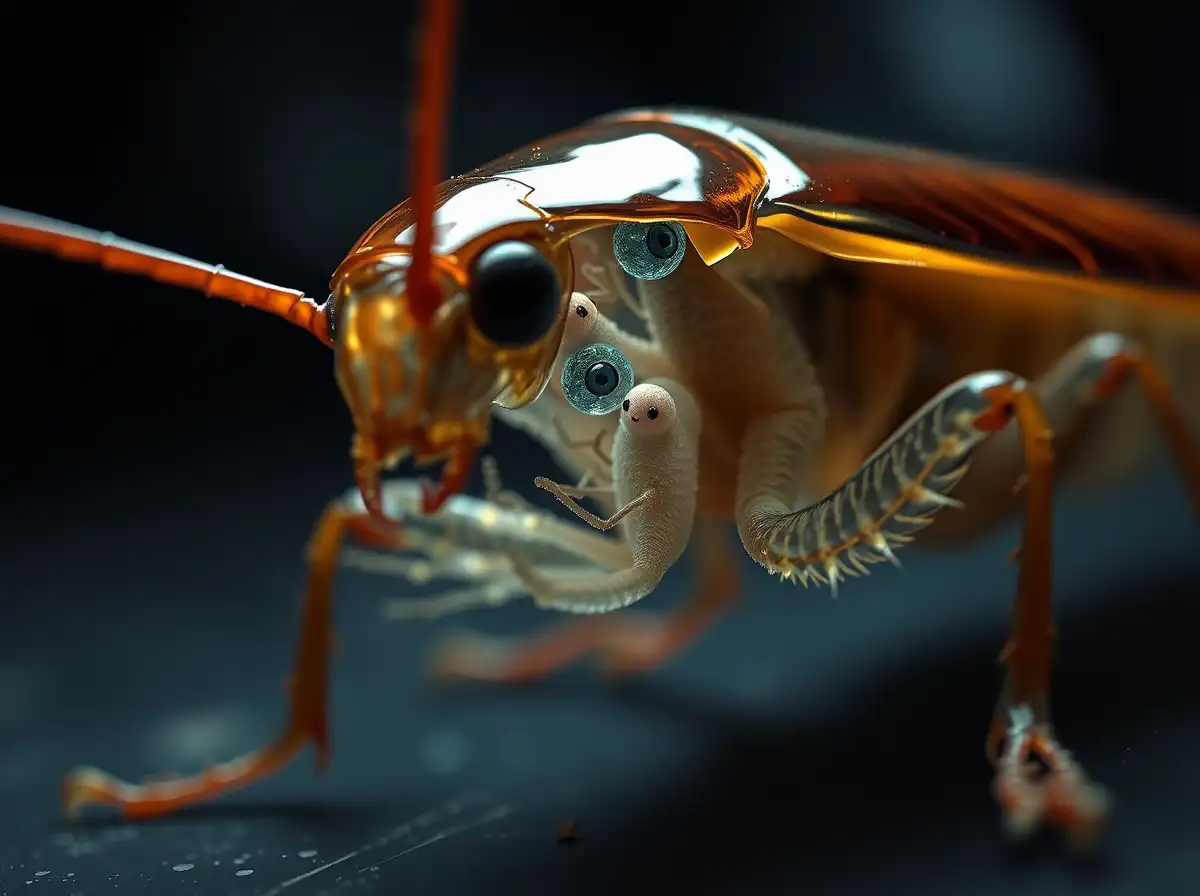
Cockroaches have shared their lives with a tiny bacterial partner for millions of years. Now, a new genome study suggests that this ancient relationship left an unexpected mark inside the insects' DNA.
Researchers found that several cockroach species contain thousands of small DNA fragments that appear to have come from Blattabacterium cuenoti, a bacterium that has lived inside cockroaches and their relatives for millions of years, according to a report.
The finding does not mean cockroaches are part bacteria. Instead, it reveals that long-term partnerships between animals and microbes may leave lasting traces inside animal genomes.
A partnership that lasted millions of years
Scientists focused on cockroaches because of their unusually close relationship with Blattabacterium. The bacterium lives inside specialized cells in the insects and is passed from one generation to the next through eggs, as per an Eco News report.
Because the bacteria and their hosts have remained closely connected over millions of years, researchers wanted to know whether tiny pieces of bacterial DNA had become part of the cockroach genome.
To investigate, they analyzed cockroach and termite genomes, including newly sequenced ones, and searched for DNA that matched Blattabacterium. They also checked carefully to make sure the matches were genuine and not the result of contamination or sequencing errors.
The genomes contained thousands of bacterial DNA traces
The results were striking. Australian panesthiine and geoscapheine cockroaches contained more than 3,000 horizontal gene transfer inserts. According to the researchers, this is more than ten times higher than previous estimates reported in other eukaryotes, excluding rotifers, as per the Eco News report.
Across 18 cockroach genomes, the team identified 40,485 DNA fragments linked to Blattabacterium. Individual species carried anywhere from 93 to 4,900 inserts.
Most of these fragments were very small, measuring at least 50 base pairs long, and many were not complete genes.
How bacterial DNA ended up inside cockroaches
The study centers on a process called horizontal gene transfer. Unlike the usual inheritance of DNA from parents to offspring, horizontal gene transfer allows genetic material to move between unrelated species.
This process is common in bacteria, where microbes frequently exchange DNA. It is much rarer in animals because inherited genetic changes must reach sperm or egg cells.
The researchers suggest that the close relationship between cockroaches and Blattabacterium created repeated opportunities for small pieces of bacterial DNA to enter the cockroach genome over evolutionary time, as per the Eco News report.
Most of the DNA fragments appear to do very little
The study does not suggest these bacterial DNA fragments explain why cockroaches are so resilient.
Researchers believe many of the inserts are simply remnants that stayed in the genome because they were not harmful enough for evolution to remove, as per the Eco News report.
Some of the fragments, however, appear to be ancient. According to the study, certain bacterial DNA inserts have remained in cockroach genomes for at least 28.7 million years.
The researchers say some of these long-lasting fragments could have functional roles, but they do not conclude that every bacterial DNA insert is beneficial.
The discovery changes how scientists view animal genomes
The findings suggest that animal genomes may preserve evidence of ancient relationships with microbes.
Horizontal gene transfer is well known in bacteria but has been much harder to identify in animals. Earlier studies often treated bacterial-looking DNA as contamination.
Modern long-read sequencing now allows scientists to identify where bacterial-like DNA joins animal DNA, making it easier to confirm that these fragments are genuine parts of the cockroach genome.
FAQs
What did scientists discover in cockroach DNA?They found thousands of tiny DNA fragments linked to a long-term bacterial partner.
What is Blattabacterium cuenoti?
It is a bacterium that has lived inside cockroaches for millions of years.