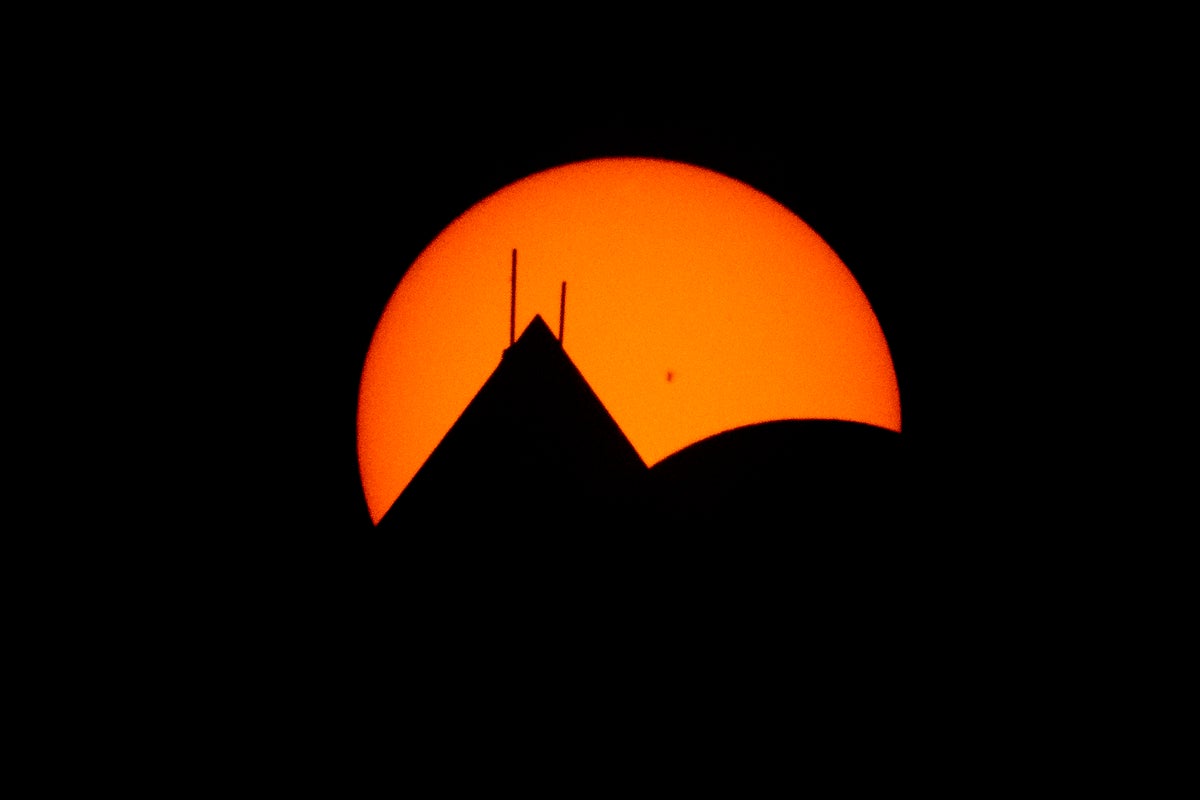
The Sun is behaving in mysterious and unexpected ways, scientists have found after listening to its “heart”.
A new study suggests that something has changed about the Sun’s internal rhythm over the past 40 years, the researchers say. That rhythm decides space weather than can affect life on Earth, and scientists say that urgent study is required to understand what is happening to our star.
The Sun is known to change on 11-year cycles, from active to less active times. Through the busier parts of those cycles, the Sun is more likely to throw out solar flares and ejections of particles that can lead to potentially dangerous solar storms.
The new research came after scientists listened to the tiny sound waves that are inside the Sun. That allows them to better understand the changes on the Sun’s interior, and what they might mean for its cycles and behaviour.
They found that the Sun appears to be entering a “different mode of behaviour”. In addition to the usual 11-year tempo, there are more long term changes in its structure that could alter how the Sun works.

The study suggests that solar magnetic activity is being pushed into a layer just below the visible surface of the Sun, and that layer is becoming increasingly shallow.
"The Sun has its own 'active biorhythm' creating rising and falling magnetic activity that shapes space weather. However, traditional surface measures don't capture the full story – that the Sun may be entering a different mode of behaviour unfolding over decades,” said Bill Chaplin, from the University of Birmingham, who was the lead author on the new study.
"We have uncovered evidence of systematic changes in the solar activity cycle. Crucially, magnetic activity is becoming more tightly confined near the surface with each cycle. This is the first such discovery and would have been impossible without the long BiSON observations."
The researchers suggest that more work is required to better understand the Sun’s current cycle and whatever changes inside might be powering and altering it.
"We discovered that the relationship between internal solar oscillations and surface activity has evolved over the past few cycles,” said Sarbani Basu, from Yale University.
"This trend cannot be explained simply by weaker magnetic fields. Instead, it indicates a structural reorganisation of how the Sun's magnetic activity is stored beneath the surface."