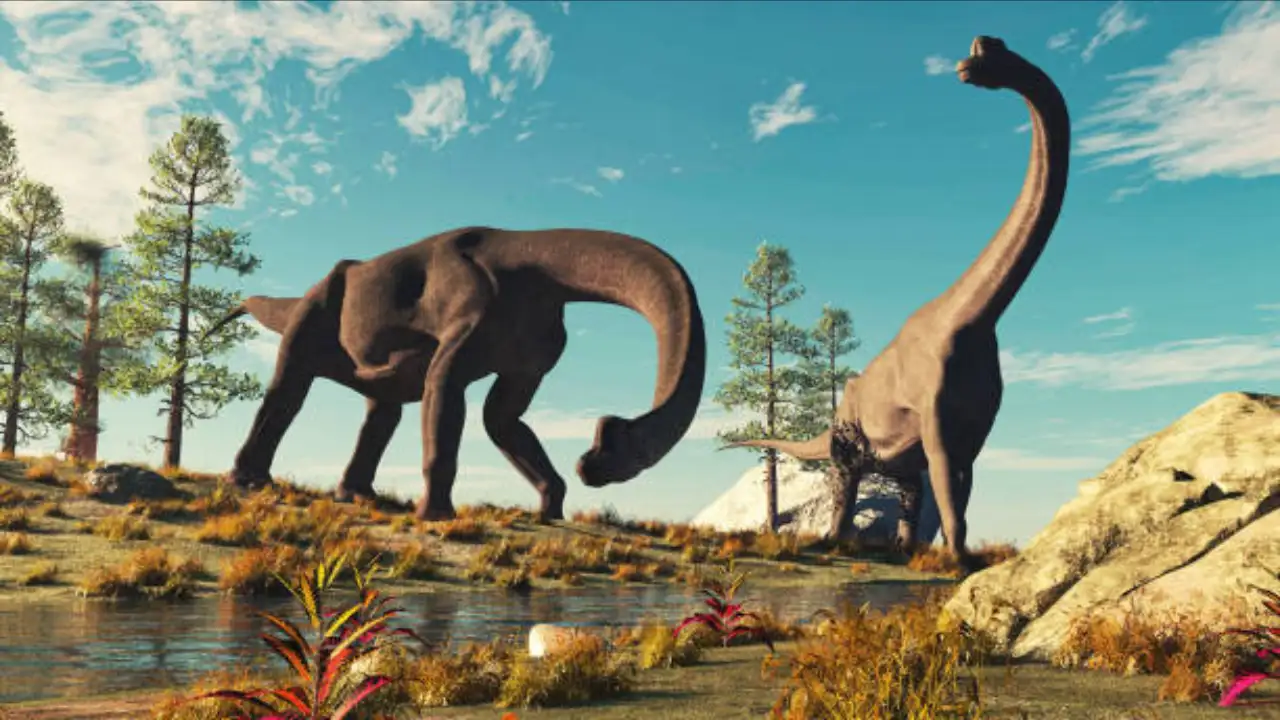
A newly discovered dinosaur in Argentina is giving scientists fresh clues about how some of the biggest creatures on Earth evolved millions of years ago. The massive long-necked dinosaur lived around 155 million years ago and carried a surprising mix of features never seen together before. Researchers now believe the fossil could reshape what scientists understand about giant sauropods in the Southern Hemisphere during the Jurassic period. The discovery comes from Patagonia, a region already famous for producing remarkable dinosaur finds.
ALSO READ: Why did Melania skip Trump's China trip? Her office's one-line answer raises more questions
The dinosaur has been named Bicharracosaurus dionidei, and while it was smaller than some of the largest sauropods ever found, it still stretched an estimated 65 feet, or 20 meters, in length, as per a report by Science Daily.
What makes this dinosaur so unusual?
Scientists recovered more than 30 vertebrae from the dinosaur’s neck, back and tail, along with ribs and part of its pelvis. The fossil remains belonged to an adult dinosaur that lived roughly 155 million years ago on Gondwana, the ancient southern supercontinent. What immediately caught researchers’ attention was the unusual combination of features preserved in the skeleton.
Some parts closely resembled Giraffatitan, a brachiosaurid dinosaur first discovered in Tanzania. Other characteristics, particularly in the back vertebrae, appeared more similar to Diplodocus and related dinosaurs from North America.
"Our phylogenetic analyses of the skeleton indicate that Bicharracosaurus dionidei was related to the Brachiosauridae, which would make it the first Brachiosauridae from the Jurassic of South America," said LMU doctoral student Alexandra Reutter, who examined the fossils during her doctoral research, as per a report by Science Daily.
Why is the Argentina fossil discovery important?
Researchers say the discovery could help fill important gaps in understanding how giant sauropods evolved across the Southern Hemisphere. For years, much of the scientific understanding surrounding Late Jurassic sauropods came from discoveries in North America and other parts of the Northern Hemisphere. Southern fossil evidence remained relatively limited.
"Our knowledge of the evolution of sauropods from the Late Jurassic has so far been based almost entirely on numerous fossil findings from North America and other sites in the Northern Hemisphere," explained dinosaur expert Prof. Oliver Rauhut of the Bavarian State Collections of Natural History.
He added that the fossil site in Argentina’s Chubut province now provides important material that allows scientists to reevaluate the evolutionary history of these giant animals, especially in the Southern Hemisphere, as per a report by Science Daily.
How did the dinosaur get its name?
The dinosaur’s name also carries a local connection. The first fossils were discovered on a farm by shepherd Dionide Mesa, whose name was later used for the species designation. Meanwhile, the genus name comes from "bicharraco," a Spanish slang term meaning "big animal."
The fossils were uncovered from the Cañadón Calcáreo rock formation in Patagonia and are now housed at the Museo Paleontológico Egidio Feruglio in Trelew, Argentina.
For paleontologists, the discovery represents more than just another giant dinosaur. It may become one of the key fossils helping scientists better understand how Jurassic titans spread and evolved across ancient continents millions of years ago.
FAQs
How large was the newly discovered dinosaur?
Researchers estimate the dinosaur measured about 65 feet, or 20 meters, in length.
Where were the fossils found?
The remains were uncovered in Patagonia’s Chubut province in southern Argentina.