While we’ve all become accustomed to the seemingly never-ending stream of negative AI headlines, once in a while the technology is used for something good – and this is one of those times.
Researchers in the US have implemented camera traps hooked up to an AI photo analysis tool to recognize and document different bee species, validating that these cheap yet effective platforms can replace traditional lethal or time-consuming manual pollinator research methods.
The scientists, based at Oregon State University, built the traps using low-cost, commercially available components ($100-$200 in total each) housing them in weatherproof containers with a solar panel and battery setup.
Then they positioned the cameras at a fixed focal distance, aimed at colored platforms that served as non-rewarding visual lures.
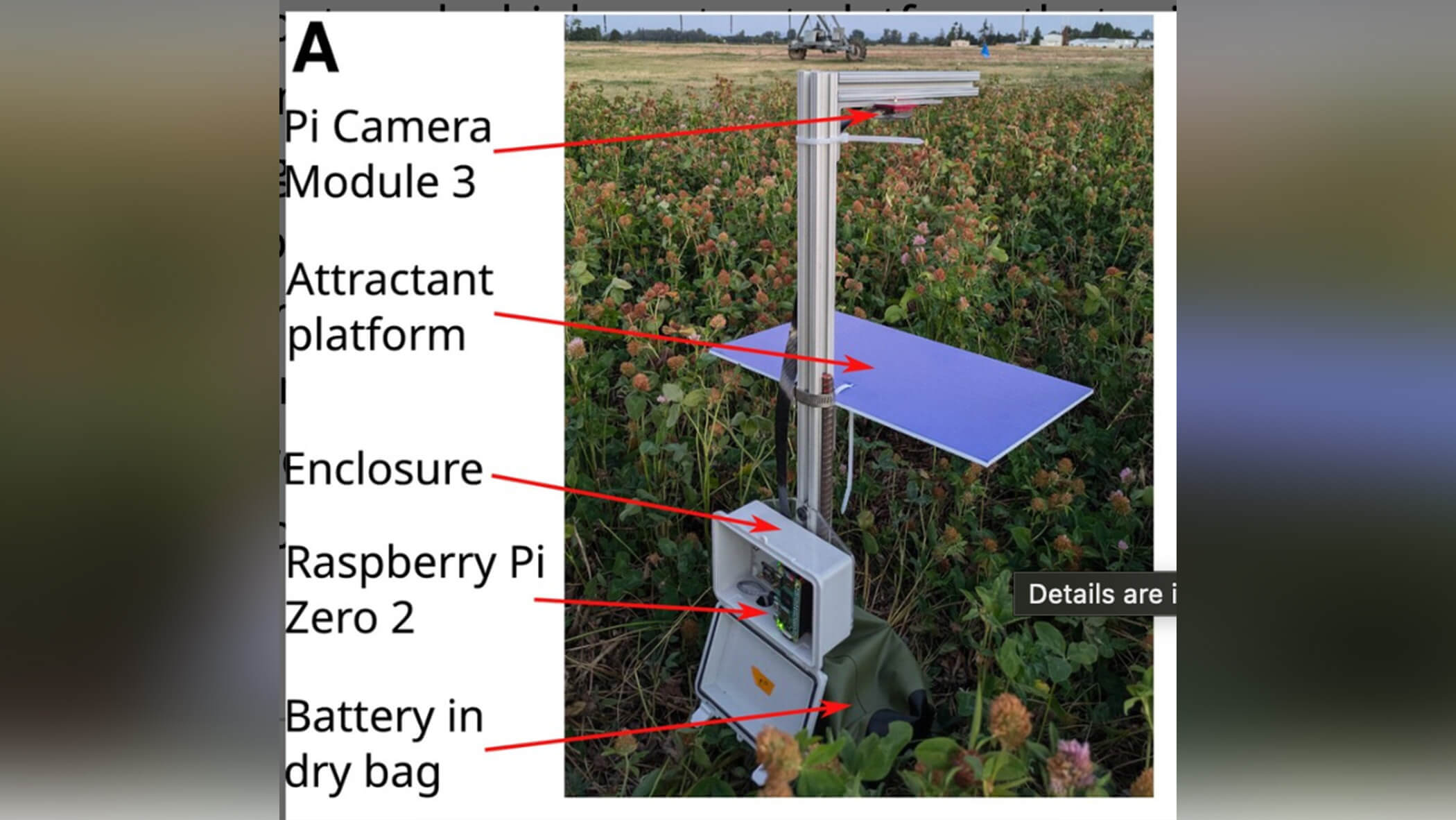
Across 18 days, multiple camera units recorded continuous time-lapse frames during all daylight hours (approximately 06:00-19:00), capturing footage of 6 bumblebee species, closely matching the bee diversity previously documented in the area by traditional methods.
Some 70,000 of these images were then fed into a pair of different AI analysis models. Over 6,000 original-resolution, full-frame images were analyzed by one model and over 66,000 tiles – which came from cropping the full-frame shots – were analyzed by the other.
The AI models then identified and classified the species, flagging and discarding images containing no insects, which reduced raw field data by over 90% without requiring human effort.
Experts then only needed to review a small subset of pre-filtered, cropped insect images to confirm species-level identification, suggesting that continuous multi-day field monitoring can be scaled feasibly.
What a fantastic use of AI to free up the scientists from mundane tasks to focus on the work that truly matters. In my view, this is exactly how AI should be implemented in photography – not to replace the photographer or create slop.
You might also like…
Discover our expert of the best cameras for wildlife photography. We’ve put all these rigs through hands-in testing for you!