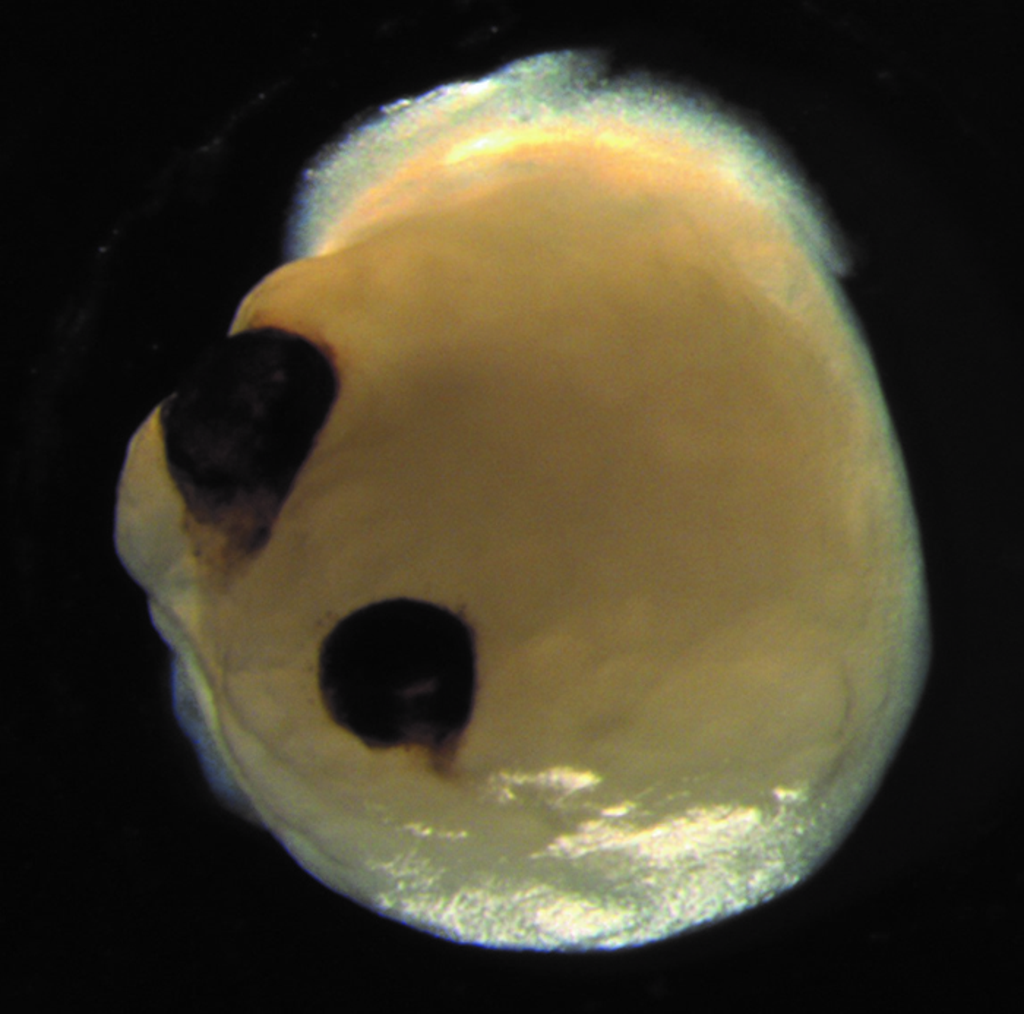
Scientists grew tiny "lab brains" that developed "eyes" sensitive to light, according to a study.
A team of researchers used human induced pluripotent stem cells to generate brain organoids.
Organoids are 3D multicellular tissue constructs that mimic their corresponding organ and are used in labs for study purposes.
On day 30 in the scientists' study, the brain organoids attempted to assemble optic vesicles.
Optic vesicles are outgrowings of the brain from which eyes begin to develop.
These developed into visible structures within 60 days, the researchers said.
They say their findings will add to the existing body of work on the brain-eye formulation during embryo development and help to better understand retinal disorders.
“Our work highlights the remarkable ability of brain organoids to generate primitive sensory structures that are light sensitive and harbor cell types similar to those found in the body,” said Jay Gopalakrishnan, of University Hospital Düsseldorf and lead author of the study.
“These organoids can help to study brain-eye interactions during embryo development, model congenital retinal disorders, and generate patient-specific retinal cell types for personalized drug testing and transplantation therapies,” he added.
Although the organoids can generate various neuronal and retinal cell types, their viability beyond day 60 is "questionable" the researchers cautioned.