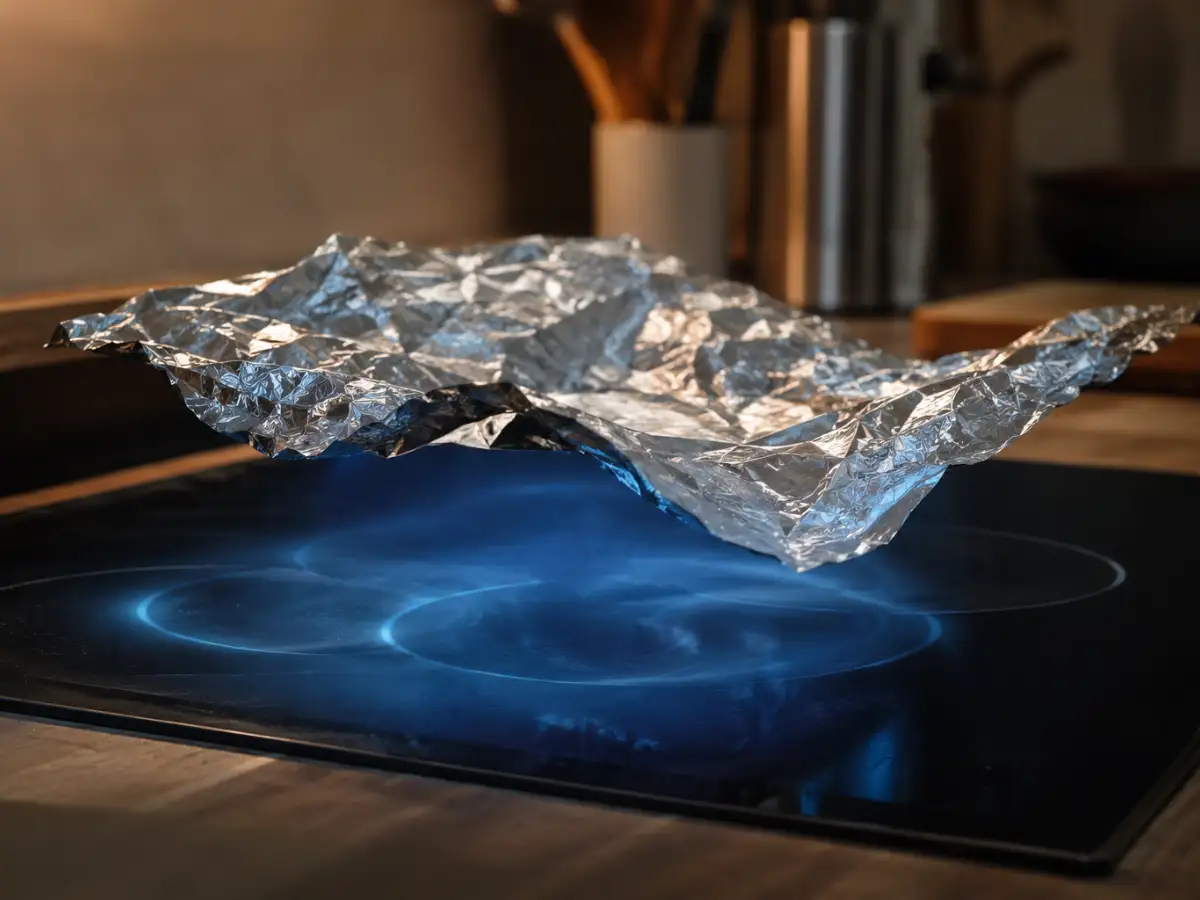
If you’ve ever accidentally dropped a piece of aluminum foil onto an induction cooktop, you might have seen something strange. The foil doesn't just sit there. It jumps, wiggles, and even lifts right off the surface sometimes as if it has a mind of its own. According to a report from the tech and engineering outlet Hackaday, this everyday kitchen oddity was turned into a levitation trick using a regular induction stove and some foil. It feels like magic, but it isn't. It's basic physics, and it explains something a lot of Americans encounter every time they wrap up leftovers before heating them.
Wait, isn't foil supposed to be magnet-proof?
This is the part that trips people up. Aluminum is not magnetic. There's a reason you can't stick a fridge magnet to a soda can. Induction cooktops are built to work best with magnetic, or "ferromagnetic," cookware like cast iron or certain stainless steel pans. So foil should just sit there quietly, doing nothing.
Except it doesn't. According to the University of Central Florida’s physics textbook chapter on eddy currents, an induction cooktop works by passing a rapidly flipping magnetic field through a coil under the glass surface. Any conductive metal you put above that coil, magnetic or not, will be pushed by small looping electric currents. These are known as eddy currents. Aluminum foil is thin, but it still conducts electricity well, so those currents appear in it as well.