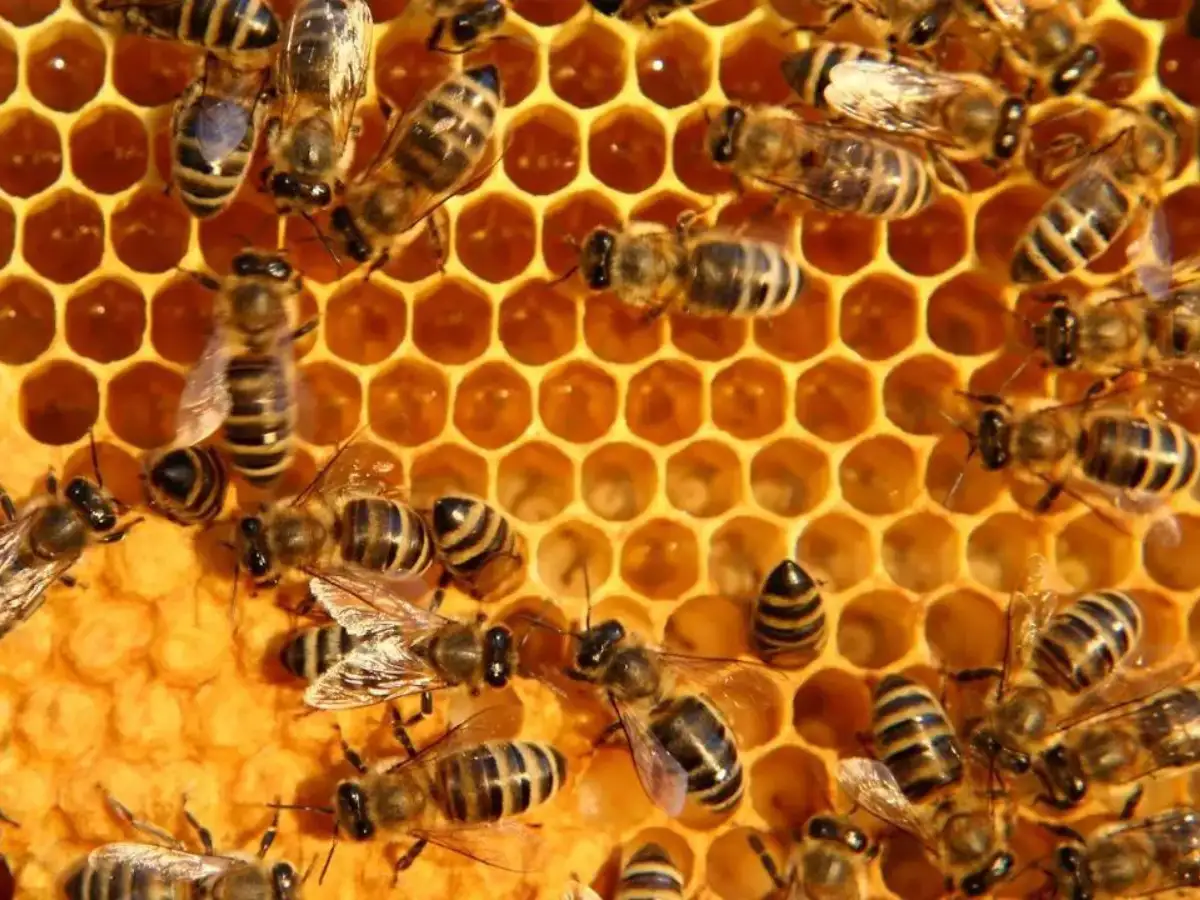
Nature has spent millions of years perfecting efficient designs, and one of its greatest engineering marvels is the honeycomb. Built by honeybees using repeating hexagonal cells, a honeycomb delivers remarkable strength while using very little material. Scientists have long admired this natural structure, and now its design principles are helping shape the next generation of solar panels.
Researchers have developed lightweight photovoltaic (PV) modules inspired by the structural efficiency of honeycombs, offering a potential solution to one of the biggest challenges in solar energy, reducing panel weight without sacrificing durability or performance. The innovation, published in the journal Solar Energy Materials and Solar Cells, demonstrates how biomimicry, or learning from nature's designs, could improve renewable energy technology.
Why the honeycomb is one of nature's most efficient designs
For centuries, engineers have studied honeycombs because of their exceptional strength-to-weight ratio. The repeating hexagonal pattern allows bees to build stable structures using the least amount of wax while enclosing the maximum amount of space.
This unique geometry distributes loads evenly, resists bending and deformation, and provides excellent mechanical strength despite using very little material. According to experts, these qualities have already inspired lightweight structures used in aircraft, spacecraft, automobiles and advanced construction materials.
Now, researchers are applying the same engineering principles to photovoltaic technology to make solar panels lighter, stronger and easier to deploy.
Study develops honeycomb-inspired lightweight solar panels
According to a study published in the journal Solar Energy Materials and Solar Cells, as cited by TOI, researchers replaced the conventional glass-and-backsheet structure of photovoltaic (PV) modules with an aluminium honeycomb sandwich design.
Instead of relying on heavy glass for structural support, the new modules use an aluminium honeycomb core bonded between thin composite layers. The cellular structure provides rigidity while dramatically reducing the amount of material required.
The researchers reported that the finished photovoltaic modules weighed just 6.2 kilograms per square metre, making them approximately 48 per cent lighter than conventional solar panels while maintaining the mechanical strength required for long-term operation.
Honeycomb solar panels passed international durability tests
Reducing weight is only useful if reliability remains uncompromised. To assess long-term performance, the research team subjected the lightweight modules to a series of internationally recognised qualification tests commonly used across the solar industry.
These included:
- Damp heat testing
- Humidity-freeze cycling
- Ultraviolet ageing tests
- Mechanical load testing
- Potential-induced degradation (PID) testing
According to the researchers, the honeycomb-based photovoltaic modules successfully passed these assessments, demonstrating that the lighter design can withstand environmental stresses while maintaining electrical performance.
The findings suggest that significant weight reductions can be achieved without compromising durability or operational reliability.
Why lighter solar panels matter
One of the biggest advantages of lightweight photovoltaic modules is easier installation.
Traditional glass-based solar panels can place substantial loads on rooftops, limiting where they can be installed. Lighter modules reduce structural stress, making solar systems suitable for buildings that may not be able to support conventional panels.
Lower weight also offers several practical benefits, including:
- Easier transportation and handling
- Faster installation
- Lower installation costs
- Reduced structural requirements for rooftops
- Lower material consumption during manufacturing
These advantages could help expand solar adoption across residential, commercial and industrial buildings.
Biomimicry is driving innovation in renewable energy
The honeycomb-inspired photovoltaic module is another example of biomimicry, the practice of solving engineering problems by studying solutions developed by nature over millions of years.
Rather than copying the appearance of a beehive, scientists adopted the honeycomb's underlying structural principles. The hexagonal cellular architecture provides high stiffness and strength while using minimal material, making it particularly well suited for lightweight engineering applications.
Biomimicry has already influenced technologies ranging from wind turbine blades to self-cleaning surfaces, and researchers believe it could continue to play an important role in improving renewable energy systems.
Where honeycomb-inspired solar panels could be used
The lightweight design opens the door to several applications where conventional glass modules may not be practical.
Potential uses include:
- Building-integrated photovoltaics (BIPV)
- Lightweight residential and commercial rooftops
- Industrial warehouses
- Portable solar power systems
- Electric vehicles
- Recreational vehicles and marine applications
- Aerospace and space-based solar technologies
Because the design also reduces raw material use, it may contribute to more sustainable manufacturing while lowering transportation and installation costs.
Nature's engineering could shape the future of solar energy
As countries continue expanding renewable energy capacity, reducing the weight and material requirements of solar panels could remove important barriers to wider adoption.
The study published in Solar Energy Materials and Solar Cells demonstrates that borrowing ideas from nature can produce practical engineering solutions. By applying the structural efficiency of the honeycomb to photovoltaic modules, researchers have shown that solar panels can become significantly lighter while retaining the durability needed for long-term use.
Inputs from TOI