Researchers have come one step closer to unlocking the secrets of tissue regeneration.
A team of scientists from the University of Kentucky built on a 2012 study which found that certain species of mice and rabbits can regenerate damaged skin, rather than just rebuilding it with scar tissue.
Over the course of their study, the Kentucky team found another tissue-regenerating species, the African spiny mouse, which can completely repair holes of up to four millimetres in its ears with new skin.
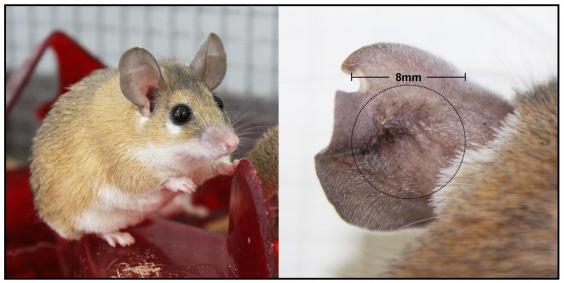
In the process, they also furthered the scientific understanding of the biological factors which lie behind this unusual trait.
A long-standing question in biology is why humans have such poor regenerative abilities compared to other animals. Injuries can cause us to develop scar tissue, but why can't we grow an entirely new piece of skin, or a new digit or limb?
Previous theories have tended to assume there is a 'magic bullet' for regeneration, like a specific gene, which could be harnessed by scientists for use in medicine.
However, an analysis of the spiny mouse's genes has shown the trait is actually much more complex, and involves the interplay of a number of different genetic factors.
The team also found that the regeneration begins when the mouse forms a blastema, or a mass of cells which eventually grow into organs or body parts.
Thomas Gawriluk, a co-author of a study on the discovery, believes developing a deep understanding of the process is a vital step in using it to help humans.
By figuring out the miniscule molecular and cellular processes that occur during regeneration, we would have a good foundation on which to develop new regenerative medicines.
"First we need to understand how mammalian regeneration works in a natural setting, then comes the potential to create theraputic treatments for humans," he said.
Much more research will need to be done on the topic, but this study is still hugely significant - the spiny mouse is one of only a few mammals which can regenerate tissue, and uncovering the mechanisms behind the process could help make human regeneration a reality.