
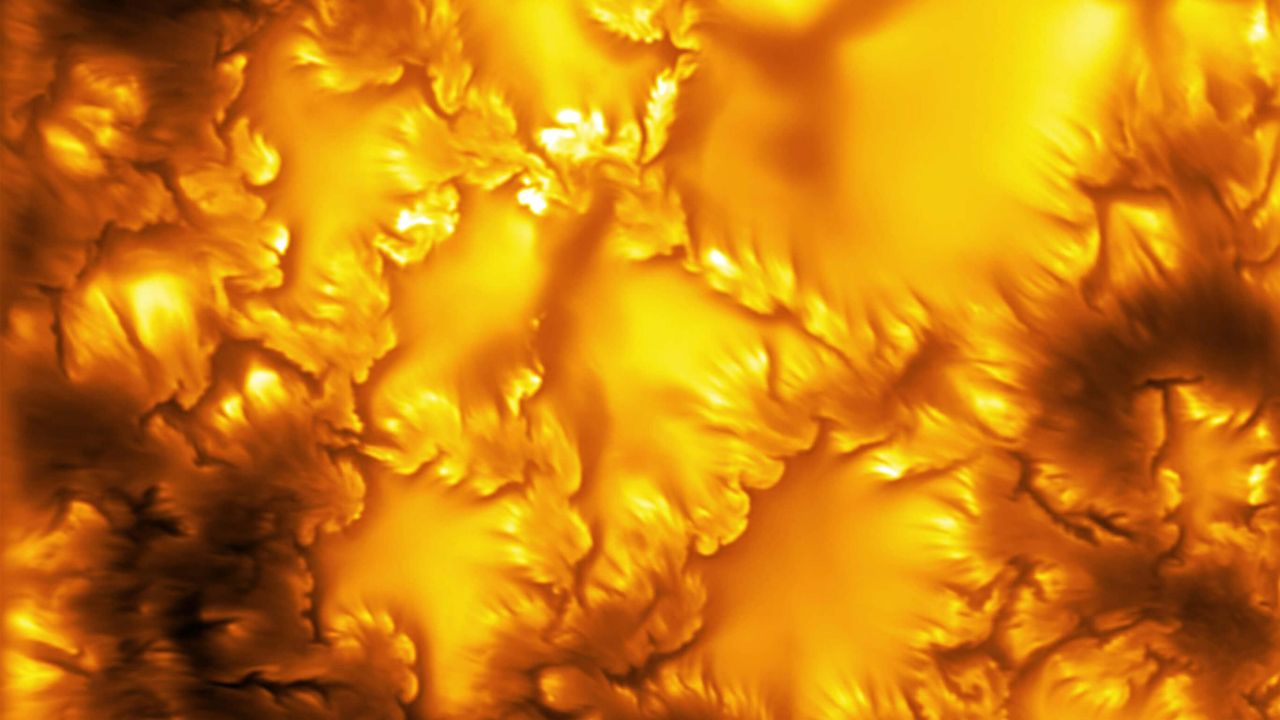
Scientists have captured the highest-ever-resolution images of the surface of the Sun, with the pictures revealing a solar process that could be key to solving the “puzzle” of how the surface of the star generates heat.
Astrophysicists based at the National Science Foundation (NSF) National Solar Observatory (NSO) in Boulder, Colorado, used the Daniel K. Inouye Solar Telescope (DKIST), in Hawaii, to capture the frames, which depicted Kelvin-Helmholtz instabilities (KHIs).
Above: watch the swirling plasma in the Sun's photosphere, captured by the DKIST, reveal KHI processes
KHIs occur when there’s a speed difference within a single continuous fluid. This process is well known in astrophysics and had previously been observed in the outermost layer of the Sun (corona). However, the new DKIST images are the first known confirmation of this process taking place in the photosphere: the lower, visible layer of the Sun that emits most of its light.
Dr. Friedrich Wöger, a senior scientist at the NSO and co-lead on the study, said: “We’ve seen the Sun’s large-scale events, but we’ve been missing some of the small-scale physics that power these events - the “tiny engines” that drive solar activity. The Inouye [telescope] gives us a clearer view of these processes, and KHI may be one of these engines.”
With the help of scientists from the Max Planck Institute, Dr. Wöger used a high-speed camera housed within the telescope, known as FastCam, to capture the pictures. The system snapped 740 grayscale frames per second, with an exposure time of 1/10,000sec per frame, on a sensor area of 2,048 x 1024 pixels (around 2.1 megapixels).
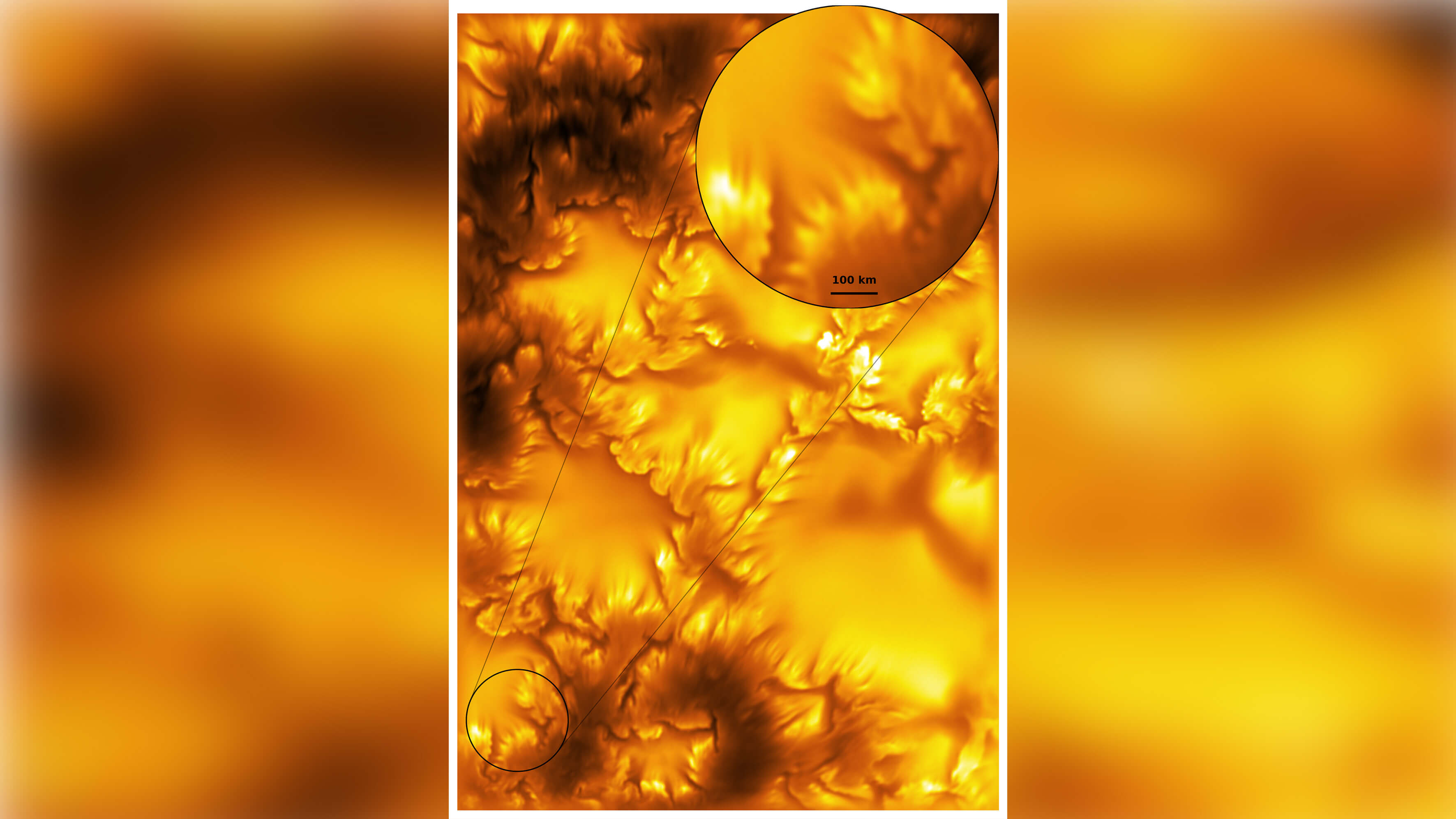
Ironically, the images, which were later colorized in post-processing, were never intended to reveal KHIs in the Sun’s photosphere. The main aim of the study was to test a new approach for gathering data with the DKIST, with Dr. Wöger describing the discovery as a “happy accident,” but one that has helped solve one of the star’s many “mysteries.”
“To better understand and eventually forecast the Sun’s most disruptive behaviors, we first have to understand the tiny physical processes that drive it,” he said. “The more of these pieces we find, and in greater detail thanks to powerful tools like the NSF Inouye Solar Telescope, the clearer and more complete our understanding becomes.”
You might also like…
Here’s our expert pick of the best cameras for astrophotography. You’ll snap stellar pictures of the night sky with these tried-and-tested rigs.