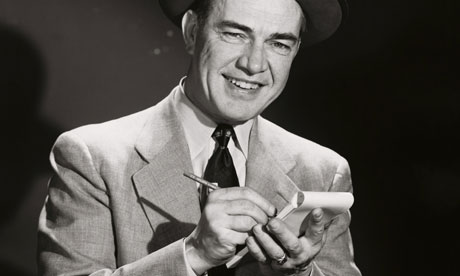
It is a truth universally acknowledged that the media, in general, could do a better job of reporting science.
There are plenty of good journalists out there, of course, carefully choosing stories, applying the filters of context, analysis and accuracy and working to ensure stories that contain science – ranging from lifestyle to politics and way beyond – get due prominence in newspapers, magazines, websites and blogs. And there are plenty of good scientists who engage, debate and contribute to the same exercise, albeit necessarily with different intents and from a different point of view.
But there's a long way to go before anyone could feasibly argue that science is used and understood well by the general media – Ben Goldacre has plenty of grist for his mill yet.
Whose job is it, though, to make things better? I'd argue it's the responsibility of anyone who believes that a fully functioning democracy requires robust coverage and scrutiny of science. Journalists, even the most scientifically literate ones, could all benefit from some self-reflection. And scientists, even the most media-savvy ones, could benefit from a better understanding of how and why things can go wrong.
People in both camps who do things well should spread their ideas and knowledge to colleagues who only ever complain or misunderstand from a distance.
To address these issues, I've helped to organise a meeting at the Royal Institution in London: "Scientists and journalists need different things from science. Discuss".
A lot of words have been spoken on this subject, a lot of blogposts written and tonnes of phlegm and bile thrown around. The debate at the Royal Institution will be purposefully different, an attempt to get beyond the old mud-slinging and to create something genuinely useful for anyone interested in making science reporting better.
As such, the structure of the debate will be tightly controlled to prevent unnecessary repetitions of hackneyed "but this is why you're shit" arguments. In the spirit of constructiveness, each speaker will start the discussion with a set of ideas of how their profession can make general reporting about science better.
Chris Chambers of the University of Cardiff will present ideas about how scientists could do things better. Ananyo Bhattacharya, chief online editor at Nature, will outline how reporters might up their game. Both speakers will post their initial thoughts on this blog and, using the most useful comments from Guardian readers, will begin the debate on 13 March with a few self-critical ideas. Chairing the debate will be Alice Bell of Imperial College London, who will also write up her thoughts on the event afterwards.
Freelance science journalist and blogger, Ed Yong, and the head of the UK's Science Media Centre, Fiona Fox, will formally respond to Chambers's and Bhattacharya's ideas. Then we'll ask members of the audience – which I hope will be a cross-section of everyone from readers to scientists to journalists to press officers – to raise ideas that could form the basis of some notional good practice guidelines for the better use of science in journalism.
These ideas will be published on this blog after the event. I don't expect them to be definitive and they certainly will not be rules. Rather they should form the basis of further discussions for anyone interested in spreading good practice.
I hope you'll take some time to consider coming to the event on 13 March or taking part in the discussions beforehand. But first, read our speakers' posts and have your say.
Tickets are available here (use the code "scimedia" to get half-price tickets). If you can't come to the event itself, do get involved before and during in comments or on Twitter, using the hashtag #Riscimedia. Start leaving your comments here