
From new drugs to advanced technology, from genetic manipulation to improved agriculture, scientific research is constantly adding to the sum of human knowledge.
However, research costs quite a lot of money. Our current politicians think it costs too much money. Despite the UK being a world leader in science and all the benefits this yields, the initial funding requirements are apparently excessive so need to be cut. This demonstrates a clear lack of understanding about science.
Imagine having a pet dolphin. Dolphins are very smart and popular, people come from all over to see your dolphin and interact with it, and regularly pay you for doing so, so it’s self-sustaining. But then you decide that you can save money by keeping your dolphin in a bathtub instead of a huge expensive tank. It hardly ever uses all that water anyway, right? As long as you give it enough to keep it alive, you’ll save money and accumulate even more profit.
You won’t though. Even if it doesn’t die, the dolphin will quickly become very ill and incapacitated, and nobody is going to pay money to crowd into a strangers bathroom to stare at a sick cetacean. Ergo, that short-sighted money-saving move ended up costing you everything. And so it is with science; blinkered cost cutting just proves needlessly restrictive, and far more expensive overall.
[NOTE: Ideally dolphins shouldn’t be kept in captivity at all, it was just cited here to illustrate the point]
But if funding is cut beyond practical means, scientists are going to have to work out how to continue their research with severely limited resources. So, here are some cost-cutting suggestions for what to do if the worst happens.
Physics
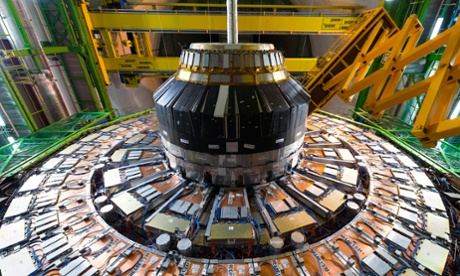
- Save money on expensive particle accelerators by using only round particles and building your accelerators on a slope, taking advantage of gravity to provide a free “boost”.
- Take advantage of the uncertainty principle by just guessing the position and momentum of a particle in your calculations, secure in the knowledge that nobody can prove you wrong.
- Consider entering a sponsorship deal with Prince where he is granted exclusive rights to the purple/violet part of the visible electromagnetic spectrum.
- Keep your costs down by recycling the atoms you split and using them in your fusion research.
Chemistry

- Many products are advertised as “chemical free”. Contact the manufacturers and see if they’ll let you take the extracted chemicals off their hands to use in research.
- Consider selling surplus Bunsen burners as needlessly elaborate and dangerous candles for birthday cakes.
- Chemistry measures substances in Moles. Avogadro’s constant states a mole is made up of precisely 6.02214129(27)×1023 atoms/molecules of a substance. That seems excessive, you can probably get away with at least halving that.
- Did you see Breaking Bad? Just saying…
Biology

- Using sewer rats instead of specially-bred lab animals will reduce your overheads and allow you to study animal behaviour and disease control at the same time.
- If you’re investigating diseases or health conditions, consider becoming a shill for Big Pharma. You’ll get accused of this whether you are or not, and apparently it pays well.
- Current data suggests there are 250 amino acids that do not form proteins. Get rid of these, they’re clearly just freeloading.
- Make saline last twice as long by diluting it.
Psychology
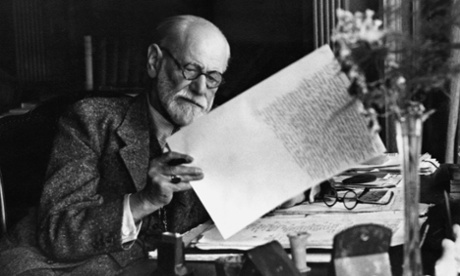
- Psychology is currently under much scrutiny due to the fact that many studies seemingly produce results that cannot be replicated. Save time and money by simply conducting studies that can be replicated.
- Avoid costly accusations of bias or selection issues by only setting up studies while so drunk you won’t remember what you did or why.
- Use reverse psychology to your advantage by telling your postdocs and other lab staff that they “definitely shouldn’t work for free”.
- Exploit the principles of Classical conditioning by giving someone a tasty treat whenever they approve your grant application.
Astronomy

- Whenever you discover a new star or planet, sell it to a private company or corporation. You’ll get the money and they’ll not be able to do anything with it in any case.
- Trick less-attentive members of the public into funding your research by renaming stars “space heaters”.
Science Communication

- Save huge sums on expensive media campaigns or press releases by simply telling your latest research to the man in the pub, the one everyone seems to listen to and believe.
- Don’t waste money on posters or pricey journals, just write your findings on a chalk board in the street.
- Support science funding and research and put pressure on the government by joining the Science is Vital campaign, the next London meeting of which is 26 October.
Dean Burnett is not allowed to do scientific research these days. Nothing to do with funding, he’s just not very good at it. He seems to have got the hang of Twitter though, @garwboy