New teaching guidelines for Japan's schools are scheduled to be adopted from fiscal 2020. What changes will occur, and what issues will develop, for children, teachers and the elementary school environment as class hours are significantly expanded?
This article reports from the front lines of education ahead of the launch of the "2020 generation," which will receive a new kind of teaching.
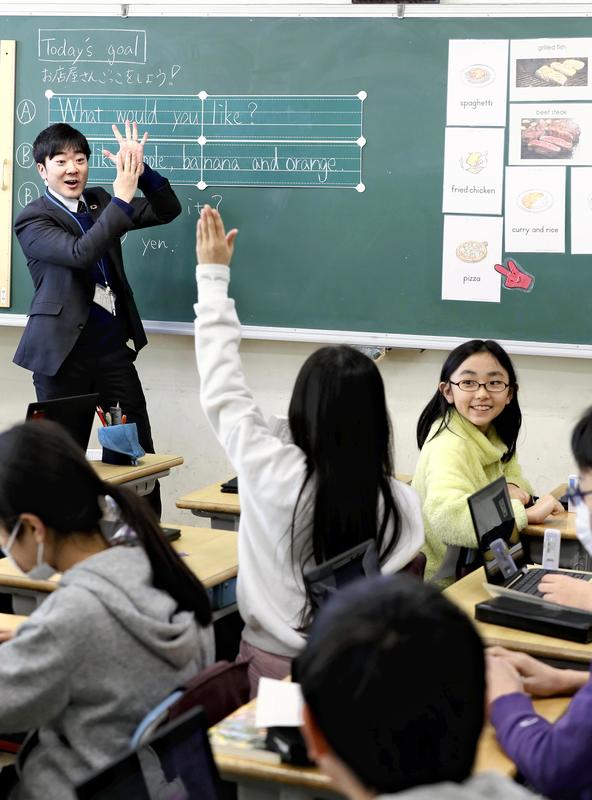
"What would you like?"
This question was asked in an English class taught on Feb. 27 to the No. 3 fifth-year class at the municipal Machida Daigo elementary school in Machida, Tokyo. There was no textbook, as the teaching guidelines had not yet been fully implemented, but 35 students were divided into shopkeepers and customers and were learning terms related to shopping.
Teacher Takayuki Namiki, 30, wants to show the students that he is taking the initiative in speaking in English, and so has actively been participating in such events as training sessions held by the city.
Namiki was conducting the class alone that day, without an assistant language teacher (ALT). Phrases like "change the direction your desks are facing" were hard to deliver for him.
At the end of the class, which was only 45 minutes long, the children were cheerful and there was sweat on the teacher's brow.
There are a number of issues to be dealt with regarding the introduction this month of English as a new subject, including finding time for English in the schedule, how to conduct classes and how to grade students' performance.
To make time for English classes, the Machida elementary school has canceled since fiscal 2017 the school arts festival and practices for it, and stopped holding the teachers' morning meeting. Notices are shared on the electronic bulletin board of an in-school network.
The about 30 teachers take turns making speeches in English at the beginning of the teachers' evening conference.
In a survey released last year by the Organisation for Economic Co-operation and Development of the working hours of teachers, Japanese teachers were said to be the busiest in the world.
Steps have been taken to support the teachers at the Machida school, such as allowing them to take their computers home and hiring special teachers for such classes as arts and crafts and music.
"Many teachers are still struggling with English, but we hope they can use their free time to develop leadership ability," principal Toshiko Igarashi said.
Read more from The Japan News at https://japannews.yomiuri.co.jp/