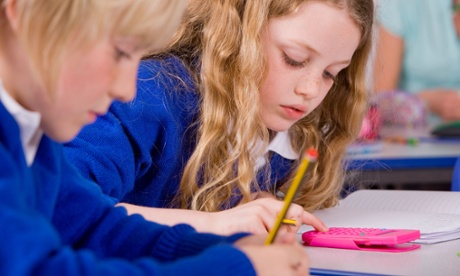
The majority of primary schools across England have opted to assess children as young as four using a method that focuses on observation as opposed to testing.
Headteachers and local authorities flocked to adopt the test-free approach offered by Early Excellence, a small consultancy in Huddersfield, which emerged as the surprise winner of the competition to supply the Department for Education’s (DfE) controversial new baseline assessment.
It means that children entering reception class in September 2015 are likely to be assessed using the new system, recording each child’s literacy and numeracy skills within a few weeks of their starting school.
The baseline assessment had been bitterly opposed by some teaching unions as a “test too far”, with the National Union of Teachers and the National Association of Head Teachers calling for them not to go ahead.
Early Excellence’s director Liz Marsden said she was delighted by the outcome, which has seen the company with fewer than 50 full-time employees sign up more than 11,000 of England’s 16,700 primary schools, in the teeth of opposition from larger and better known rivals, including Hodder Education, owned by French publishing giant Hachette.
“One reason we developed it was that we were afraid of young people being tested in a formal way,” said Marsden, referring to criticism of the assessments as “dangerous for children” by objectors who include the author Philip Pullman and psychologist Penelope Leach.
Instead, Early Excellence’s assessment is done by observation in the classroom, similar to assessments that teachers carry out as part of the existing early years’ foundation stage, and avoids the use of computers or tablets that some providers have adopted.
“We developed an assessment that isn’t a test, the child isn’t aware that they are ever being assessed, it fits in with everyday practice and it’s based on a practitioner’s professional judgement of how you understand a child as a learner,” said Jan Dubiel, Early Excellence’s national development manager. “We are absolutely not talking about formal testing here.”
Karen Lomas, the headteacher of Savile Park primary school in Halifax, said her school signed up with Early Excellence after taking part in a trial.
“For us it was a very positive thing. It’s done through observation and through normal practice within a classroom observing children. Children will not be aware that they are sitting a test, because they are not,” said Lomas.
Children with English as an additional language posed “a little bit more of a problem,” according to Lomas. “But the last thing I would want are children being put in front of a computer,” she said.
This year’s NUT annual conference in Harrogate passed a motion calling for a possible boycott of administering the assessments for pupils in reception, with delegates also calling for strike action in 2016 if the move went ahead.
Schools choosing not to participate by the deadline of April this year will have their performance judged on pass rates for later exam results – a much tougher threshold that only around 10% of schools would meet.
But the popularity of Early Excellence’s observation assessments may disarm many of the critics.
Robert Coe, professor of education at Durham University and director of its Centre for Evaluation and Monitoring, said the competition between providers had been made difficult by the controversy.
“The narrative around this has been that testing is cruel or unethical, which we disagree with – but those are the arguments that have been made and largely accepted by schools. But there are limitations to what you can get from observation alone,” Coe said.
“I think it would be shame if this doesn’t lead to a better use of high-quality assessment in diagnosing specific difficulties.”
Sigrid Brogaard-Clausen at the University of Roehampton’s School of Education in west London, who is working on a study on the use of the assessments, said that teachers report “deep concern” over having to give a child low marks.
“Because of the binary nature, in the assessment you have to score some children zero in some circumstances – and that’s not a good feeling.
“Very early on teachers will need to communicate this to parents, and I think that’s one of the big questions that is coming out,” she said.