News in brief
- There will be less to spend per pupil in schools in England over the next five years regardless of who wins the general election, according to the Institute for Fiscal Studies. A report by the thinktank, based on parties’ spending pledges, says schools face up to 12% real-terms cuts.
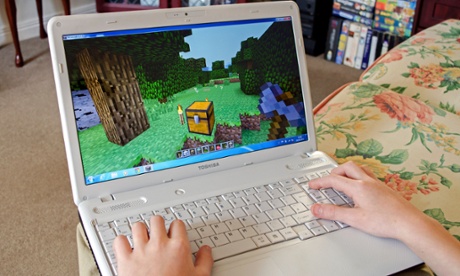
- Minecraft, the hugely popular building-block game, will be given to secondary schools in Northern Ireland as part of a project funded by the Department of Culture, Arts and Leisure. The educational version of the game will be supplied to 200 schools as well as 30 libraries and community organisations.
- Girls start to doubt their sporting abilities after the age of seven, according to research. A study, commissioned by the government equalities office, found that this is when unhelpful stereotypes emerge. “Girls are clearly conscious of these perceptions,” researchers said.
- The London Oratory, one of England’s oldest state-funded Catholic boys’ schools, is challenging the Office of the Schools Adjudicator’s (OSA) attack on its admissions policy. The OSA said many aspects of the oratory’s admission arrangements for 2014 and 2015 breached the schools admissions code.
Research of the week
Does being educated lead to happiness? Not according to a new study. A paper published by the British Journal of Psychiatry, conducted by Warwick Medical School, found that happiness is the same, whether you went to college or not. Low educational attainment is strongly associated with mental illness but the research team wanted to find out if higher educational attainment is linked with mental wellbeing. They found all levels of educational attainment had similar odds of high mental wellbeing.
Lead author of the study, professor Sarah Stewart-Brown, said: “These findings are quite controversial because we expected to find the socio-economic factors that are associated with mental illness would also be correlated with mental wellbeing.”
Researchers defined happiness as a state in which people “feel good and function well”. They applied this to data from the Health Survey for England for 2010 and 2011. Read more about the research here.
Weekly snapshot
The Easter bank holiday weekend begins on Good Friday (3 April). To get in the Easter spirit we’ve been getting crafty – including painting eggs as endangered animals. Don’t forget to share your Easter lessons with us here.

The week in numbers
The government will invest £2m to help eliminate homophobic and transphobic bullying in school. The money will be used to train teachers and fund projects to highlight the dangers of prejudice.
The Religious Education Council of England and Wales (REC) has launched a campaign to get more graduates to become RE teachers. Bursaries of up to £9,000 are available to cover training costs. The subject has seen a surge in popularity since 2012, with entries to the full course GCSE rising by 19%.
Dates to remember
Inspire students to love reading on International Children’s Book Day, Thursday 2 April. The Jewish Passover festival begins on the evening of Friday 3 April marking the Israelites’ liberation from Egypt. The Christian festival of Easter begins on the same day and celebrates the resurrection of Christ on Sunday 5 April.
Teaching resources
- Learn about Passover and how it is celebrated
- Introduce the Easter story to younger students
- Ask students to identify gas-related hazards they might find at home
- Social and emotional wellbeing – this framework looks at what works in school
Latest blogs and comments
- Finnish schools: subjects scrapped and replaced with ‘topics’
- Indian schools implement gender classes to fight inequality
- Girls’ schools are not inevitably ‘bitchy’ places
- Grading teachers by the test