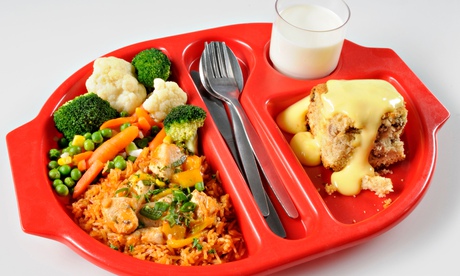
Some schools across England are struggling to cope with the increased demands of providing free school meals to all infants, despite the government’s latest efforts to provide funding to upgrade inadequate facilities.
The Department for Education announced on Tuesday the maintained schools that had been successful in their bids for extra funding for new facilities. But information gathered under freedom of information requests shows that parts of the country failed to receive any additional funding, while other schools are facing disruption from overstretched equipment or premises as a result of the universal infant free school meals (UIFSM) policy.
The DfE said the latest funding round of £20m was aimed primarily at providing facilities for the schools that were having to serve cold or packed lunches.
The failed bids include schools that are using local village halls for serving lunches, schools where facilities for special needs pupils are being taken up with food preparation, and others where classroom time and lessons are being interrupted by the need for longer lunchtimes to fit pupils in.
In several cases, school halls are being used for the extended lunchtimes, cutting into drama or PE lessons.
One of the schools still waiting for funding is St Gregory’s primary school in Marnhull, Dorset, where hot meals for 48 infants are prepared in a cramped kitchen measuring 2m by 2.5m. It lacks a sink or cooker, and food must be heated in ovens placed in a room otherwise used for children with special educational needs.
Andrew Jolley, a former school governor who has campaigned for greater transparency and funding for the free school meals policy, said: “Many schools now face an invidious choice: allow the education of their pupils to suffer, or comply with the new requirement to provide UIFSM. The government seem intent on implementing this policy on the cheap. They show none of the strategic planning they require of schools.”
Offering free school meals for infants was a policy championed by the Liberal Democrats in government. A Lib Dem source said: “Universal free school meals has been a success in the overwhelming majority of schools, and we secured this additional funding to help the very small number still only able to serve cold food. No school who showed they were in that position was turned down.
“Local authorities have also received a huge amount of capital funding this year, with more on the way, to maintain and improve schools. They are free to prioritise this however they like.”
The bids also reveal the patchy nature of the national situation. Birmingham city council – the country’s largest local authority – submitted bids worth around £3m in total, but not a single school was successful. Wiltshire received approval for just three out of its 33 bids, while Gloucestershire was luckier, winning funding for five of its six bids.
A Birmingham city council spokesperson said that the city’s schools benefited from capital from the first round of government funding. It received £2.8m, so that all its schools could now offer hot meals.
The DfE’s latest funding round is its second attempt to upgrade state school catering facilities under pressure from increased numbers; with all reception, year-one and year-two pupils receiving free school meals automatically since September last year.
The DfE’s first tranche distributed £150m to local authorities, with the funds allocated by population. The latest allocation of £20m saw local authorities submit bids from individual schools, detailing the cost of upgrade and the problems caused for the school.