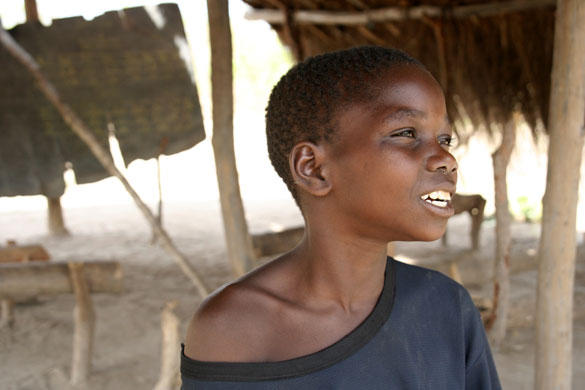
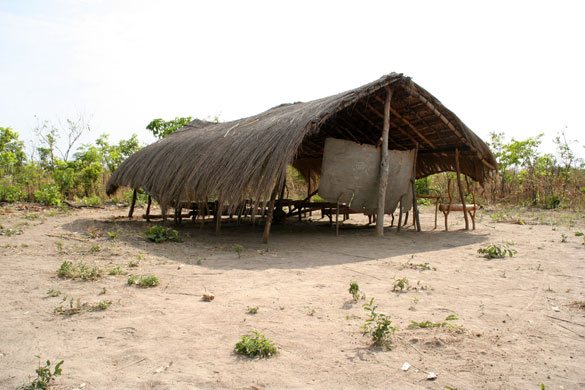
Leon, nine, has been going to a bush school for the past year. When asked what his favourite subjects are he replies: 'Everything! Maths, history, I want to learn all the languages.' Leon's family were forced to leave their home and hide in the bush. Food is scarce. 'I just wash my face and go to school, there is no breakfast. Before the war, we would have breakfast,' he says. His enthusiasm for school is evident from the fact that he runs five kilometres to get therePhotograph: Simon David/DfID/Simon Davis/DfIDThis is Leon's bush school, Betokomia Trois. It in the war-torn north-west of the Central African Republic. Since 2003, 80% of children have had to leave school because of fighting between the government and armed rebels. Betokomia Trois provides a space for 150 pupils to learn, away from the fighting and the bandits who target villages. Bush schools can be dismantled and set up in areas that are safe for their pupils and staffPhotograph: Simon Davis/DfID/Simon Davis/DfIDBush schools are set up by communities using simple materials: local timber for benches, straw roofing for shelter and a blackboard. The bush schools programme is supported by DfID (the UK’s Department for International Development) and run by Cooperazione Internazionale, an international non-governmental organisation that helps choose and train potential teachers in a communityPhotograph: Simon Davis/DfID/Simon Davis/DfID
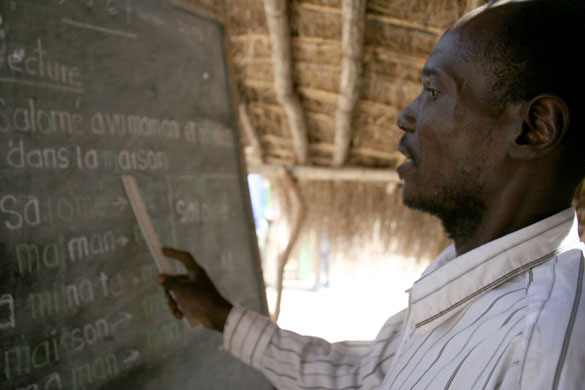
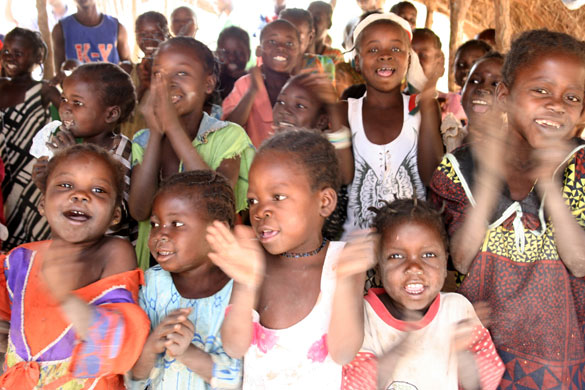
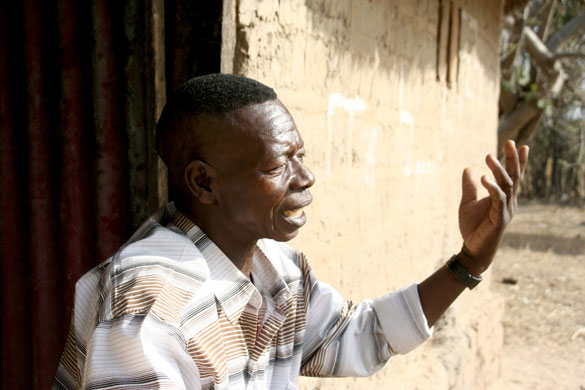
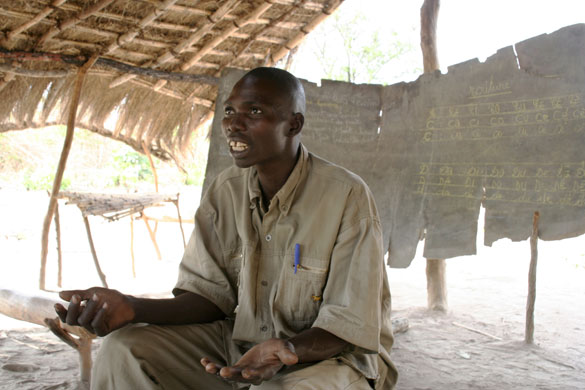
These are some of the children that are getting a chance to continue their education at Betokomia Trois. Despite ongoing warfare, around 12,500 children are at school across the north-west, thanks to the bush schools programmePhotograph: Simon David/DfID/Simon Davis/DfIDRoger-Blaise, Leon's father, is head of the Betokomia Trois parents' association. 'We don't have money to pay the teacher,' he says. 'If we have time, we will just go to the teacher's farm to work for the teacher. That is the only way we can pay him back because we don't have any money'Photograph: Simon Davis/DfID/Simon Davis/DfIDAnd this is the teacher, Francis. Occasionally, he receives payment in kind. But it was sheer commitment that made him accept the role. 'A child has to be educated. If there is a child who doesn't know how to read or write this is catastrophic. That is why I teach the children,' he explains. Despite his passion, he is realistic. 'For now, I am teaching here. But if they say the rebels are coming, I will have to leave my books and everything to run away'Photograph: Simon Davis/DfID/Simon Davis/DfID
Sign up to read this article
Read news from 100’s of titles, curated specifically for you.