Over the last two weeks each political party has released their political manifesto describing their vision of a “stronger”, “fairer” or “better” Britain. But what does this mean for our young people and their access to school sport, physical education (PE) and physical activity?
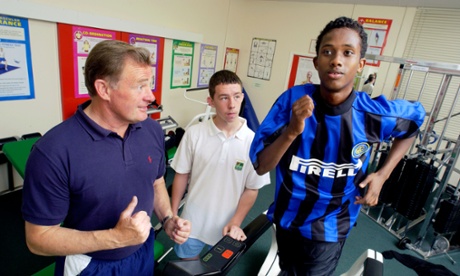
In a week in which headlines told us that two-thirds of primary school pupils lack basic fitness, the Conservatives, Labour and the Greens have pledged to abate this worrying trend, recognising the “ask” from the Youth Sport Trust’s (YST) own manifesto, Unlocking Potential, for more higher quality PE, physical activity and school sport. Such cross-party support means that whatever the outcome of the general election, one of the parties forming the next government will ensure our young people are provided with a minimum two hours of PE, sport or physical activity per week. We’ve been celebrating this sweep of support from across the parties for physical activity as a means of tackling health inequalities, with many of our “asks” being reflected in the proposals of the major parties.
The commitment from the Conservatives of school time and funds, in the form of the PE and Sport Premium, indicates an intention to foster good habits in physical activity to limit future burdens on the health service. They are perhaps hoping to reinforce this message with their assurance to continue funding elite sports to see our sportsmen and women “win even more medals in Rio 2016 than they did in London 2012”. This demonstrates an understanding of the role that hosting mega-events like these and the forthcoming Rugby World Cup, the IPC World Championships and Cricket World Cup can play in shaping the health and sporting aspirations of all our young people.
The SNP also hopes to build on the legacy of Glasgow’s Commonwealth Games, aiming to tackle health inequalities by extending their ”Cashback for Communities” scheme which offers free sporting sessions to young people.
Both parties face a contender no less committed to changing young people’s lives through school sport, PE and physical activity. Labour – advocates of a “new national ambition to help people get more physically active” – describes their intention to create a public health policy that outlines recommended levels of physical activity as part of their health manifesto, A Better Plan for the NHS, Health and Care. Central to this is the commitment that “children will participate in a minimum of two hours of organised sport every week at school”.
Labour’s education commitments have also separated them from the field. A Labour-controlled government will require each teacher to gain qualified-teacher status and will make professional membership reliant on the completion of professional development activities. The Liberal Democrats support this requirement for the state sector and join Labour and the Conservatives in the call for a national college of teaching to oversee professional development. The YST believes that the benefits of PE can only be unlocked if it is taught by specialist teachers in a supportive environment and welcomes the commitments to making this a reality.
The Liberal Democrat education commitments might not be so timetable-targeted but where the party has picked up praise is in their campaign to give mental health the same status as physical health. Their desire to see our young people develop resilience and have their wellbeing monitored by a Children’s Mental Health Taskforce, as part of a national wellbeing outcomes framework, indicates the impact our manifesto “asks” have had in advocating for an improvement of both the physical and emotional health of our young people.
The 2015 general election has been marked by the emergence of the smaller parties. Once grouped together as “other”, each is now communicating a defined character and policy ambitions. The likelihood of a hung parliament and a minority or coalition government is real, meaning that that these parties could have far more leverage over future policy than has been previously the case.
While the more radical proposals contained in their manifestos are unlikely to be adopted it is pleasing to see a consensus of opinion across the parties’ publications regarding sport’s benefit to health and wellbeing. Indeed the combined, cross-party support for school sport could mean there is a real prospect that over the next five years schools across the country can deliver high quality PE, school sport and physical activity provision for all – helping raise aspirations, reduce health inequalities and dispel attitudes towards diversity.
A popular proposal across manifestos is the call for the opening up of more sports facilities and encouraging cycling for all, with Plaid Cymru perhaps putting the case across most vigorously. Promoting sports, exercise and activity for all age groups, genders and abilities would be achieved, the party says, by the development of grassroots sports and the extension of their “Inspire Wales” programme which would task elite athletes to promote sport and inspire participation, through visits to schools, youth clubs and events. Such attitudes of inclusion, in particular the party’s commitment to design “schemes to encourage teenage girls to take part in fitness programmes” are welcomed by the YST, alongside similar commitments from the Conservatives and those of the Green Party, who would “set targets for participation in sports by women, ethnic minorities and disabled people”.
Perhaps the only party raising questions is Ukip, with its plans to abolish the Department for Culture, Media and Sport. It is not clear from their manifesto where the management and funding of sport would go following this cost-cutting proposal but the hope is that their only likely coalition partner would, regardless of this request, secure a healthy and happy future for our young people through an improved access to PE, schools sport and physical activity.
Having secured clear commitments from the key policymakers of this election, thanks to our own manifesto, the YST will continue to work to ensure that whatever the future government, these pledges for school sport, PE and physical activity will become reality.