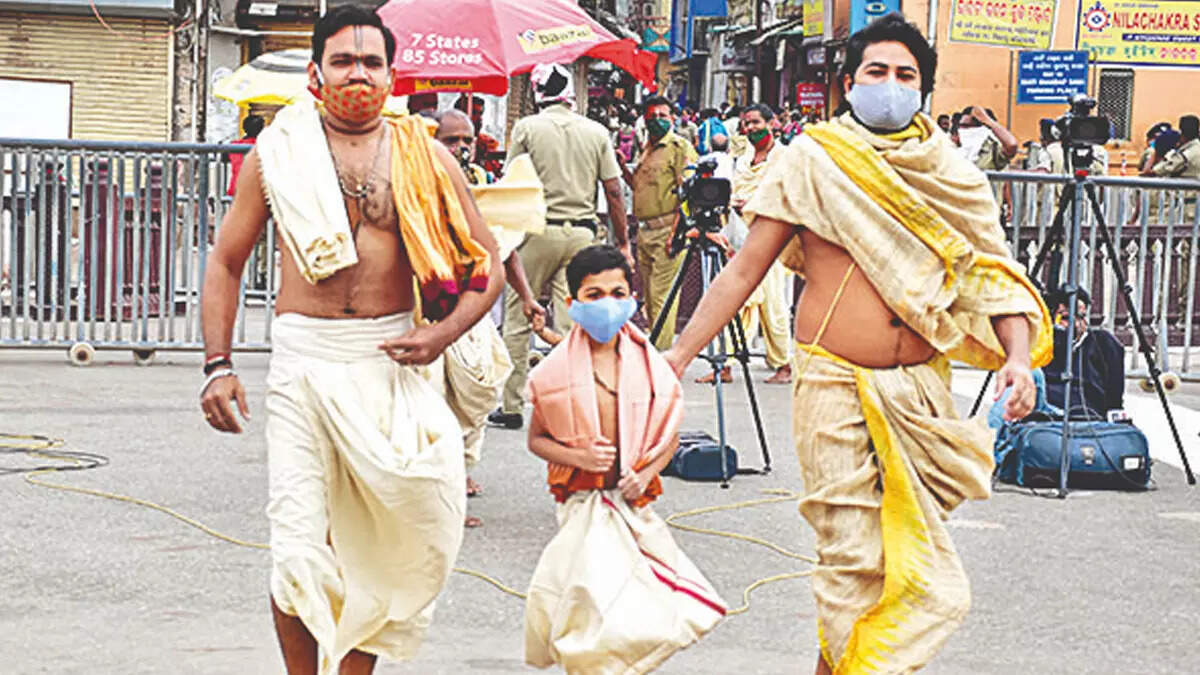
BHUBANESWAR: Nearly two years after the state government announced to set up the Adarsh Gurukul, a school for the children of servitors of Jagannath Temple at Puri, the shrine administration has planned to make the institute functional from the next academic year.
The newly-constituted temple managing committee on Thursday decided to form Shree Mandir Adarsh Gurukul Society, which would manage the Adarsh Gurukul. The managing committee’s chairman, Gajapati Dibyasingha Deb, has been named president of the proposed Gurukul Society.
“We have identified 17 acre of land at Matitota in Puri. As announced by chief minister Naveen Patnaik, the government will spend around Rs 20 crore to build the Adarsh Gurukul under the Augmentation of Basic Amenities and Development of Heritage and Architecture (ABADHA) scheme. The society will look after the Gurukul. A Shree Mandir Gurukul fund will be created to run the school. The society will select and sign MoU with a non-profit organisation to run the school,” temple’s chief administrator Krishan Kumar said. Sources said a sub-committee was constituted to finalise modalities of the project.
The free Adarsh Gurukul education is likely to follow the CBSE pattern up to Class XII. The students will also be trained in traditional seva puja and rituals of the temple.
In a separate development, the temple managing committee on Thursday put the proposed housing scheme for poor servitors on fast track.
“We have decided to provide houses to 400 poor servitors families in the first phase. The housing scheme will be developed on eight acre of land in Puri. Each family will be given 600 sq ft plot and Rs 2 lakh assistance towards building cost initially. The government will develop the common infrastructure like road, electricity, sewerage connection and water supply,” Kumar said.
The exam number of families that would be covered under the housing scheme will be finalized following a thorough scrutiny. The managing committee has also approved a proposal to donate wheels and other components of the chariots free of cost to different temples, organisations and government offices. The wheels of the chariots used to be sold to devotees after the end of Rath Yatra every year.