Scholar by day, street-sweeper by night, one Black man navigates Rio's racial divide
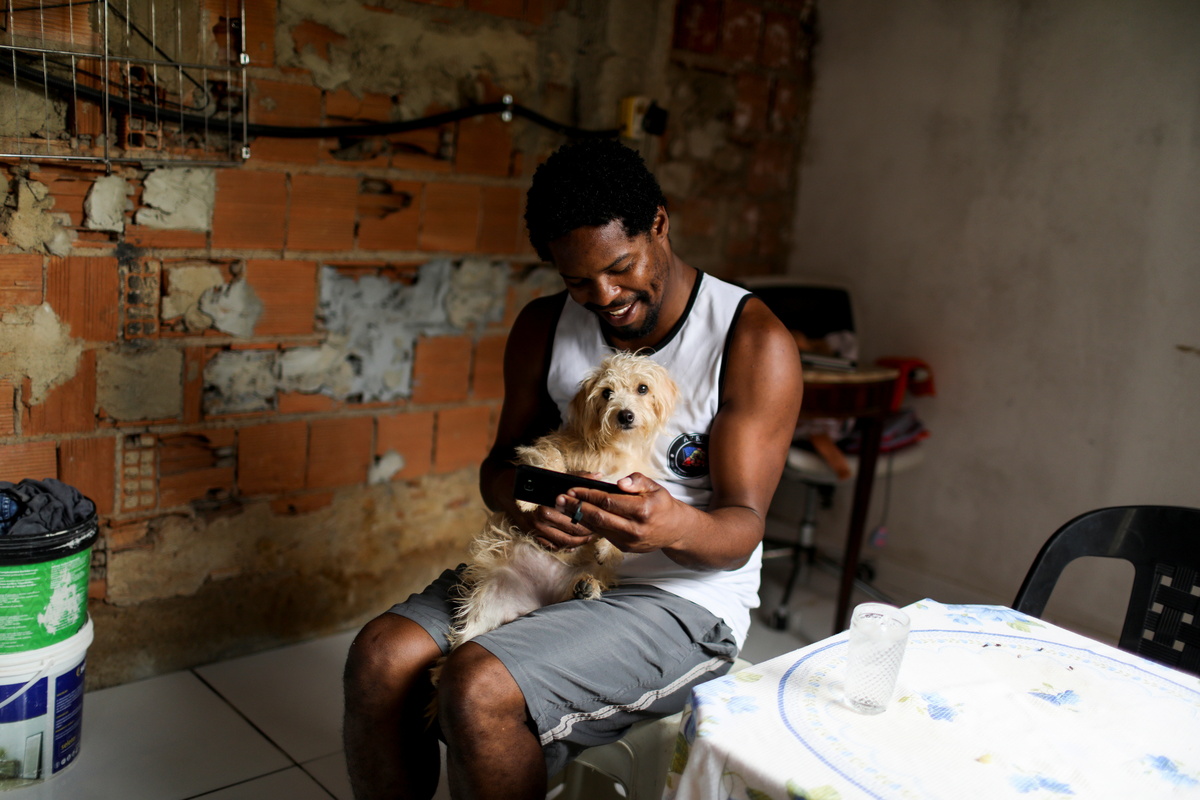
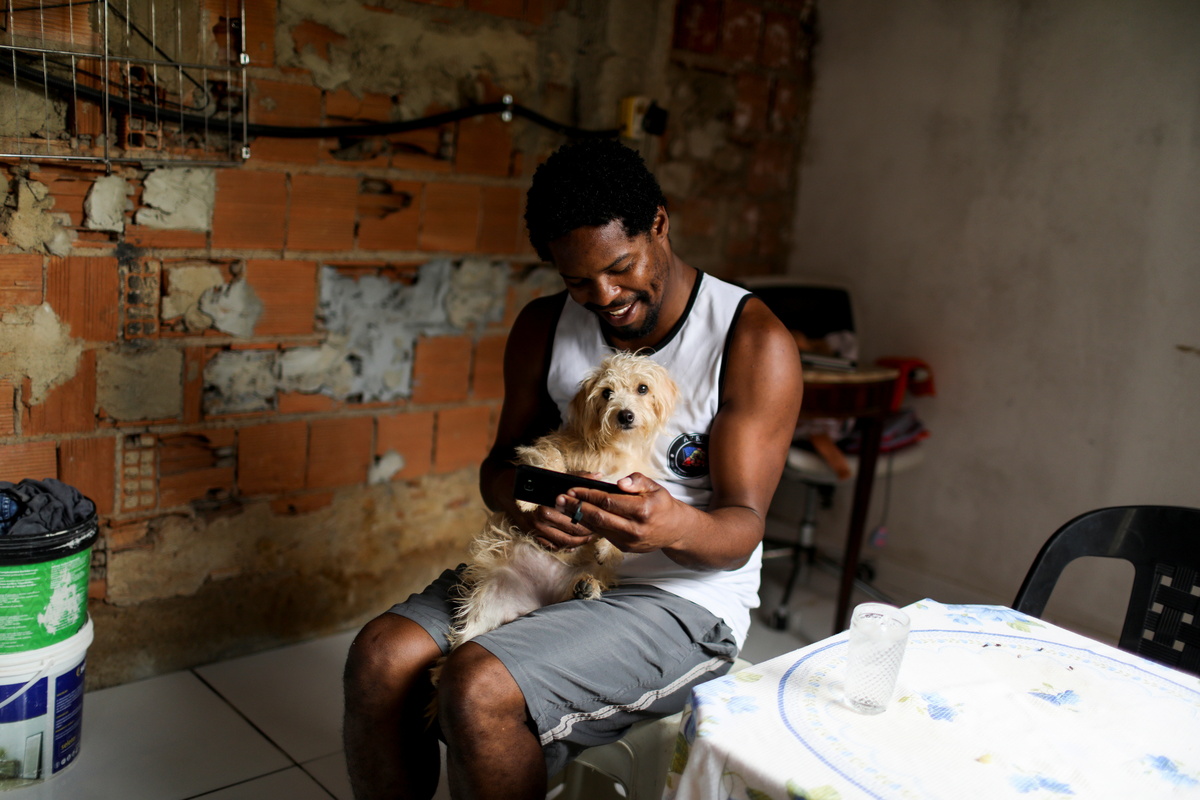
Felipe Luther, 37, a scholarship student at Pontifical Catholic University of Rio (PUC-Rio) who also works as a street-sweeper, uses his cellphone to take part in an online class for his university, as he holds his dog Mel at his home in Belford Roxo, near Rio de Janeiro, Brazil, December 9, 2020. REUTERS/Pilar Olivares
Felipe Luther spends his afternoons studying for a degree from one of Brazil's top universities, tucked in the green hills of Rio de Janeiro above the ritzy beaches of Leblon and Ipanema.
He spends his nights hauling trash in those wealthy communities below.
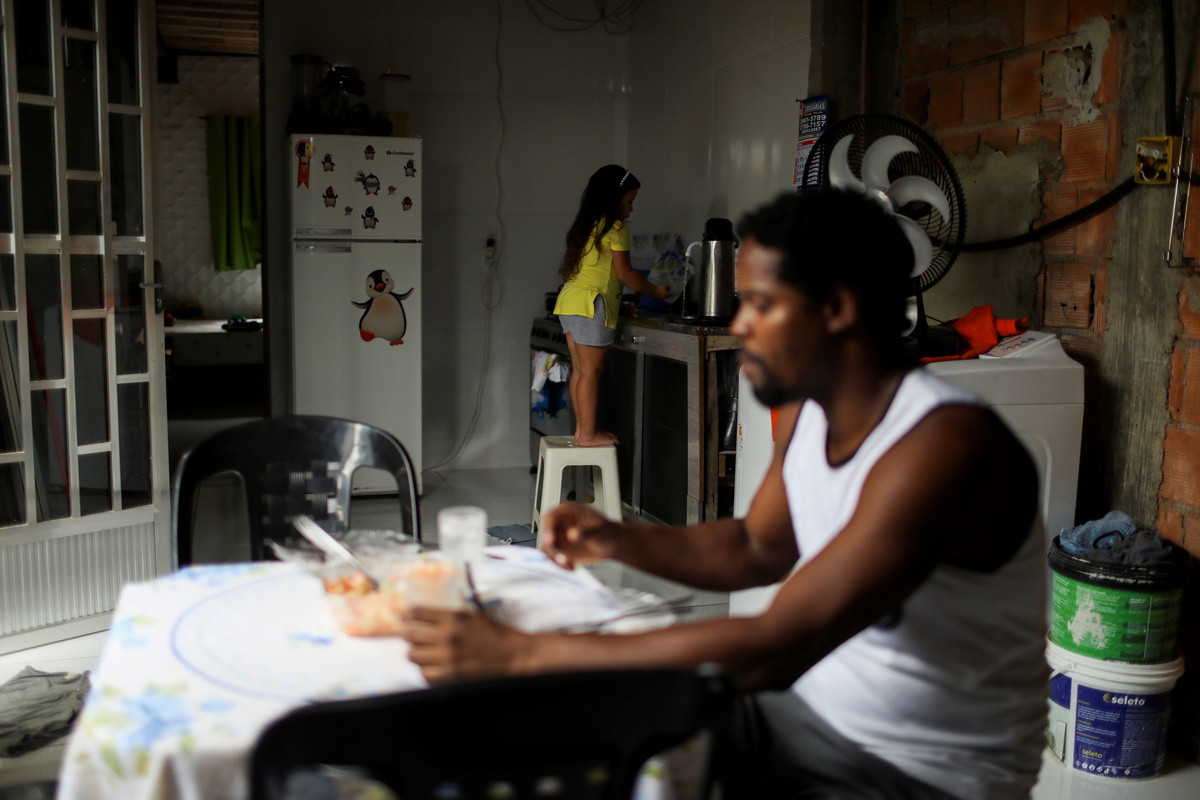
Felipe Luther, 37, a scholarship student at Pontifical Catholic University of Rio (PUC-Rio) who also works as a street-sweeper, uses his cellphone to take part in an online class for his university, as he has lunch with his stepdaughter Mirella da Silva, 8, at their home in Belford Roxo, near Rio de Janeiro, Brazil, December 9, 2020. Brazil's educational inequalities have only grown during the pandemic, as remote classes force students to rely on resources at home, widening a gap between the haves and the have-nots. "For my course, which demands a lot of reading, I need a better computer than the one I got. But some people aren't even given a computer," Luther said, noting the array of challenges for disadvantaged students forced to study from home. "Not all phones are good enough for working, and not everyone has a phone ... or enough internet data to download their readings." REUTERS/Pilar Olivares
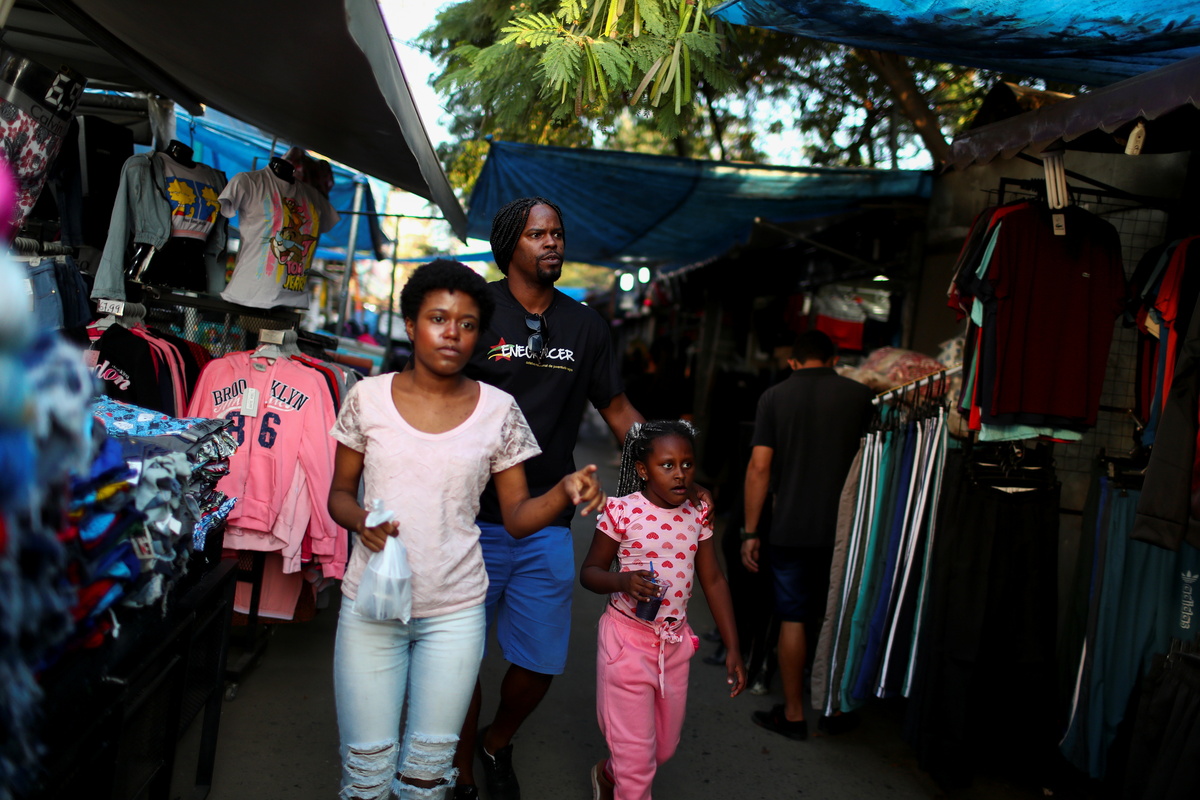
"When I tell my classmates about my job, they're often shocked," Luther said in an interview.
In 2017, he got a full scholarship to the social sciences program at the Pontifical Catholic University of Rio (PUC-Rio), a private school that has minted central bank presidents and movie stars.
Luther's rare opportunity and daily routine are reminders of the disparities in Brazilian society and Rio in particular, where a police raid killing dozens in May stirred fresh debate about the dangers and disadvantages facing Black men like him.
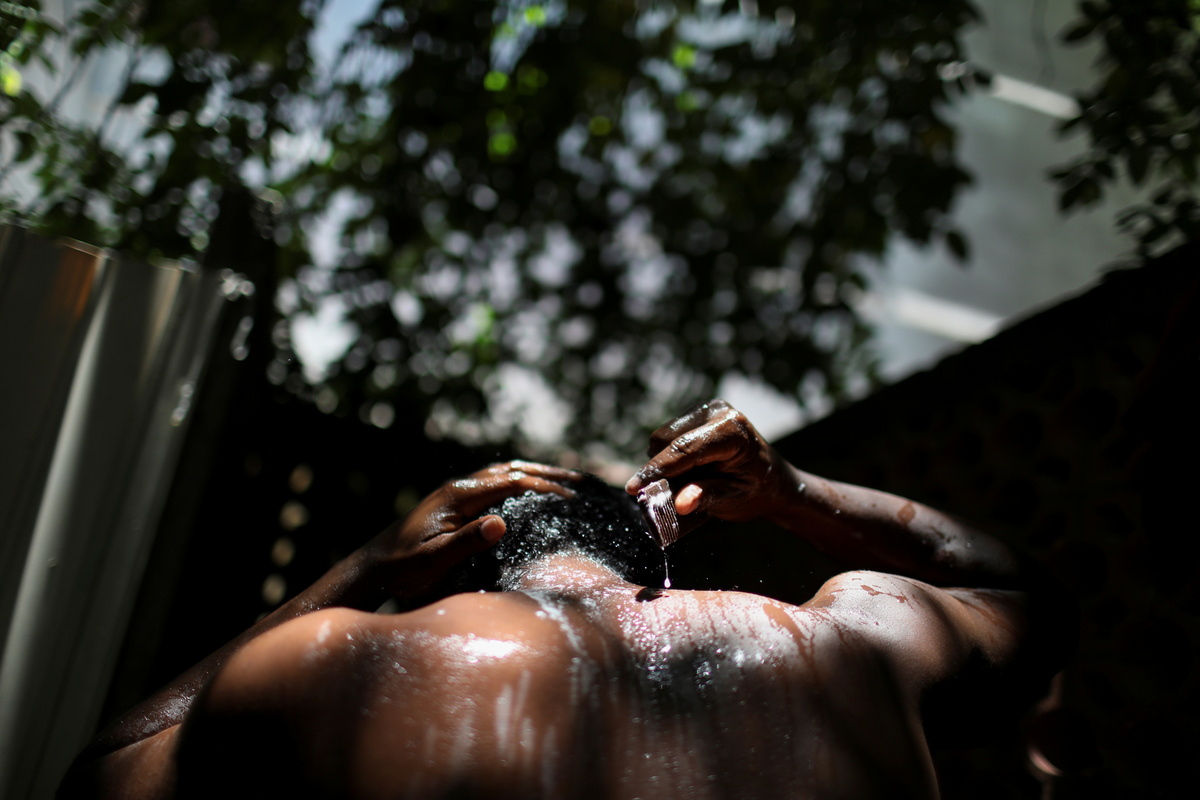
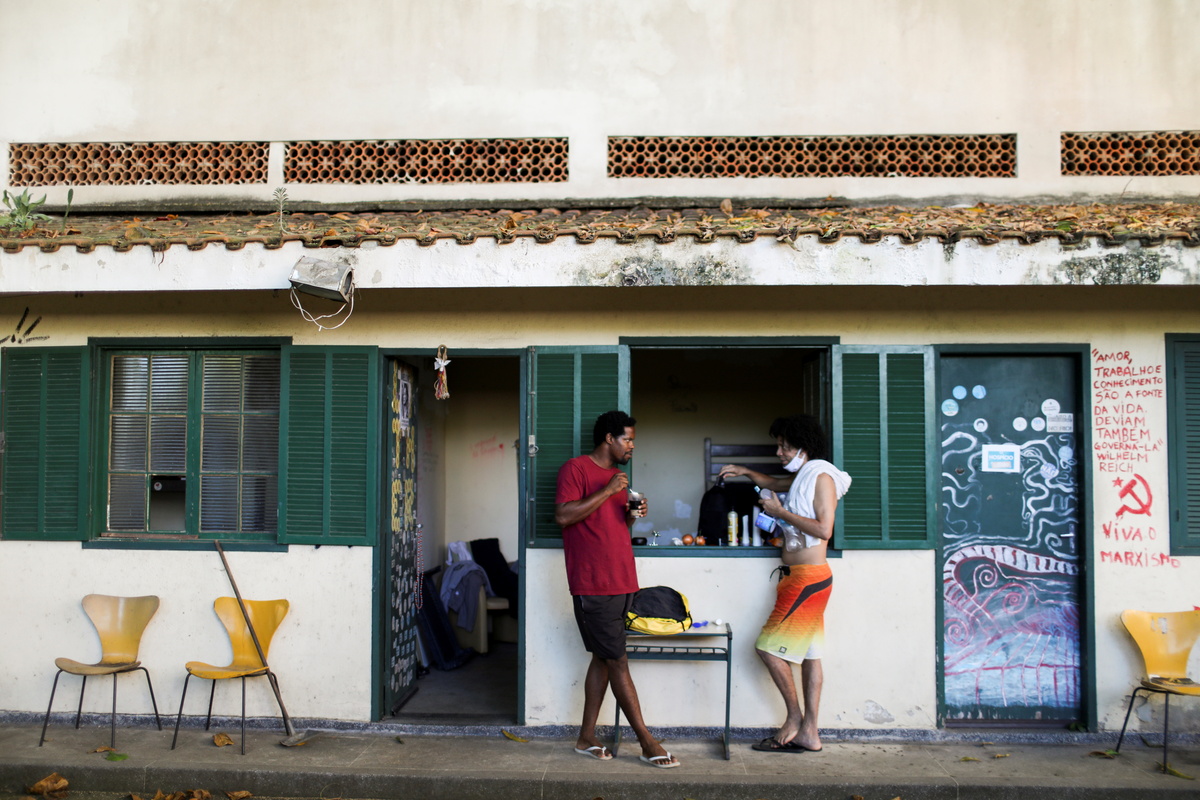
Felipe Luther, 37, a scholarship student at Pontifical Catholic University of Rio (PUC-Rio) who also works as a street-sweeper, takes bathes at the student residence where he temporarily lives, in Niteroi, Brazil, February 4, 2021. In 2017, Luther got a full scholarship to the social sciences program at the Pontifical Catholic University of Rio (PUC-Rio), a private school that has minted central bank presidents and movie stars. "Because there are so few Black people at this renowned university, many view Black folks as servers, not as fellow classmates," Luther said, recalling awkward run-ins on campus. In one case, a woman mistook Luther for an elevator operator. In another, someone tried to pay him for a cup of coffee, confusing him with cafeteria staff. "It hurts, in a way, because you get the impression that you don't belong there," he reflected. REUTERS/Pilar Olivares
Luther, 38, had previously passed up college for work to support his family, including a job sweeping streets with the municipal cleaning agency since 2009.
"Many students like me start working when they are very young," said Luther, who comes from humble roots in the northern reaches of Rio, more than two hours from campus. "This reduces the time and structure they need to be able to compete with children of the elite."
Studying at PUC-Rio has put Luther's dreams within reach, while bringing him face-to-face with the overwhelmingly white elite of a country where 54% of people have African ancestry.
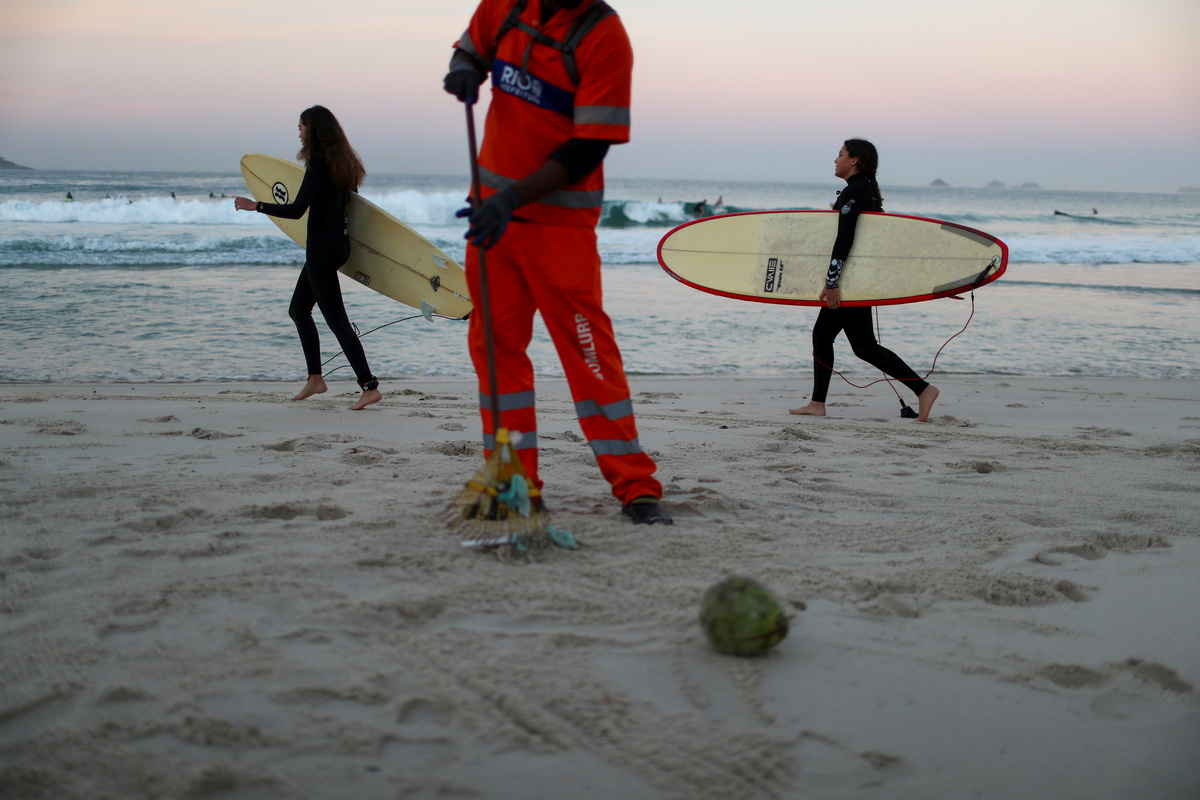
Felipe Luther, 37, a scholarship student at Pontifical Catholic University of Rio (PUC-Rio) who also works as a street-sweeper, walks along the shore of the beach picking up rubbish that sunbathers leave on the sand on Arpoador beach in Rio de Janeiro, Brazil, May 11, 2021. In 2017, Luther got a full scholarship to the social sciences program at the Pontifical Catholic University of Rio (PUC-Rio), a private school that has minted central bank presidents and movie stars. Luther, 38, had previously passed up college for work to support his family, including a job sweeping streets with the municipal cleaning agency since 2009. "Many students like me start working when they are very young," said Luther, who comes from humble roots in the northern reaches of Rio, more than two hours from campus. "This reduces the time and structure they need to be able to compete with children of the elite." REUTERS/Pilar Olivares
In 2000, the national census found white Brazilians were five times more likely to have attended university than their Black, mixed race and indigenous peers.
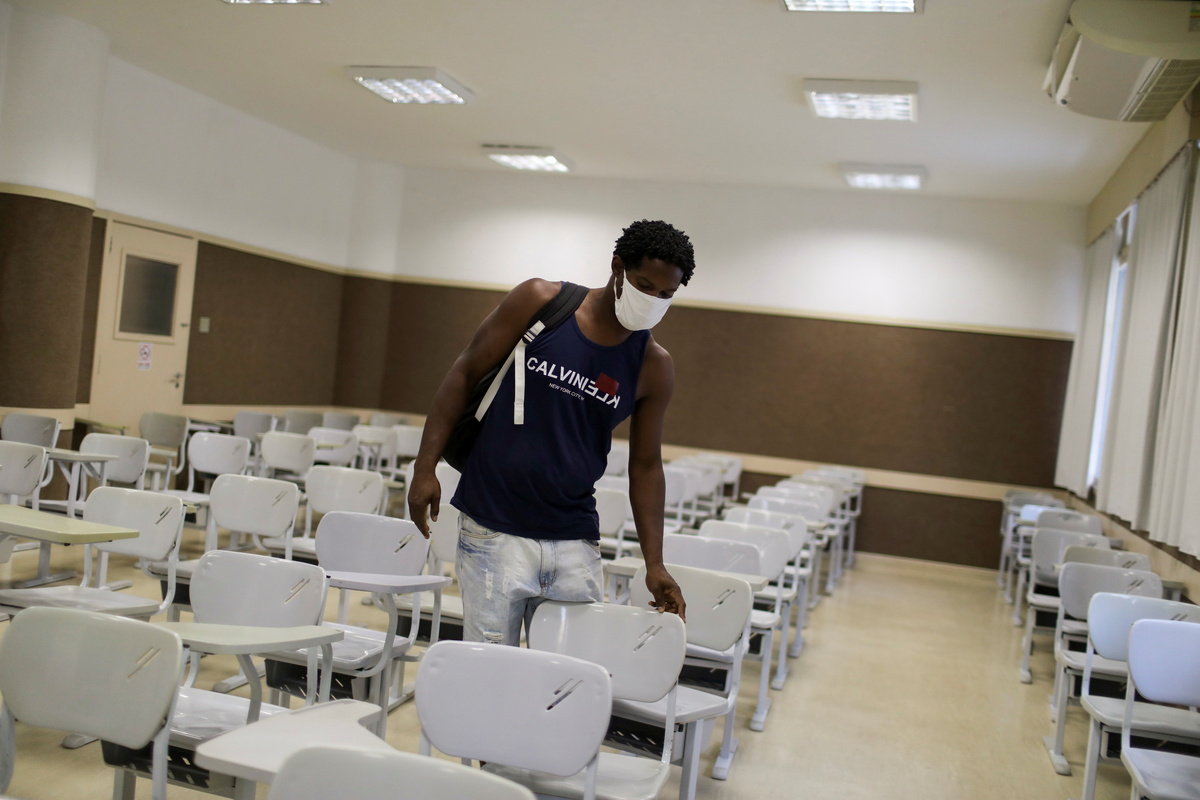
"Because there are so few Black people at this renowned university, many view Black folks as servers, not as fellow classmates," Luther said, recalling awkward run-ins on campus.
In one case, a woman mistook Luther for an elevator operator. In another, someone tried to pay him for a cup of coffee, confusing him with cafeteria staff.
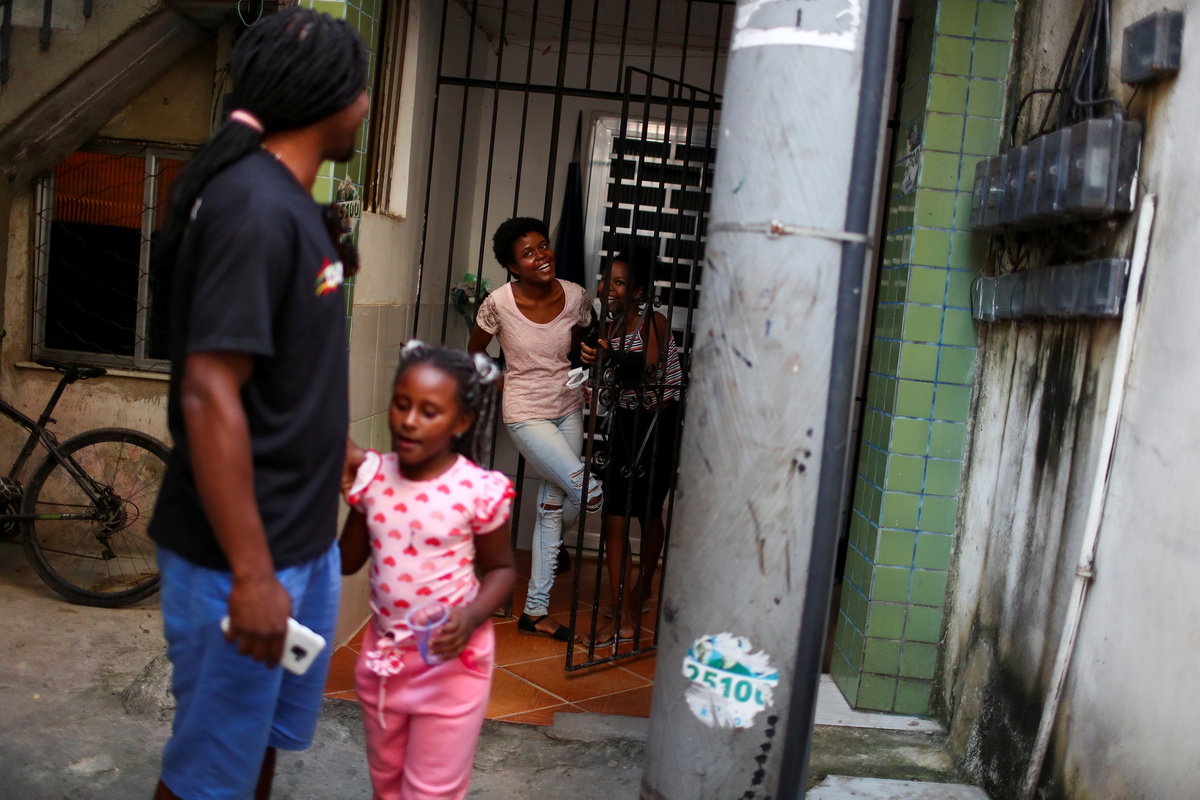
Felipe Luther, 37, a scholarship student at Pontifical Catholic University of Rio (PUC-Rio) who also works as a street-sweeper, walks with his daughters Angela Vicente Noronha de Oliveira, 7, and Raquel da Conceicao de Oliveira, 17, in Rio de Janeiro, Brazil, May 27, 2021. In 2017, Luther got a full scholarship to the social sciences program at the Pontifical Catholic University of Rio (PUC-Rio), a private school that has minted central bank presidents and movie stars. Luther, 38, had previously passed up college for work to support his family, including a job sweeping streets with the municipal cleaning agency since 2009. "Many students like me start working when they are very young," said Luther, who comes from humble roots in the northern reaches of Rio, more than two hours from campus. "This reduces the time and structure they need to be able to compete with children of the elite." REUTERS/Pilar Olivares
"It hurts, in a way, because you get the impression that you don't belong there," he reflected.
Brazil's educational inequalities have only grown during the pandemic, as remote classes force students to rely on resources at home, widening a gap between the haves and the have-nots.
For months, Luther was reading at night by candlelight in Niterói, across the bay from campus, where his student residence often lacked power. He charged his phone and laptop at work and used them to study until his street-sweeping shift from 9 p.m. to 5 a.m.
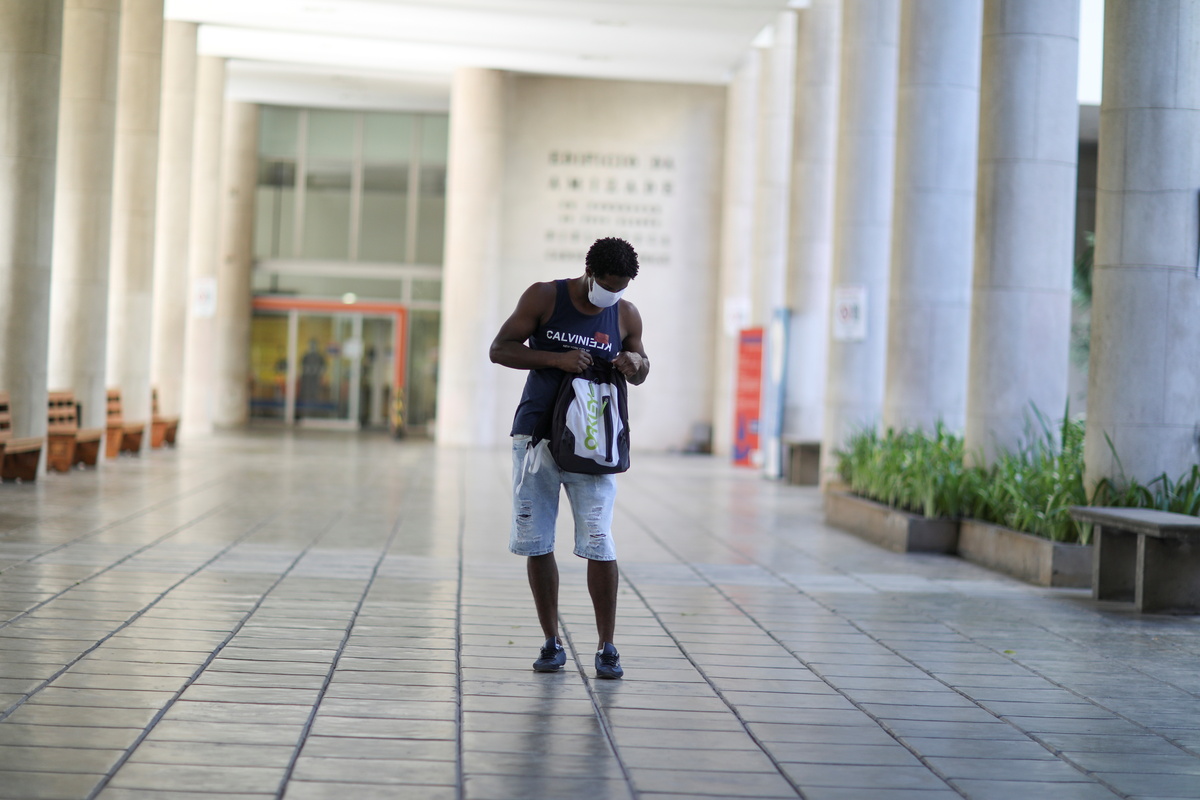
Felipe Luther, 37, a scholarship student at Pontifical Catholic University of Rio (PUC-Rio) who also works as a street-sweeper, poses for a photograph as he visits his university which is closed due to the coronavirus disease (COVID-19) outbreak, in Rio de Janeiro, Brazil, April 16, 2021. In 2017, Luther got a full scholarship to the social sciences program at the Pontifical Catholic University of Rio (PUC-Rio), a private school that has minted central bank presidents and movie stars. "Because there are so few Black people at this renowned university, many view Black folks as servers, not as fellow classmates," Luther said, recalling awkward run-ins on campus. In one case, a woman mistook Luther for an elevator operator. In another, someone tried to pay him for a cup of coffee, confusing him with cafeteria staff. "It hurts, in a way, because you get the impression that you don't belong there" he reflected. REUTERS/Pilar Olivares
"For my course, which demands a lot of reading, I need a better computer than the one I got. But some people aren't even given a computer," he said, noting the array of challenges for disadvantaged students forced to study from home. "Not all phones are good enough for working, and not everyone has a phone ... or enough internet data to download their readings."
PROTESTING 'GENOCIDE'
Recent events in Rio have underscored even greater challenges Luther faces as a Black man.
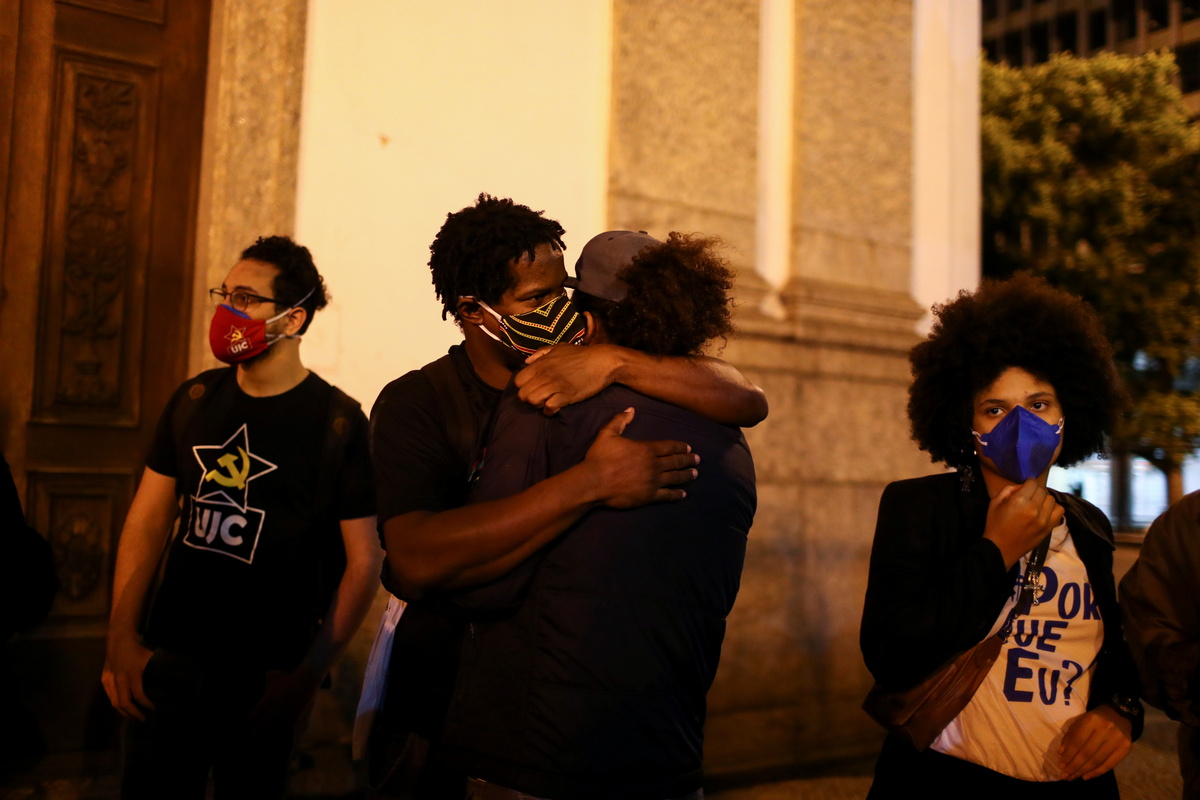
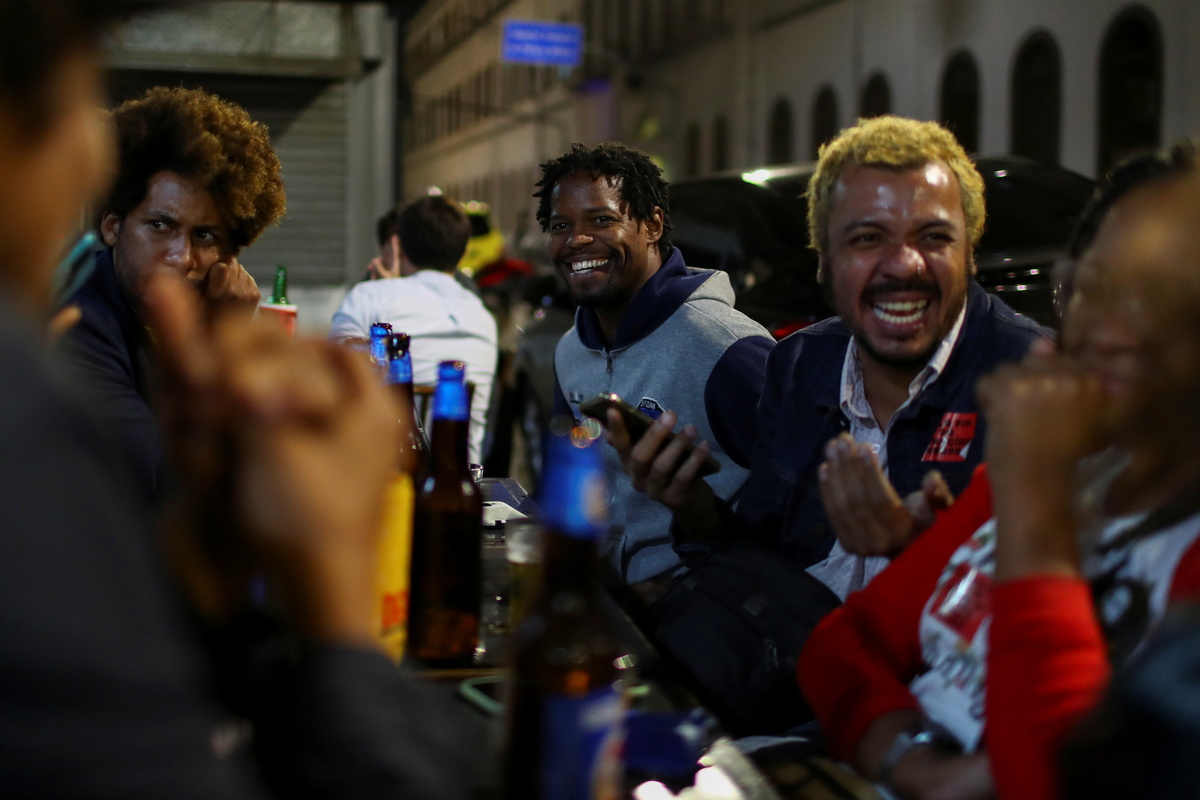
Felipe Luther, 37, a scholarship student at Pontifical Catholic University of Rio (PUC-Rio) who also works as a street-sweeper, gathers with his friends as they take part in a protest against racism and police violence in Rio de Janeiro, Brazil, May 13, 2021. Luther said he lives in constant fear of police violence and makes a point of staying off the streets in certain neighborhoods at night. "Even if I were rich or very famous, I would still be living in a Black body in a city, a state, a country where Black people seem expendable," he said. More than three-quarters of the almost 9,000 people killed by Brazilian police over the last decade were Black men, according to Human Rights Watch. REUTERS/Pilar Olivares
In May, police stormed Jacarezinho, a poor community in northern Rio, in a raid targeting the Red Command drug gang. The hours-long shootout killed 27 men in the neighborhood and one officer, making it one of the deadliest police operations in the city's history and drawing backlash from human rights groups.
Luther, who has two sisters living a few minutes from Jacarezinho, joined a demonstration in Rio the week after the deadly raid, using the official anniversary of abolition in the country to protest police violence against Afro-Brazilians.
"NO to genocide against Black people," read one protestor's sign.
Felipe Luther, 37, a scholarship student at Pontifical Catholic University of Rio (PUC-Rio) who also works as a street-sweeper, walks along the Arpoador beach as he works, in Rio de Janeiro, Brazil, May 11, 2021. In 2017, Luther got a full scholarship to the social sciences program at the Pontifical Catholic University of Rio (PUC-Rio), a private school that has minted central bank presidents and movie stars. "When I tell my classmates about my job, they're often shocked," Luther said. REUTERS/Pilar Olivares
Luther said he lives in constant fear of police violence and makes a point of staying off the streets in certain neighborhoods at night.
"Even if I were rich or very famous, I would still be living in a Black body in a city, a state, a country where Black people seem expendable," he said.
More than three-quarters of the almost 9,000 people killed by Brazilian police over the last decade were Black men, according to Human Rights Watch.
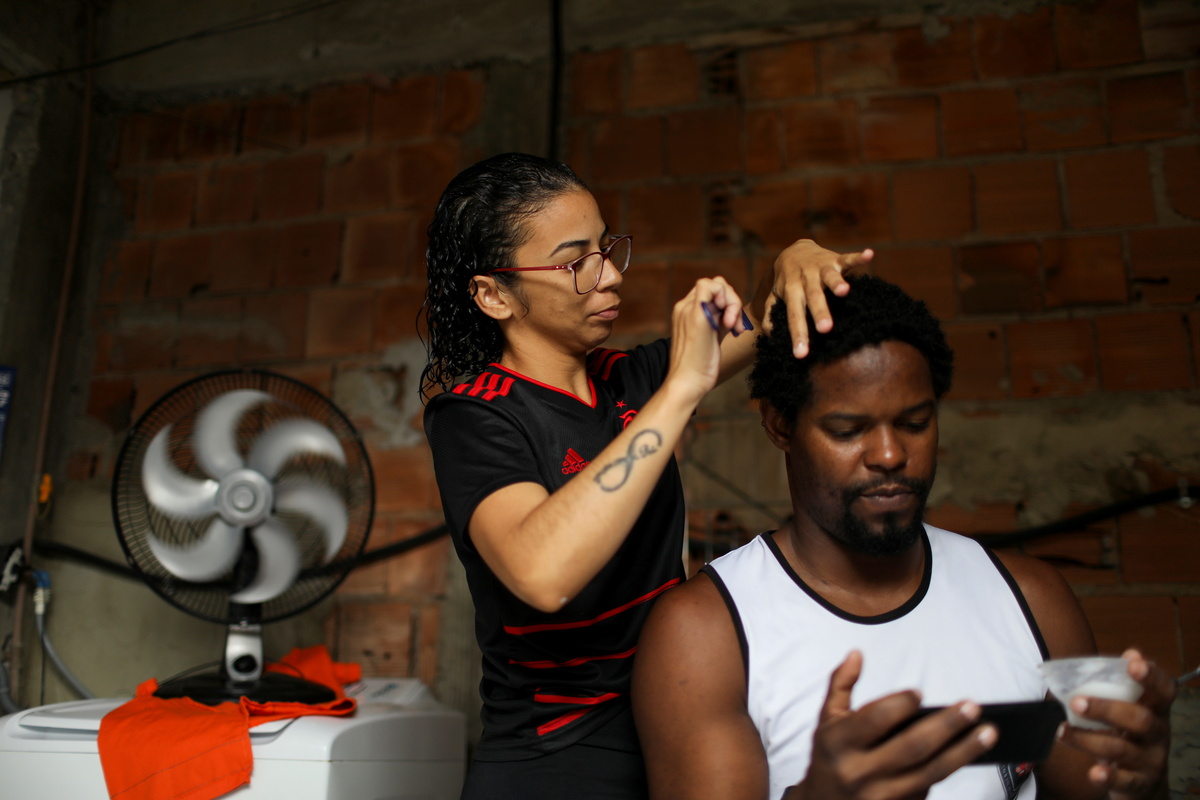
Felipe Luther, 37, a scholarship student at Pontifical Catholic University of Rio (PUC-Rio) who also works as a street-sweeper, uses his cellphone to take part in an online class for university, as his wife Erica Maria da Silva, 32, does his hair, at their home in Belford Roxo, near Rio de Janeiro, Brazil, December 9, 2020. Brazil's educational inequalities have only grown during the pandemic, as remote classes force students to rely on resources at home, widening a gap between the haves and the have-nots. "For my course, which demands a lot of reading, I need a better computer than the one I got. But some people aren't even given a computer," Luther said, noting the array of challenges for disadvantaged students forced to study from home. "Not all phones are good enough for working, and not everyone has a phone ... or enough internet data to download their readings." REUTERS/Pilar Olivares
CONNECTING WITH ANCESTRY
Despite threats, Afro-Brazilian culture continues to thrive in Brazil as it has for centuries.
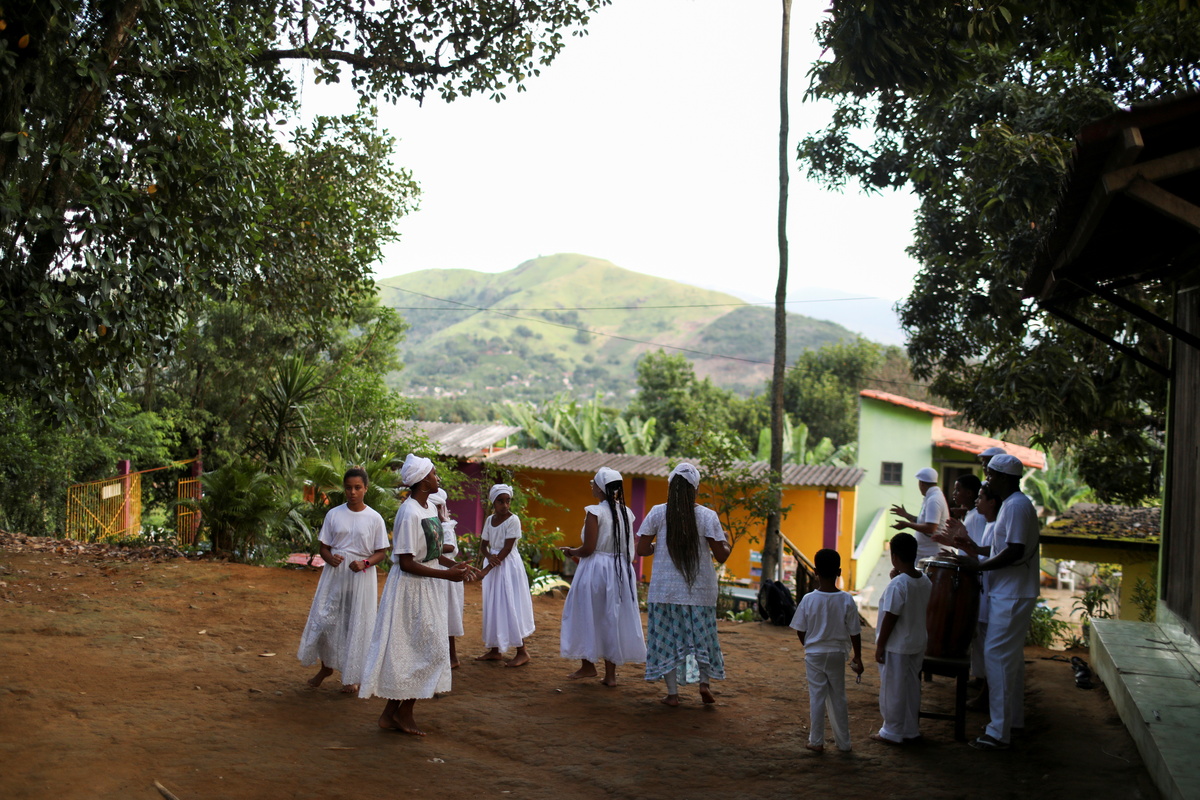
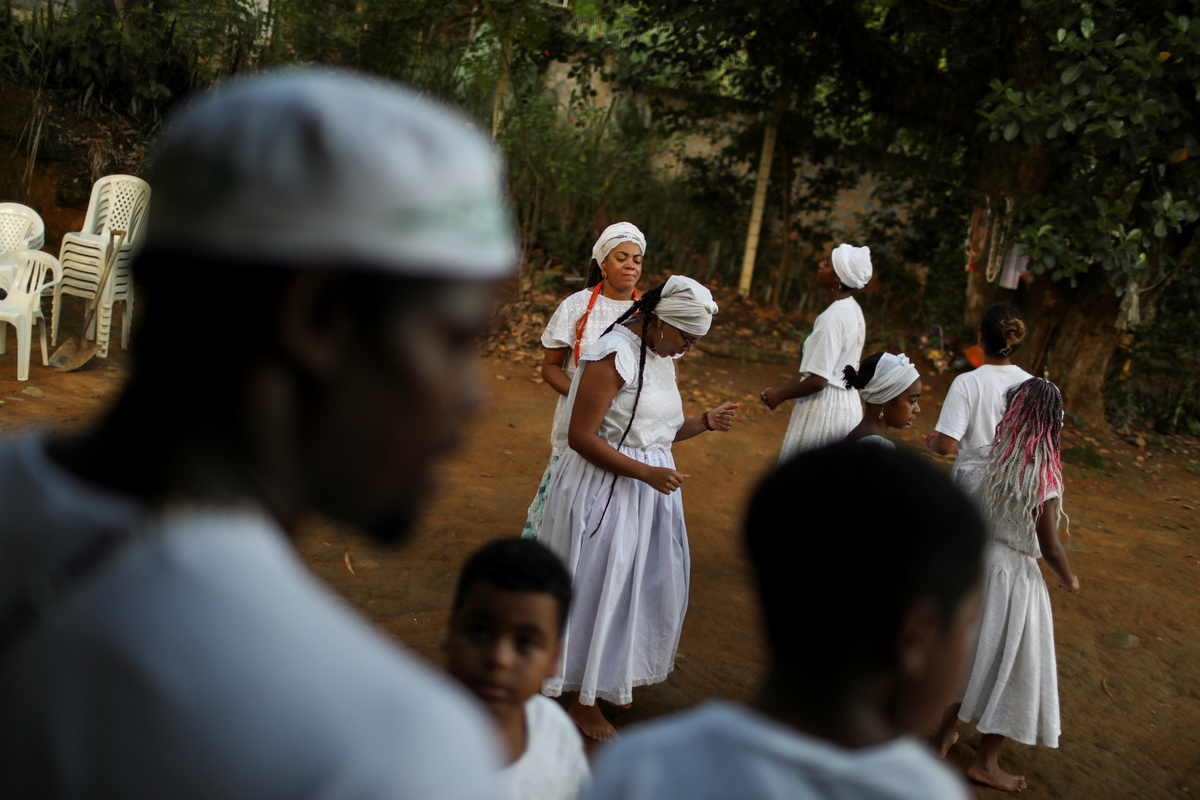
Twice a week, Luther visits a local "terreiro" to practice Umbanda, a religion with origins in West African spiritual traditions. Dressed in all-white clothing with beaded necklaces hanging over his chest, Luther participates in dances, songs and rituals with fellow believers.
Felipe Luther, 37, a scholarship student at Pontifical Catholic University of Rio (PUC-Rio) who also works as a street-sweeper, poses for a photograph as visits his university which is closed due to the coronavirus disease (COVID-19) outbreak, in Rio de Janeiro, Brazil, April 16, 2021. In 2017, Luther got a full scholarship to the social sciences program at the Pontifical Catholic University of Rio (PUC-Rio), a private school that has minted central bank presidents and movie stars. "Because there are so few Black people at this renowned university, many view Black folks as servers, not as fellow classmates," Luther said, recalling awkward run-ins on campus. In one case, a woman mistook Luther for an elevator operator. In another, someone tried to pay him for a cup of coffee, confusing him with cafeteria staff. "It hurts, in a way, because you get the impression that you don't belong there," he reflected. REUTERS/Pilar Olivares
"It connects me with my ancestry," he said.
Popularized in Rio in the 1930s, Umbanda, like fellow Afro-Brazilian religion Candomblé, has roots in the transatlantic slave trade, which brought as many as 5 million enslaved people from Africa to Brazil – 10 times the number brought to the United States.
Those who sought to practice their rituals free from the harassment by Europeans would blend their native traditions with elements of Catholicism, creating syncretic religions now practiced by over half a million people in the country.
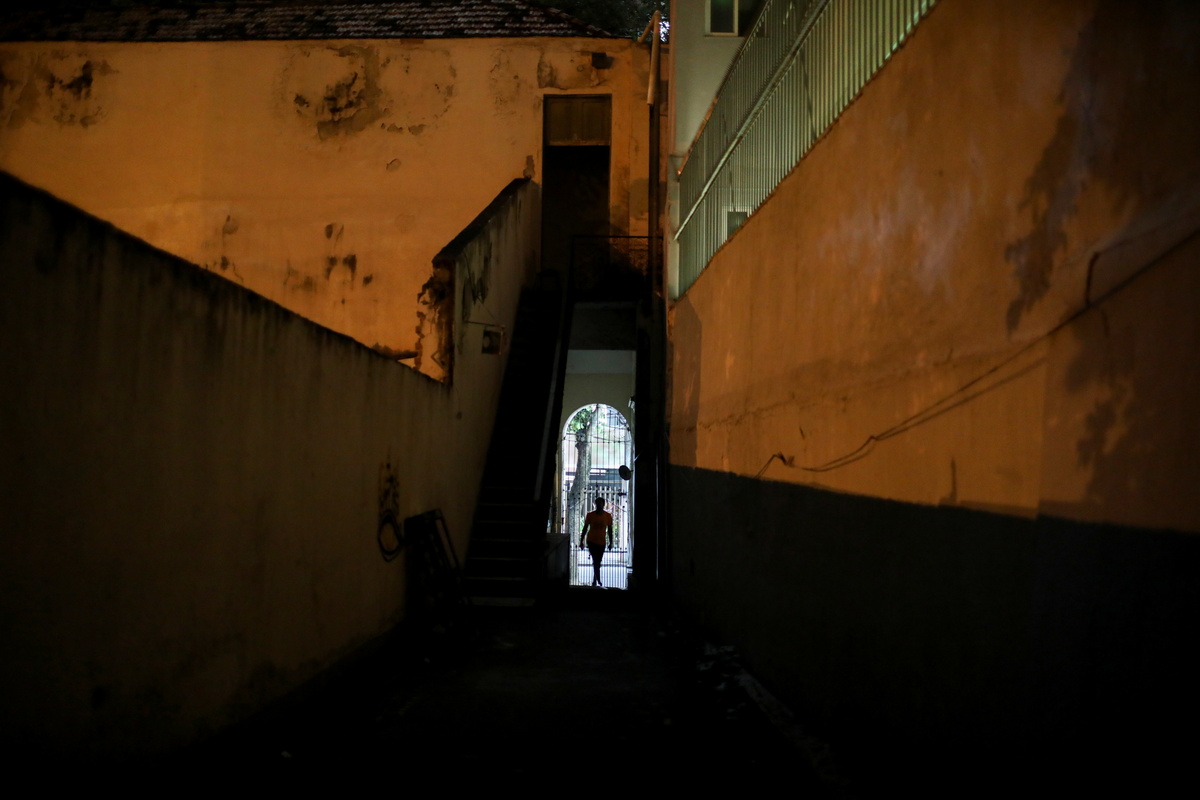
Felipe Luther, 37, a scholarship student at Pontifical Catholic University of Rio (PUC-Rio) who also works as a street-sweeper, stands at the front door of the student residence where he temporarily lives, in Niteroi, Brazil, February 4, 2021. In 2017, Luther got a full scholarship to the social sciences program at the Pontifical Catholic University of Rio (PUC-Rio), a private school that has minted central bank presidents and movie stars. "Because there are so few Black people at this renowned university, many view Black folks as servers, not as fellow classmates," Luther said, recalling awkward run-ins on campus. In one case, a woman mistook Luther for an elevator operator. In another, someone tried to pay him for a cup of coffee, confusing him with cafeteria staff. "It hurts, in a way, because you get the impression that you don't belong there," he reflected. REUTERS/Pilar Olivares
Brazilian churches often serve as community centers, like the one where Luther took a free college prep course in 2017, setting him on his journey to PUC-Rio.
Once he gets his degree, Luther says one of his goals is to begin teaching college prep courses in low-income communities, opening the door for the next generation of aspiring students.
"I want to give back to other young people by allowing them to hope that this is possible," he said.
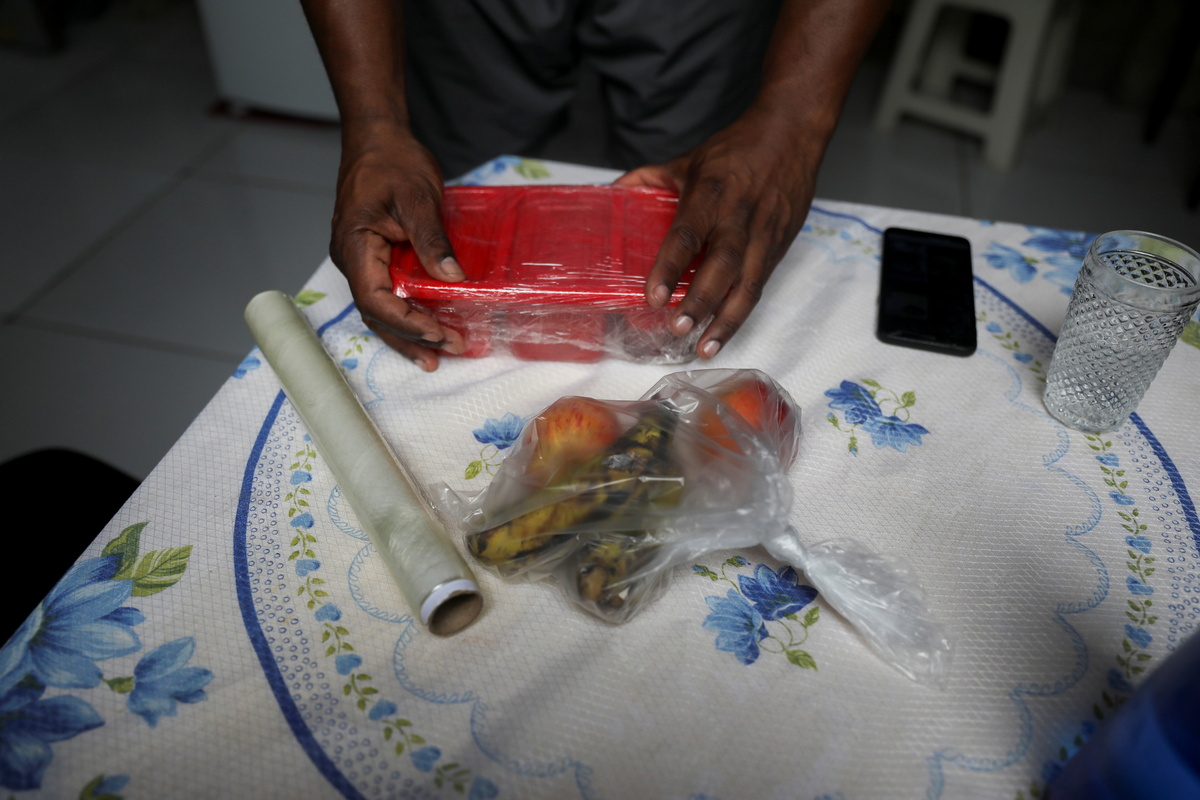
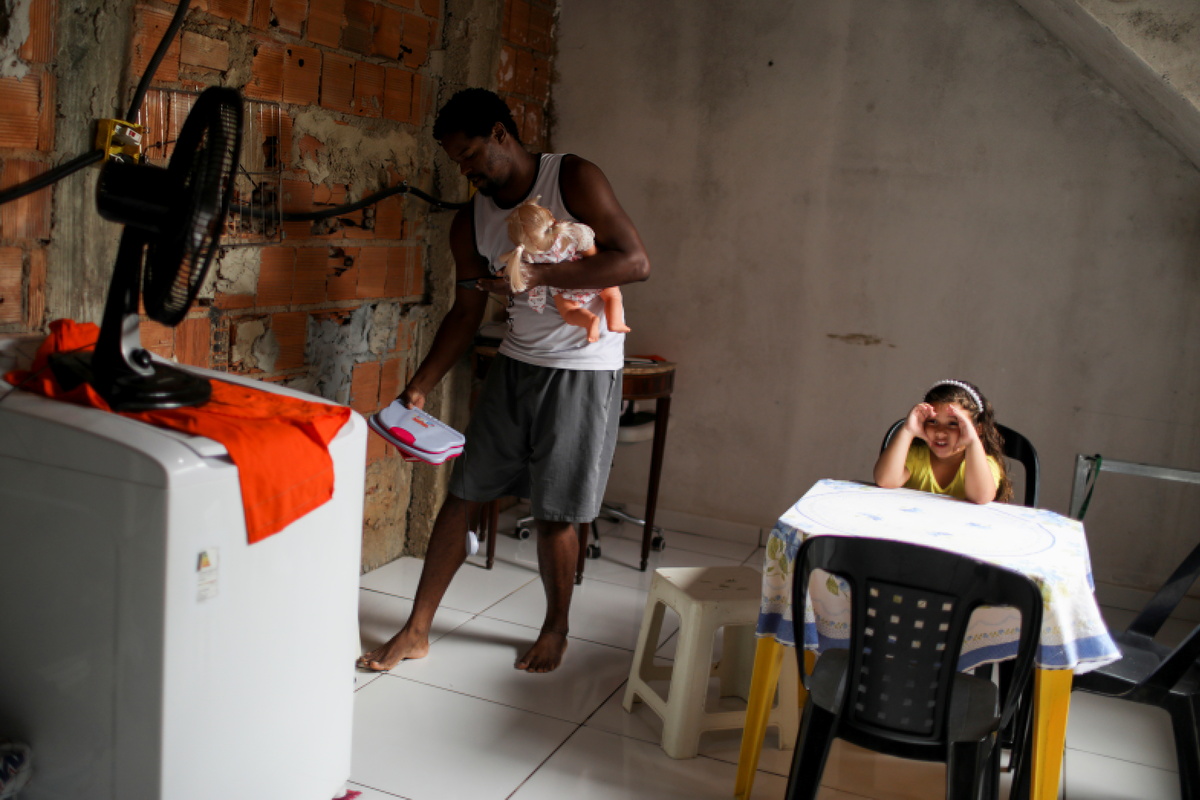
Felipe Luther, 37, a scholarship student at Pontifical Catholic University of Rio (PUC-Rio) who also works as a street-sweeper, packs his lunch as he gets ready to go to work, at his home in Belford Roxo, near Rio de Janeiro, Brazil, December 9, 2020. In 2017, Luther got a full scholarship to the social sciences program at the Pontifical Catholic University of Rio (PUC-Rio), a private school that has minted central bank presidents and movie stars. "Because there are so few Black people at this renowned university, many view Black folks as servers, not as fellow classmates," Luther said, recalling awkward run-ins on campus. In one case, a woman mistook Luther for an elevator operator. In another, someone tried to pay him for a cup of coffee, confusing him with cafeteria staff. "It hurts, in a way, because you get the impression that you don't belong there," he reflected. REUTERS/Pilar Olivares
(Reporting by Pilar Olivares and Jimin Kang; Editing by Brad Haynes and Lisa Shumaker)
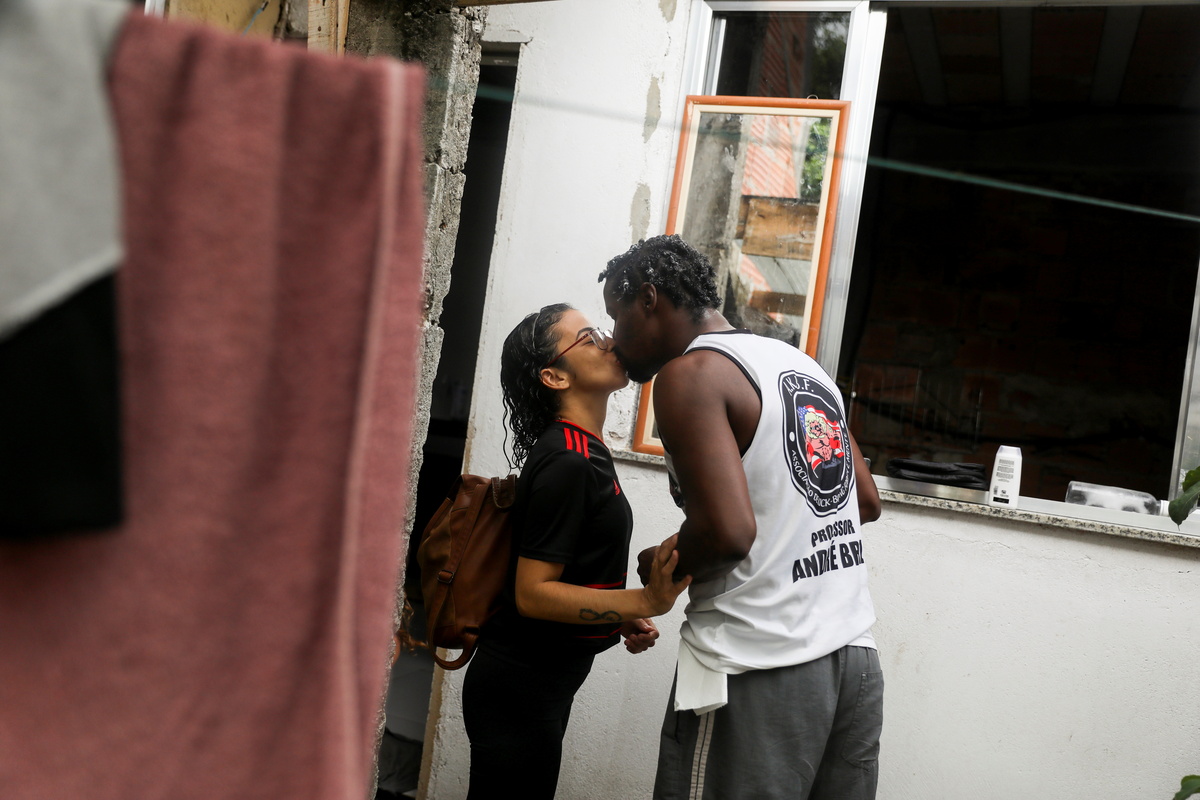
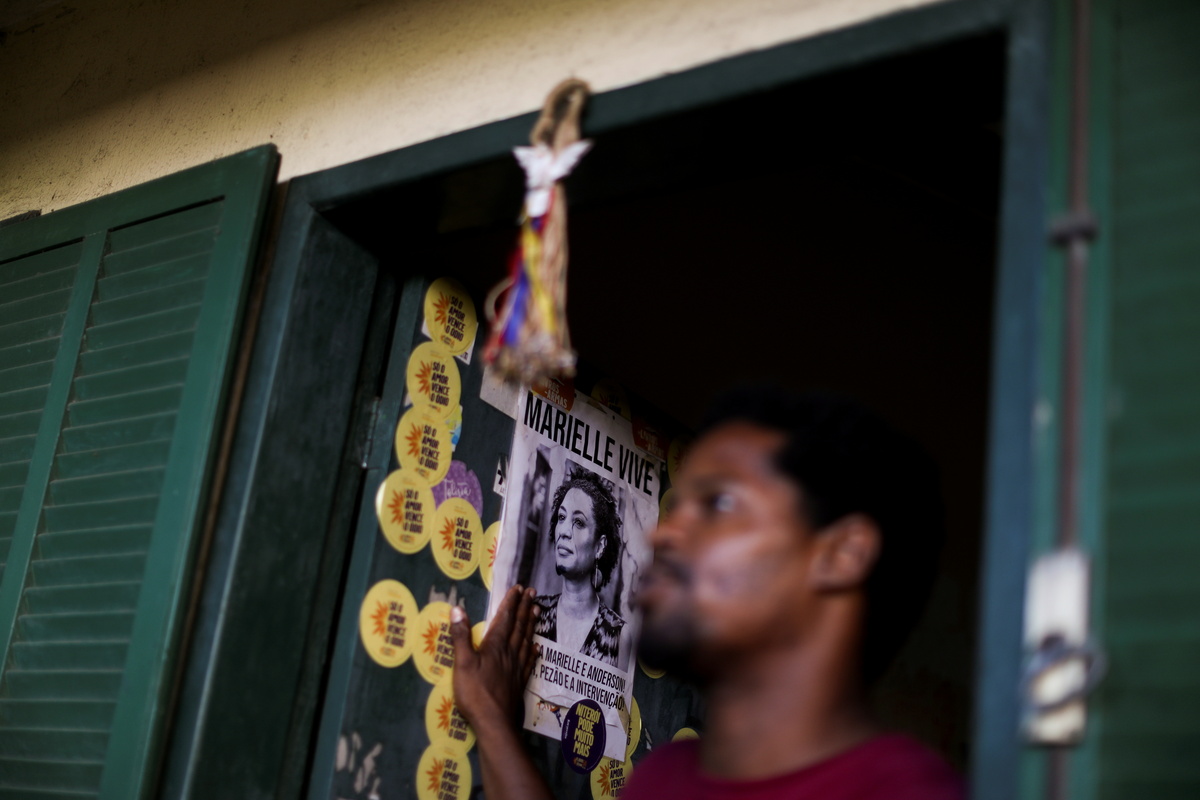
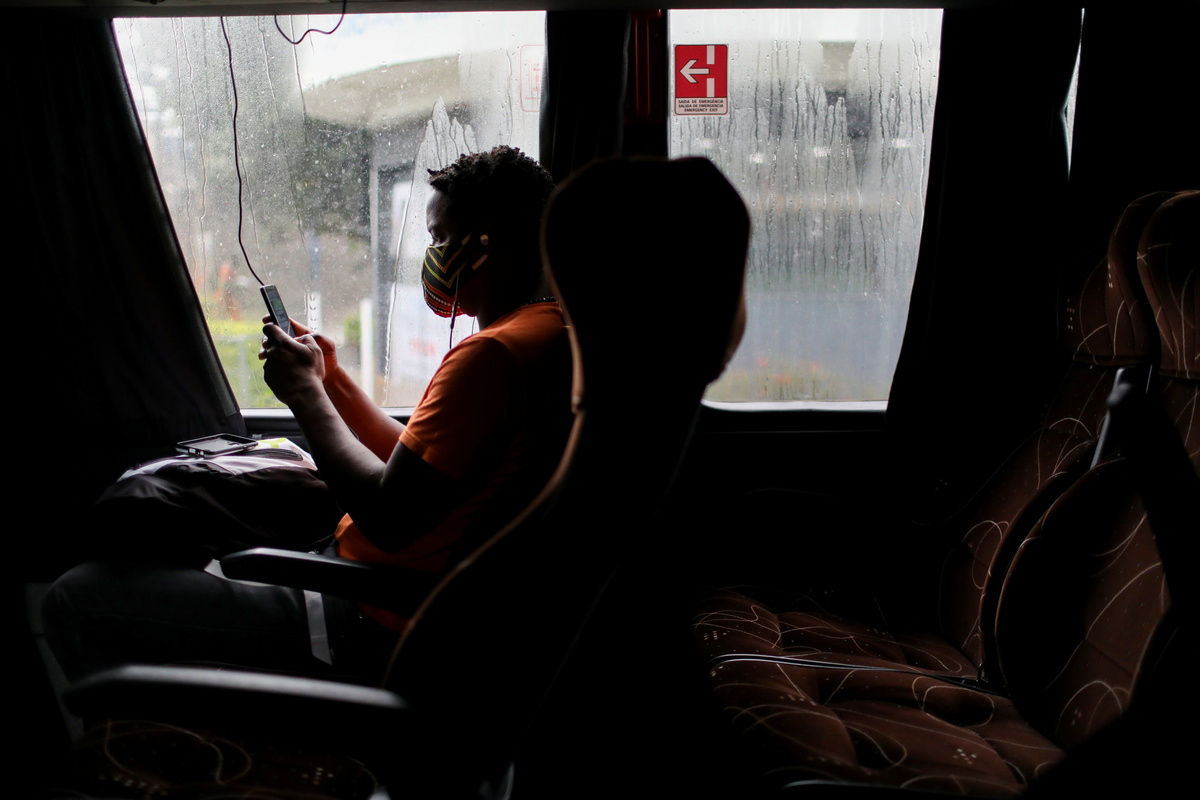
Felipe Luther, 37, a scholarship student at Pontifical Catholic University of Rio (PUC-Rio) who also works as a street-sweeper, kisses his wife Erica Maria da Silva, 32, as she leaves for work, at their home in Belford Roxo near Rio de Janeiro, Brazil, December 9, 2020. Brazil's educational inequalities have only grown during the pandemic, as remote classes force students to rely on resources at home, widening a gap between the haves and the have-nots. "For my course, which demands a lot of reading, I need a better computer than the one I got. But some people aren't even given a computer," Luther said, noting the array of challenges for disadvantaged students forced to study from home. "Not all phones are good enough for working, and not everyone has a phone ... or enough internet data to download their readings." REUTERS/Pilar Olivares Felipe Luther, 37, a scholarship student at Pontifical Catholic University of Rio (PUC-Rio) who also works as a street-sweeper, uses his cellphone to take part in an online class for his university, as he holds his dog Mel at his home in Belford Roxo, near Rio de Janeiro, Brazil, December 9, 2020. Brazil's educational inequalities have only grown during the pandemic, as remote classes force students to rely on resources at home, widening a gap between the haves and the have-nots. "For my course, which demands a lot of reading, I need a better computer than the one I got. But some people aren't even given a computer," Luther said, noting the array of challenges for disadvantaged students forced to study from home. "Not all phones are good enough for working, and not everyone has a phone ... or enough internet data to download their readings." REUTERS/Pilar Olivares Felipe Luther, 37, a scholarship student at Pontifical Catholic University of Rio (PUC-Rio) who also works as a street-sweeper, takes part in an Umbanda ceremony in a terreiro in Campo Grande, Rio de Janeiro state, Brazil, February 9, 2021. Twice a week, Luther visits a local "terreiro" to practice Umbanda, a religion with origins in West African spiritual traditions. Dressed in all-white clothing with beaded necklaces hanging over his chest, Luther participates in dances, songs and rituals with fellow believers. "It connects me with my ancestry," he said. Popularized in Rio in the 1930s, Umbanda, like fellow Afro-Brazilian religion Candomble, has roots in the transatlantic slave trade, which brought as many as 5 million enslaved people from Africa to Brazil ? 10 times the number brought to the United States. Those who sought to practice their rituals free from the harassment by Europeans would blend their native traditions with elements of Catholicism, creating syncretic religions now practiced by over half a million people in the country. REUTERS/Pilar Olivares Felipe Luther, 37, a scholarship student at Pontifical Catholic University of Rio (PUC-Rio) who also works as a street-sweeper, rests at CASOC (Academic Center of Social Sciences) at his university in Rio de Janeiro, Brazil, April 16, 2021. In 2017, Luther got a full scholarship to the social sciences program at the Pontifical Catholic University of Rio (PUC-Rio), a private school that has minted central bank presidents and movie stars. "Because there are so few Black people at this renowned university, many view Black folks as servers, not as fellow classmates," Luther said, recalling awkward run-ins on campus. In one case, a woman mistook Luther for an elevator operator. In another, someone tried to pay him for a cup of coffee, confusing him with cafeteria staff. "It hurts, in a way, because you get the impression that you don't belong there," he reflected. REUTERS/Pilar Olivares Felipe Luther, 37, a scholarship student at Pontifical Catholic University of Rio (PUC-Rio) who also works as a street-sweeper, hangs out with friends after attending a protest against racism and police violence in Rio de Janeiro, Brazil, May 13, 2021. Luther said he lives in constant fear of police violence and makes a point of staying off the streets in certain neighborhoods at night. "Even if I were rich or very famous, I would still be living in a Black body in a city, a state, a country where Black people seem expendable," he said. More than three-quarters of the almost 9,000 people killed by Brazilian police over the last decade were Black men, according to Human Rights Watch. REUTERS/Pilar Olivares Felipe Luther, 37, a scholarship student at Pontifical Catholic University of Rio (PUC-Rio) who also works as a street-sweeper, stands in front of a poster of Marielle Franco, at the student residence where he temporarily lives in Niteroi, Brazil, February 4, 2021. Marielle Franco, a Black openly gay Rio de Janeiro politician, and her driver Anderson Gomes were gunned down in 2018 in what investigators said appeared to be a political assassination. REUTERS/Pilar Olivares Felipe Luther, 37, a scholarship student at Pontifical Catholic University of Rio (PUC-Rio) who also works as a street-sweeper, holds his cell phone as he takes part in an online class for his university, at his home in Belford Roxo, near Rio de Janeiro, Brazil, December 9, 2020. Brazil's educational inequalities have only grown during the pandemic, as remote classes force students to rely on resources at home, widening a gap between the haves and the have-nots. "For my course, which demands a lot of reading, I need a better computer than the one I got. But some people aren't even given a computer," Luther said, noting the array of challenges for disadvantaged students forced to study from home. "Not all phones are good enough for working, and not everyone has a phone ... or enough internet data to download their readings." REUTERS/Pilar Olivares Felipe Luther, 37, a scholarship student at Pontifical Catholic University of Rio (PUC-Rio) who also works as a street-sweeper, travels to work on a bus in Belford Roxo, near Rio de Janeiro, Brazil, December 9, 2020. In 2017, Luther got a full scholarship to the social sciences program at the Pontifical Catholic University of Rio (PUC-Rio), a private school that has minted central bank presidents and movie stars. "When I tell my classmates about my job, they're often shocked," Luther said. REUTERS/Pilar Olivares Felipe Luther, 37, says goodbye to his daughters Raquel da Conceicao de Oliveira, 17, and Ana Luisa da Conceicao de Oliveira, 13, after a walk in Rio de Janeiro, Brazil, May 27, 2021. In 2017, Luther got a full scholarship to the social sciences program at the Pontifical Catholic University of Rio (PUC-Rio), a private school that has minted central bank presidents and movie stars. Luther, 38, had previously passed up college for work to support his family, including a job sweeping streets with the municipal cleaning agency since 2009. "Many students like me start working when they are very young," said Luther, who comes from humble roots in the northern reaches of Rio, more than two hours from campus. "This reduces the time and structure they need to be able to compete with children of the elite." REUTERS/Pilar OlivaresFelipe Luther, 37, a scholarship student at Pontifical Catholic University of Rio (PUC-Rio) who also works as a street-sweeper, has breakfast with a friend at the student residence where he temporarily lives, in Niteroi, Brazil, February 4, 2021. Brazil's educational inequalities have only grown during the pandemic, as remote classes force students to rely on resources at home, widening a gap between the haves and the have-nots. "For my course, which demands a lot of reading, I need a better computer than the one I got. But some people aren't even given a computer," Luther said, noting the array of challenges for disadvantaged students forced to study from home. "Not all phones are good enough for working, and not everyone has a phone ... or enough internet data to download their readings." REUTERS/Pilar Olivares Felipe Luther, 37, a scholarship student at Pontifical Catholic University of Rio (PUC-Rio) who also works as a street-sweeper, takes part in an Umbanda ceremony in a terreiro in Campo Grande, Rio de Janeiro state, Brazil, February 9, 2021. Twice a week, Luther visits a local "terreiro" to practice Umbanda, a religion with origins in West African spiritual traditions. Dressed in all-white clothing with beaded necklaces hanging over his chest, Luther participates in dances, songs and rituals with fellow believers. "It connects me with my ancestry," he said. Popularized in Rio in the 1930s, Umbanda, like fellow Afro-Brazilian religion Candomble, has roots in the transatlantic slave trade, which brought as many as 5 million enslaved people from Africa to Brazil ? 10 times the number brought to the United States. Those who sought to practice their rituals free from the harassment by Europeans would blend their native traditions with elements of Catholicism, creating syncretic religions now practiced by over half a million people in the country. REUTERS/Pilar Olivares
Sign up to read this article
Read news from 100’s of titles, curated specifically for you.