That moment in the year had arrived when a longing for spring set in but when winter, which drained colour from the landscape, still refused to relent. Restless lapwings seemed unable to settle, torn between feeding opportunities in the fields and the frosted high pastures where they will nest. Celandine buds remained as tight as clenched fists. Some hazel catkins, scorched by frost, had paid the price for precocity.
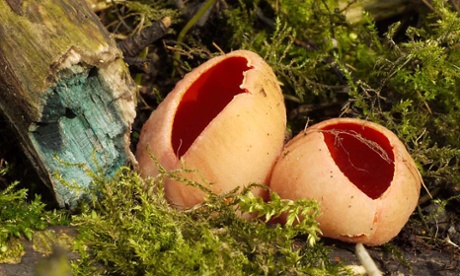
But there was one spot where we knew we would find colour as intense as anything summer can deliver. On an embankment in the lee of a stone bridge over the disused railway line, sheltered under a tangle of alder, willow and hawthorn, among moss-covered twigs torn down by winter gales, we found scores of scarlet elf cups.
These toadstools, some as small as a golf tee, others as broad as an egg cup, had begun to open. Sarcoscypha coccinea is among a select group of fungi, seemingly immune to frost damage, that herald the arrival of spring. Their parabolic surfaces, as vivid as a guardsman’s regimental tunic, focus the feeble heat of the winter sun on thousands of minute, flask-shaped sporangia embedded in their surface, which respond by discharging a silent fusillade of invisible spores.
They appear here every year but this time they were accompanied by another fungus whose colour is almost as intense. All around, decaying ends of twigs were stained turquoise, the work of hyphae of green elf cup, Chlorociboria aeruginascens. It fruits infrequently, with cups no bigger than the end of a pencil, but is common on fallen oak. The green-tinted timber is prized for use in Tunbridge ware, a decorative inlay for tables, cabinets and ornamental boxes; it must surely be the only wood-rotting fungus that enhances the value of furniture.
As we turned for home, clouds blotted out the sun and sleet stung our faces. By the next day the toadstools would be buried under snow, but for now those flashes of scarlet were a reassuring sign that spring was on its way.
Twitter: @seymourdaily