
Just behind the trendy restaurants and tattoo parlours of London’s Exmouth Market lies the architecturally undistinguished presence of Taylor House, home to a number of London’s many immigration and asylum courts. As in an airport departure lounge, you enter via a metal detector and body scan and sit in serried ranks on cheap fixed chairs like motorway service stations used to have.
Anxiety is locked on the faces of those waiting for judgment. Three distinguished-looking gentlemen sit upright, looking straight ahead, each sporting a chestful of medals. I cannot tell the expression of the woman in the niqab, but her two small boys have brown eyes that dart around the room trying to accustom themselves to this intimidating world of faceless bureaucracy. A blind, Turkish-looking man is helped into court by his nephew. Amid the general hubbub, lawyers back into the corners of the room to create makeshift private spaces for a final consultation with their clients. The blue carpet is stained and filthy.
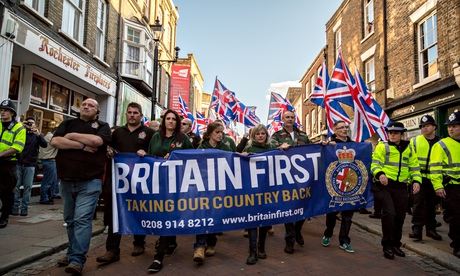
Sitting here, it’s hard to imagine that these are the people that look set to determine the course of the next election. Yet the idea that we are being swamped with immigrants has become almost an accepted part of the political landscape and the widely held explanation for many of our political and economic ills.
It’s total nonsense, of course. The reason white seaside Britain has been economically devastated has much more to do with people wearing smart suits in the City than Romanians breaking their backs in the fields of East Anglia. But the former have much better PR departments. And better lawyers. And, in the end, politicians don’t argue with big money for long. Of course, it was ever thus. The poor and the vulnerable – especially those who do not share the same language or customs or religion – have always been a politically convenient scapegoat for a society’s various ills. It’s the oldest trick in the book.
Hanging around in Taylor House, phrases from the Bible start coming to me. The book of Leviticus says this: “The alien who resides with you shall be to you as the citizen among you; you shall love the alien as yourself, for you were aliens in the land of Egypt: I am the Lord your God.” And the book of Deuteronomy says this: “You shall love the stranger, for you were once strangers in the land of Egypt.” I could go on and on. Jesus taught that the way one deals with strangers is the way one deals with him.
All of which is why it is so bizarre that some people seem to think immigrants are somehow a threat to something called Christian Britain (whatever that is). No, the real threat to Christianity on these shores is the narrow-minded provincialism that confuses religion with some chauvinistic Englishness that believes native-born people come first.
Indeed, from a religious (as opposed to a narrowly national) perspective, it is hard morally to distinguish between natives and foreigners. For instance: roughly 2,000 people came into this country yesterday, without papers or passports. No one stopped them or questioned their right to stay. And what was their clever port of entry, you may ask. Answer: maternity wards. They just happened to be born here. And because they had done (fairly) well in the geographical lottery of their birth, they are immediately handed various political rights of residency.
But from the God’s eye perspective, we are all sojourners on a planet that is on loan, and no corner of it is ours out of necessity or through any sort of inalienable right. I suspect the secular equivalent of this perspective is there in the green movement and the appreciation that the natural rhythms of the planet have little interest in borders and passports. From the perspective of the planet, as indeed sub specie aeternitatis, the legitimacy of one’s residency status in the UK is a narcissism of small differences. Which is precisely why, as our politicians obsess more and more about the problems of immigration, we shrink in size, in imagination and in influence.


.png?w=600)









