In the real world, George Osborne plans £25bn of cuts. And in the surreal world of press regulation, David Wolfe QC and his Royal Charter recognition team have taken £3m of Treasury funding and begun a month’s trek of public consultations, from Belfast to Glasgow to Cardiff, to see whether the 28 criteria they’ve laid out for approving one (or several) new Leveson-compliant regulators command support. But wait a minute …
You’d have thought that the whole Leveson legacy was parked for at least five years; that David Cameron had decided he would let charter regulation lie in his second term; that the Independent Press Standards Organisation, up and running long since, had displayed no interest in seeking recognition because neither its existing members (a massive majority along Fleet Street) nor the holdouts (the Guardian, Indy and FT) wanted anything to do with the charter. You’d reckoned, in sum, that Wolfe’s recognition panel had nothing to recognise and so nothing to do – for the time being, at least, and possibly for eternity.
But, as Wolfe told a launch consultation audience at the London School of Economics last week, a royal charter is “the hardest legal instrument in the country to make changes to”. He’s got his role and parliament’s marching orders. He’s worked out the criteria he’ll be using when – or if – there’s an application to deal with (featuring practical problems such as who should answer a whistleblowing hotline in clause 8(d) and what constitutes an “adequate” complaints procedure). And look! The Impress project thinks it might be his first customer this autumn.
The project, a gallant alternative to Ipso pioneered by Jonathan Heawood, lately English director of PEN, mirrors Ipso processes in many ways, but without the cash clout of publishing’s big battalions, and thus the theoretical influence such clout brings in train. It has, as yet, no one applying to be regulated by it. But if Wolfe’s panel does sanctify it later this year, and so create the possibility that membership could ameliorate libel damages, there may be applicants waiting in line from a supposed “700 hyperlocal news sources up and down Britain”: enterprises so blameless that Leveson didn’t mention them and so small that joining Ipso (and paying its fees) doesn’t seem attractive.
We’ll see: this story somehow keeps trundling on. It may end with a united Ipso and nothing else, or a scatter of niche regulators enforcing niche standards. Or it may simply run out of money after three years when parliament has to vote more funds to keep recognition going. But technically, at this consultative moment, there’s only a recognition apparatus with nothing to recognise and a prospective regulator with no one to regulate: merely squads of the great and good around every boardroom table in sight.
Try playing a little parlour game while the various groupings sort themselves out. I’ve taken descriptions of five random members from each of the three boards involved and stirred them together. Good cops, bad cops? See if you can pick out the regulators we can trust.
They are (a) the chair of the Lord Chancellor’s Strategic Investment Board; (b) the Northern Ireland member of Ofcom’s communications panel; (c) the CEO of the Professional Standards Authority; (d) the CEO of the Legal Services Commission; (e) a former director of communications for the deputy prime minister; (f) a former director of content and standards at Ofcom; (g) the CEO of the Royal Institute of British Architects; (h) a former commissioner to the Independent Police Complaints Commission; (i) a governor and former audit committee head at Heriot-Watt university; (j) the secretary of the Civil Mediation Council; (k) a former vice-chair of council and courts at the LSE; (l) the chief of the Financial Ombudsman Service; (m) the CEO of Action on Smoking and Health; (n) the emeritus professor of media studies at the University of Ulster; (o) the chairman of the National Council for Voluntary Organisations.
It’s obvious, isn’t it? I mean, a, b, h, k and o are clearly upstanding guardians, while you wouldn’t trust c, d, e, f or g to run a print shop. Or possibly the other way round. And as for i, j, l, m and n, who do they think they are? The answers, in order, are the people charged with running Ipso, recognition, and Impress. But the real answer is that any one (or all) of them might sit on any one (or all) of the three boards. There is no difference in individual probity, reputation, experience. One regulatory class fits all in modern Britain: one criterion covers the assembled throng.
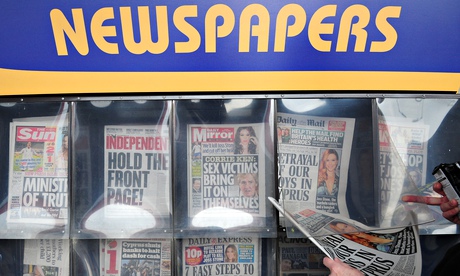
So don’t ask why competing millions have to be raised and spent, why assorted rule books must be drawn up and circulated. Don’t mention passing time or fading common sense either. When Leveson was first called to inquire four years ago, national dailies sold 9,774,845 copies a day and national Sundays 9,661,298. Those figures respectively are now 6,992,804 and 6,624,137. At this rate, there’ll soon be nothing recognisable left to regulate anyway.


.jpg?w=600)