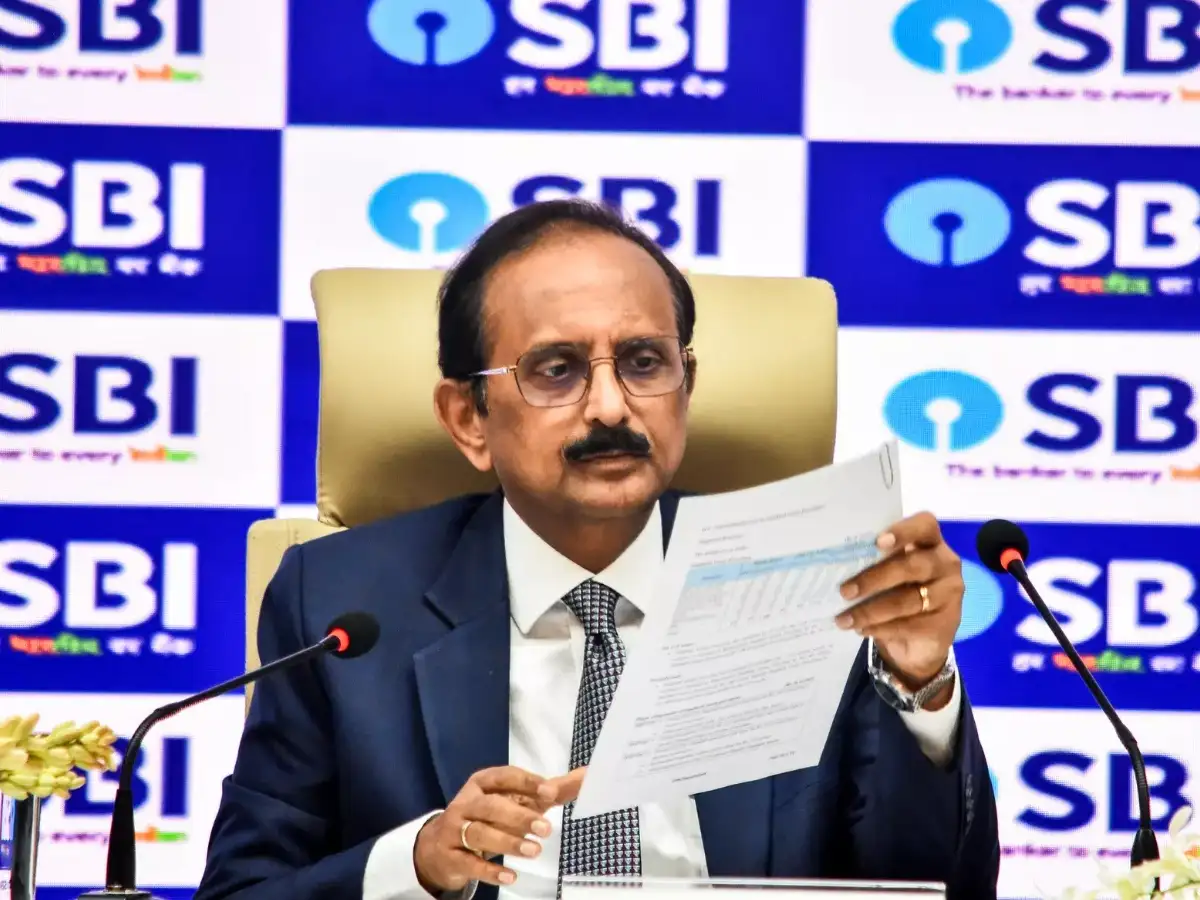
India's third-largest lender by market capitalisation, State Bank of India (SBI), deserves a better valuation than the market currently assigns it, chairman Challa Sreenivasulu Setty said in an interview with the Mint, arguing that investors are beginning to recognise improvements in the bank's financial strength, customer franchise and earnings profile.
Setty's comments come as SBI narrows the valuation gap with private-sector rivals ICICI Bank and HDFC Bank. The chairman argued that the bank's scale, improving financial performance and valuable subsidiaries are not fully reflected in its share price, citing progress in areas such as technology adoption, capital strength and customer acquisition.
As of June 19, SBI's market capitalisation stood at Rs 9.56 lakh crore, while that of ICICI Bank and HDFC Bank were at Rs 9.67 lakh crore and Rs 12.03 lakh crore, respectively.
Also Read: SBI, Axis Bank among lenders set for $2 billion ECB fundraising via RBI swap
In the interview, Setty said that unlike his predecessors, who faced challenges such as stressed assets, consolidation or market-share pressures, he inherited a bank without a defining problem. The challenge, he said, was identifying SBI's next growth engine and preparing it for the future.
Setty's three priorities with SBI
To that end, the bank focused on three priorities: launching a rebuilt version of its Yono digital platform, strengthening capital and undertaking operational process re-engineering through Project Saral.
Setty said Yono 2.0, launched last year, has attracted strong customer interest and positive reviews. He also pointed to SBI's Rs 25,000-crore qualified institutional placement in 2025, which improved the lender's capital position and provided additional growth capital.
The emphasis on capital strength comes as broader assessments of SBI's financial profile have improved. In August 2025, S&P Global Ratings said the bank's capitalisation was expected to strengthen further, projecting its risk-adjusted capital ratio to rise to 7%-7.5% over the following two years from 5.9% previously. The agency also said SBI's asset quality was likely to remain better than the Indian banking sector average and comparable with similarly rated international peers.
Setty said government ownership had never prevented SBI from adopting technology or embracing digitalisation. He argued that the lender's operational performance has remained "ownership-neutral" and that the market is gradually recognising this reality.
SBI's investments and diverse subsidiaries
Beyond its core banking operations, SBI's investments and subsidiaries represent another source of value, according to the chairman. The bank has nearly 18 subsidiaries spanning insurance, asset management and other financial services. An initial investment of around Rs 6,000 crore in these businesses has grown to an estimated value of about Rs 3 trillion, he said.
Also Read: SBI chairman Shetty sees MPC’s repo rate pause ‘appropriate’ at this juncture
Setty also highlighted SBI's strategic investments in market infrastructure, including its stake in the National Stock Exchange, which is preparing for an initial public offering. The bank is also planning to list SBI Funds Management.
Customer acquisition and retention remain key focus areas. According to Setty, SBI now acquires between 60,000 and 65,000 customers every day, while more than one-third of its customer base is below the age of 30. He said customer satisfaction scores have improved across channels and account attrition rates have declined.
The chairman acknowledged that SBI faces higher expectations than many peers because customers often maintain deeper relationships with the bank and view it as a public institution that should offer superior service. Improving service quality across both physical branches and digital channels therefore remains an ongoing effort, he said.
On business growth, Setty identified power, MSME and retail lending as important opportunities. While sectors such as steel and cement are generating sufficient cash flows to fund much of their expansion internally, he sees rising demand for financing in the power sector amid growing concerns about energy security.
He also expects retail credit—including home loans, gold loans and personal loans—to remain a significant contributor to growth. Improved data availability has increased banks' confidence in lending to small businesses, he said, adding that SBI can now process MSME loan approvals within 15 to 20 minutes.
Setty also suggested that banks may need to rethink how they fund future growth as household savings increasingly move into mutual funds, pension products and insurance. While deposits will remain important, bonds and other market instruments are likely to play a larger role in funding credit growth over time, he said.
AI casts a shadow over the road ahead
Artificial intelligence is another major area of investment for the lender. Setty outlined a three-pronged strategy centred on responsible AI deployment, productivity gains for employees and customers, and stronger governance and risk management. SBI plans to deploy generative AI and agentic AI across areas such as fraud monitoring, risk management, regulatory reporting and customer engagement.
The broader operating environment for banks remains supportive, according to S&P. In its August 2025 assessment, the ratings agency said India's banking system continues to benefit from structural reforms such as the Insolvency and Bankruptcy Code, stronger credit discipline and healthy economic growth. It also projected that banking-sector weak loans would remain near decade-low levels despite pockets of stress in unsecured retail lending.
Despite global uncertainties and geopolitical disruptions, Setty said he remains optimistic about India's long-term economic prospects. Describing himself as a "die-hard optimist" after nearly four decades in banking, he said India has repeatedly demonstrated resilience through periods of external shocks and continues to offer a compelling long-term growth story for investors.