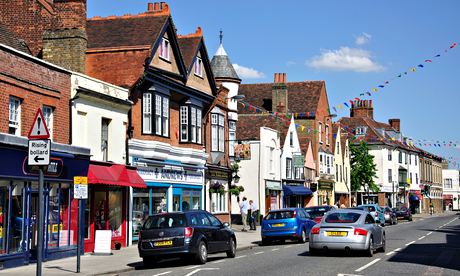
Look at government reports such as the Portas Review, magazine articles and blogs from architects and neighbourhood activists and you'll see the reflection of our love-hate relationship with a row of shops, whether they are located in one street or under one roof.
When I find myself in a high street, the Clash's Should I Stay comes to mind. I may need to buy something, but the sameness, the price and the general feeling that you could be in any town in the country makes me want to chuck the shopping list and head home. Talking to friends and colleagues, I know I'm not the only one.
The high street experience is about what happens outside the shops possibly more than what happens inside them. We need high streets to be places people want to stay a while, and so with the squeeze coming from internet shopping, they need to offer more than just products.
We know there's a growing number of us saying no to stepping outside our homes to buy stuff. Why bother when you can fill the fridge, get a pair of jeans and buy the latest bestseller with one click of a button. You save on petrol, reduce the possibility of your bike being nicked and the coffee at home is considerably cheaper.
So what would make the overpriced coffee and journey worth it? The key is to focus on the notion of the street and the place. People go to the high street to meet other people, to sit, to watch, to talk, be inspired by design, awed by local heritage and to take a breather in a space that has a character of its own. High streets are part of the public realm so need to be accessible as well as having an identity that signals which town they belong to.
They are also part of a massive private retail and developer sector, crucial to the local and national economy. However, the old thinking – "Build and the customers will come" does not always work. Some large-scale shopping regeneration schemes don't make it past the planning stage, despite what look like done deals with well known developers. Plus, figures show that most money made in local big brand high streets moves out of the local economy as quickly as snow on a hot shovel.
These failures are down to high streets not connecting with people and place. The high street should appeal to the human need to feel safe, to provide a place where people can meet and where they can enjoy what happens, inside the shop as well as outside. Reflecting on the urban- and green-place-making schemes I've been a part of, it seems that there are three things about high streets that make people want to stay rather than go:
Local flavour, not just big brands
When one high street looks pretty much like the other, residents are keen to show what makes their offer different. Bringing local flavour, from heritage to food, that makes each high street distinctive, can be key to creating a destination people want to spend time and money in.
Neighbourhoods are increasingly keen on telling the story of their street, from their local cheeses to having the first bike shop in the county. Organisations such as Totally Locally, which provides an innovative local shop and economy toolkit are helping to illustrate that the way to keep local high streets alive is about working together to lift a whole town.
Somewhere green and clean
The majority of high streets often have little more than a cursory nod to anything green. But there are more than a few clever places rolling out the potting tubs, hanging baskets, and "pop up parks". And there are larger scale schemes focusing on pedestrianising a shopping area so that the greening and the place making of a high street can be upscaled.
Other schemes are as simple as the idea behind the poster child of green small high streets – Incredible Edible Todmorden. For the Todmorden folk, growing carrots or chrysanthemums is not just for allotments but for the shopping parade, too. Plants provide the back drop for connecting people to the local environment.
Opportunities for arts and culture
High streets are a great space to experiment with art, design and culture that interests the young, the old and increasingly diverse residents. Sometimes it's a café showcasing live music or offering gallery space. But it is the out door space on a high street acting as a stage or gallery, exhibiting sculpture or dance, that offers the biggest high street buzz.
Wandsworth Arts Festival used its high street as a cultural test bed through "pop up" performances and installation showcases. Another example is the Forest Hills Open Studios. The studios offer another reason for a visit to the local high street by opening up the doors to over a dozen artist studios art and working lives.
So whether it is focusing on points of local interest, "greening" a place or encouraging arts and culture, all three enhance community participation, collaboration, wellbeing and inspiration and not just shopping.
High streets, if got right, are part of a vibrant place and economy. But this will only happen if people are offered more than they could just as easily buy at home tapping on a keyboard.
Maria Adebowale is director of the Living Space Project and a Clore social leadership environment fellow 2014
The sustainable living hub is funded by Unilever. All content is editorially independent except for pieces labelled advertisement feature. Find out more here.
Join the community of sustainability professionals and experts. Become a GSB member to get more stories like this direct to your inbox