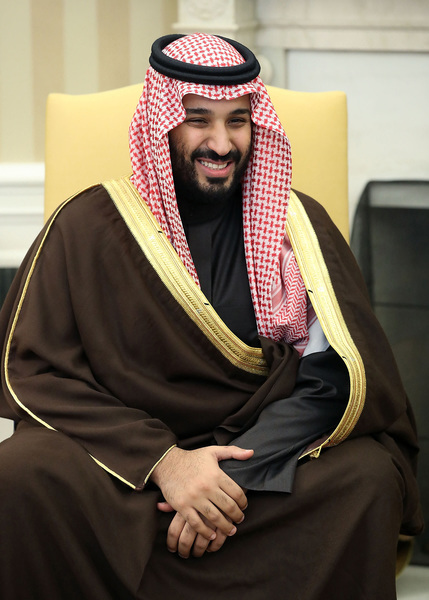
RIYADH, Saudi Arabia _ Saudi Arabia increased its payments to some members of the royal family just as officials were wrapping up a controversial anti-corruption campaign that targeted some of the kingdom's richest men and most prominent princes, according to three people with knowledge of the matter.
The most recent monthly stipend _ paid after the government had stopped covering electricity and water bills for royalty _ was raised by as much as 50 percent, two of the people said. A Saudi government official said the report was "absolutely not true."
It's not clear whether the payment was a one-time bonus or will continue each month, or how widely the money was distributed. One of the people said it extended beyond the descendants of King Abdulaziz, Saudi Arabia's founder, to include more distant branches of the family. Another person said the payment was only given to adults who had reached a particular age. The three spoke on condition of anonymity because of the sensitivity of the issue.
The payments are the latest sign that Crown Prince Mohammed bin Salman is trying to maintain public and royal support to avoid unrest as he seeks to overhaul a decades-old social contract built on generous handouts in return for political loyalty.
Over the past three months, authorities locked up dozens of the kingdom's richest men in what was described as an anti-graft drive, imposed value-added taxation and announced sharp increases to fuel and utility prices to repair public finances. Some of the moves appear to have backfired.
After complaints about rising prices, King Salman ordered a handout worth more than 50 billion riyals ($13.3 billion) to support many ordinary Saudis. The attorney general said 11 princes were sent to jail after staging a protest against the decision to stop paying their utility bills, though another prince challenged that official account.
Dozens of princes and billionaires, including Prince Alwaleed bin Talal, were among those held at the Ritz Carlton hotel in Riyadh in the anti-corruption purge. The attorney general said this week all but 56 people were released either for lack of evidence or after they agreed to pay part of the allegedly ill-gotten money. The government has reaped more than 400 billion riyals ($107 billion) in settlements, he said.
The crackdown was popular among many young Saudis. Yet it raised concerns among some foreign investors, with critics dismissing it as a power grab by the 32-year-old heir to the throne. Officials say the purge was necessary as part of the plan to attract investments and reduce the economy's reliance on oil.
The increased payments will likely raise questions over how serious the government is in curbing wasteful spending.
The payments, subject of complaint among some Saudi citizens, are paid to members of the Al Saud ruling family, who number in the thousands. The government has never disclosed how many people receive them or how large they are.
A U.S. diplomatic cable in 1996 released by WikiLeaks said that members of the royal family receive the monthly payments from birth, with the amounts depending on their proximity to King Abdulaziz. At the time, the payments ranged from a low of $800 a month to a high of $270,000 a month, and the diplomat estimated the total cost to the state at about $2 billion.