BEIRUT _ Saudi-led troops launched an offensive Wednesday on the Yemeni port of Hudaydah despite warnings by aid groups that an attack would put civilian lives at risk and further snarl humanitarian efforts in the war-ravaged country.
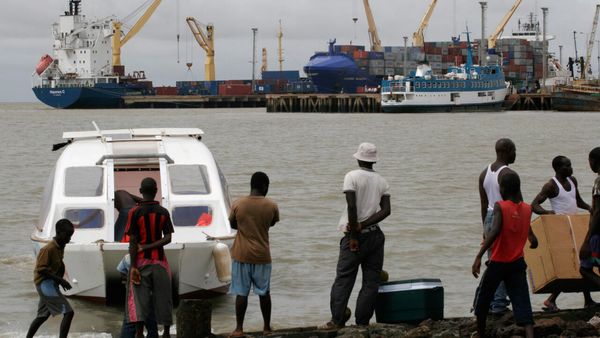
Hudaydah, which has been in the hands of Houthi rebels since 2015 and is Yemen's second-largest port, is the most important point of entry into the country, according to the United Nations.
It receives anywhere from 70 percent to 80 percent of all aid shipments, including food, medicine and basic supplies that serve more than 20 million people in need _ three quarters of the entire population. Eight million Yemenis are at risk of starvation, according to aid agencies.
But the Saudi-led coalition, which is backed by the U.S. and comprises an uneasy alliance with the United Arab Emirates, various Yemeni proxy forces and mercenaries, insists the Houthis have used the port to smuggle arms and benefited from the aid.
Anwar Gargash, the United Arab Emirates Minister of State for Foreign Affairs, on Sunday gave U.N. officials a Tuesday deadline to convince the Houthis to abandon the port, saying their "illegal occupation of Hudaydah (was) prolonging the Yemeni war."
Shortly after the deadline passed, the coalition launched operation "Golden Victory," an assault that included air, naval and land units, according to the Saudi-owned Al-Arabiya news network.
Coalition warships as well as aircraft began "violent bombing" of Houthi positions in and around Hudaydah, the news agency reported, adding in a later report that ground forces had seized control of one of the city's southern suburbs.
Yemen's government, which is recognized by the U.N. despite being in exile, said in a statement released Wednesday on the state-run Saba news agency that "the liberation of Hudaydah port constitutes a distinguishing mark in our struggle to retake Yemen from the militias that kidnapped it to execute foreign agendas."
The government and the coalition accuse Iran of backing the Houthis in a bid to destabilize its regional nemesis Saudi Arabia.
"The liberation of the port is the beginning of the fall of the Houthi militia," the statement said, "and will secure marine shipping in the strait of Bab Al-Mandib and cut off the hands of Iran that had long drowned Yemen with weapons that shed the Yemenis' precious blood."
Mohammad Ali Houthi, a leader with the Houthi rebels, tweeted Wednesday that Hudaydah was a civilian port and that every ship entering it submits to a coalition search. He added that Houthi forces had attacked two coalition warships, forcing one to retreat and sinking another.
Yahya Kurd, a Yemeni journalist, said planes had been a constant presence over the city of Hudaydah and that the booms of artillery and aerial bombing could be heard coming from its south.
Although food and basic supplies were still available, they were expensive and their price was only expected to rise because of scarcity.
"People are extremely worried. Hudaydah's residents are some of the poorest people in Yemen, and many of them haven't gotten paid in 20 months," Kurd said Wednesday via the WhatsApp messaging service. "Most of these people can't leave."
Kurd said a ballistic missile had been launched from somewhere in the city. Pro-Houthi media confirmed the report.
Mirella Hodeib, a spokeswoman for the International Committee of the Red Cross, or ICRC, in Yemen, said Hudaydah has been a "lifeline" for trade, especially in the country's northern parts.
"It's one of the poorest governorates in Yemen, and it's also a very densely populated urban center," Hodeib said in a phone interview Wednesday.
"As the ICRC we've always called for them to spare infrastructure," she said. "But the needs _ fuel, water, and food and health care ... all these are going to be impacted very badly, and they're already impacted drastically."
The offensive marks another dismal milestone in the three-year civil war that has made Yemen, a country long plagued by poverty, home to the "worst humanitarian crisis in the world," according to a statement from the U.N.'s humanitarian office Friday.
The coalition entered the war in Yemen in March 2015 on the side of President Abed Rabbo Mansour Hadi, after the Houthis ran him out of the capital.
That kicked off an intense air campaign that the U.N. says is responsible for the majority of the estimated 6,439 civilians killed and the more than 10,000 wounded and that it unleashed a cholera epidemic that has hit an estimated 1 million people.
Meanwhile, the coalition cobbled together a force of southern separatist groups, Islamist fighters with links to al-Qaida and units led by Tarek Saleh, the nephew of the late former Yemeni President Ali Abdullah Saleh. The deposed strongman was assassinated in December by his one-time Houthi allies.
The coalition also imposed a devastating air and naval blockade on the country, forcing aid ships to submit to a lengthy search process that has slowed assistance.
Yet Hudaydah, which was captured by the Houthis in October 2015, remained a sticking point.
The U.N. estimates some 600,000 people live in the city and its environs. Lise Grande, U.N. resident and humanitarian coordinator for Yemen, said in a statement Friday that in a "prolonged worst case (scenario), we fear that as many as 250,000 people may lose everything _ even their lives."
For years, coalition leaders have clamored for the Pentagon, which already provides intelligence, midair refueling capabilities and munitions to the campaign, to greenlight an offensive for the port.
Those calls intensified in recent months, even as U.S. lawmakers have repeatedly sought to halt U.S. military support for the campaign.
On Monday, Secretary of State Mike Pompeo released a statement, saying the U.S. was "closely following developments in Hudaydah."
"I have spoken with Emirati leaders and made clear our desire to address their security concerns while preserving the free flow of humanitarian aid and life-saving commercial imports," Pompeo said.
Some analysts said Pompeo's words amounted to giving the coalition a pass.
With an attack looking increasingly imminent, several aid organizations had evacuated personnel from Hudaydah. The International Committee of the Red Cross, Hodeib said, had relocated 71 staff members outside Yemen, leaving some 400 aid workers in the country. The U.N., according to officials, has kept dozens of its employees in Yemen as well.
"In the middle of all of this, we have a vessel that is docked at our port, and the U.N. is offloading food today," Grande said in a phone interview Wednesday.
"We have not abandoned the city. We are delivering food, we are delivering healthcare, and we're trying to help with cholera."
Hodeib was among those who left Yemen.
"We don't do miracles as the ICRC. All of us do a fraction of what is needed because the needs are massive, but then you feel like you're doing something at least," she said.
To leave at this time, she said, was "devastating."
"You're leaving people, meaning your colleagues," she said. "but also Yemenis, at a very critical moment."