Saudi Arabia has accused the United Arab Emirates of smuggling a UAE-backed separatist leader out of Yemen after he failed to turn up for crisis talks in Riyadh on Wednesday.
The Saudi-led coalition in Yemen said Aidarous al-Zubaidi had fled the port city of Aden for Abu Dhabi under Emirati supervision, deepening a diplomatic row between Saudi Arabia and the UAE.
The Saudis said al-Zubaidi travelled first by boat to the Emirati-owned port of Berbera in the breakaway territory of Somaliland, before boarding an aircraft to Mogadishu, Somalia, that was later tracked to a military airport in Abu Dhabi, the capital of the UAE.
Sources in al-Zubaidi’s Southern Transitional Council did not dispute the fact of his escape.
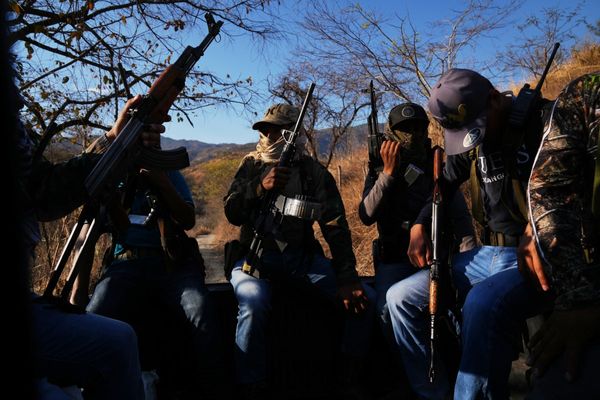
The crisis between the UAE and Saudi Arabia erupted last month when UAE-backed separatists swept through southern Yemen and reached the border with Saudi Arabia, which declared the move a threat to its national security.
For years, the US allies had fought together in Yemen against the Iran-backed Houthis, before a 2022 ceasefire that left the Houthis in control of a chunk of north-western Yemen.
The Saudis back Yemen’s Presidential Leadership Council, which oversees Yemen’s internationally recognised government, and on Wednesday expelled al-Zubaidi and charged him with treason after he failed to fly to Riyadh for talks.
His flight puts a disastrous end to the now internally divided STC drive to declare southern Yemen a separate state and push out forces loyal to the internationally recognised government. The aim had been to return to the north-south split that prevailed prior to unification in 1990.
In recent days, al-Zubaidi’s aides had vowed he would fight to retain Aden – long an STC stronghold – or retreat to conduct a guerilla campaign, but it appears plans for a late-night exile were already under way, and that splits emerging in the STC made his position untenable.
He is said to have fled with some of his closest supporters in the government.
The Saudi-backed, internationally recognised government’s ministry of information demanded international sanctions be placed on al-Zubaidi. It said: “Al-Zubaidi would not have acted with such recklessness without direction from Abu Dhabi … where he placed his personal interests and the interests of his supporters above the interests of the nation.”
Saudi Arabia’s willingness to highlight the Emirati role in al-Zubaidi’s escape shows the continued anger in Riyadh at the Emirati role in backing the STC rebellion.
On Tuesday night, al-Zubaidi had, at the last minute, refused a Saudi ultimatum to fly from Aden to Riyadh for talks, a move that angered the Saudis so much that they bombed an STC military camp. He apparently had reached the airport but did not board the plane, before returning to his home in Aden and then fleeing.
A more than 50-strong STC delegation did fly from Aden to Riyadh. Members of the delegation said they were safe and that they had held constructive talks. It was not clear how free the delegation were to speak.
The STC’s grip on Aden had been weakened by internal splits when Abdulrahman Al-Muharami, a commander of the Giants Brigades, issued orders to withdraw heavy weapons from military camps and to impose security control over commanders linked to al-Zubaidi’s Al-Dhala wing.
The split made it easier for Saudi-backed forces to enter Aden. Leaders of the Saudi-backed government had left the city for Saudi Arabia when the STC took control last month.
The disarray confirms the scale of the military and political overreach that has created a disaster for the southern movement.
Three weeks ago, in a bid to control the entire south of Yemen, a confident STC poured into two previously independent-minded eastern governorates: Hadramaut and Al-Mahra. In a televised address on 2 January, al-Zubaidi declared a two-year transitional period leading to a self-determination referendum for the “State of South Arabia” within the borders of the former People’s Democratic Republic of Yemen, which was independent from 1967 to 1990.
The advance angered Saudi Arabia, which used limited airstrikes and loyal local militia to force an STC withdrawal, provoking a wider collapse in STC support across the south.
The UAE, diplomatically isolated, ended its military support for the STC initiative, a critical factor in the STC withdrawal. Abu Dhabi removed its military equipment and assets from bases and camps in Hadramaut, Shabwa, Aden, and the West Coast.
It is not clear whether the Saudi diplomats back in the driving seat are sincere in saying they want to listen to the longstanding demands of the separatists, or will instead back calls to repress not just the STC for insurrection and treason but also the cause that it had led. Saudi Arabia has promised to stage a southern dialogue.
The separatist cause has long been supported by the UAE, creating friction with Riyadh. Saudi Arabia shares a border with Yemen and opposes the fracturing of Yemen, preferring instead to focus on uniting the multiple Yemeni factions and tribes to try to drive the Houthis out.